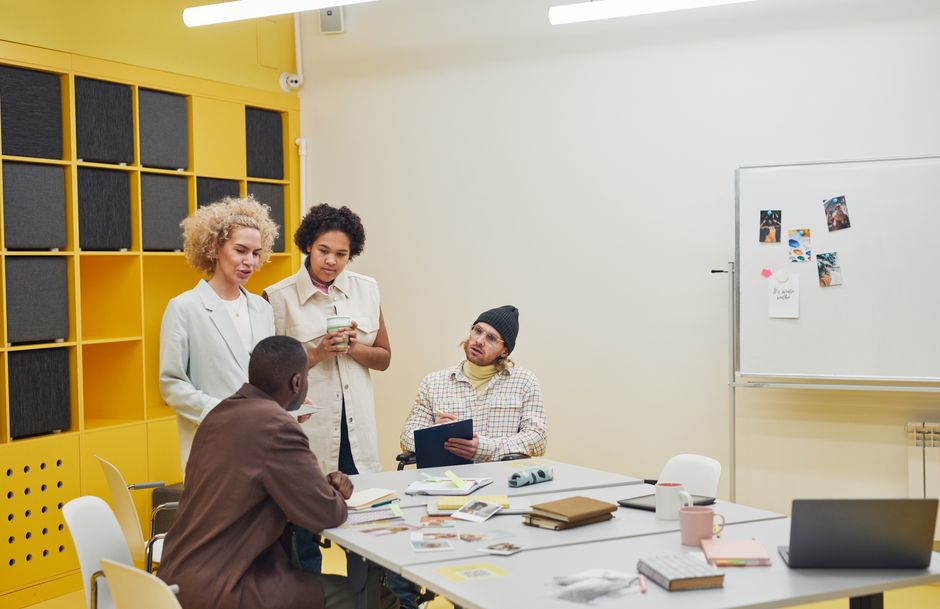
A training session can use the same room, the same agenda, and the same handouts and still produce very different results. The variable is often the facilitator. Facilitation skills are the process skills used to help groups carry out work effectively, and a facilitator helps structure and support a group process so the group can do its best thinking and learning. That distinction matters in training. Good sessions are not just delivered. They are facilitated.
What Training Facilitator Skills Actually Cover
Training facilitator skills are broader than platform presence. Facilitation of training groups requires knowledge of how people learn and of group process strategies, as well as skill in leading group participants. The skill set includes strong communication, knowledge of adult learning principles, flexibility and adaptability, organizational skills, interpersonal skills, and problem solving. It also includes active listening, encouraging curiosity, resolving conflict, using a participative style, encouraging openness, and empathizing with participants. A facilitator who only controls the room is not doing the full job. The work is to structure the process so the group can learn and act.
The Difference Starts Before the Session
The session’s quality is shaped before the first activity begins. Two design choices matter most: how the session is built for adult learners and how visible the group process is.
Design for How Adults Learn
A good session begins with intentional design. Effective facilitator training combines knowledge about adult learning and intentional design with opportunities to practice real facilitation. That principle applies to the session itself. A strong facilitator designs for how adults learn, not just for what the trainer wants to say. The design gives the group a clear process for participation, reflection, practice, and decisions. A weak session may have activities, but the activities do not serve the group’s work. They fill time. The difference is visible before anyone enters the room.
Make the Group Process Visible
A facilitator helps structure and support a group process. In a training group, that means making the process clear enough for people to participate without guessing. The facilitator explains how questions will be handled, how small groups will report back, and how the group will reach a conclusion. None of that has to be elaborate. It does have to be intentional. When the process is invisible, participants spend energy trying to work out what is happening. When the process is visible, they can spend that energy on the learning itself.
Skills That Show Up in the Room
Some facilitator skills are easy to name and hard to practice under pressure. They show up in how the facilitator listens, handles disagreement, and invites participation.
Active Listening and Encouraging Curiosity
Active listening is one of the clearest dividing lines between a good session and a bad one. A facilitator who listens for meaning, not just for the right answer, can respond to confusion before it becomes disengagement. Encouraging curiosity matters as well. A good facilitator makes questions welcome and uses them to move the group forward. A weak facilitator treats questions as interruptions or listens only to the most confident voices. The group notices the difference quickly, even when no one names it.
Problem Solving and Conflict Resolution
Groups disagree. That is normal in any session where people are asked to think together. Problem solving and conflict resolution are core facilitator skills because the group’s work does not stop when friction appears. A strong facilitator helps the group name the issue, separate the people from the problem, and find a way forward. A weak facilitator avoids conflict until it leaks into side conversations or shuts the discussion down. Facilitation guidance also covers dealing with disrupters through prevention and intervention, which is part of protecting the group’s process.
Participative Style, Openness, and Empathy
A participative style does not mean the facilitator has no plan. It means the plan makes room for the group. Encouraging openness and empathizing with participants help people contribute without feeling foolish. A good facilitator can say, “That is a fair concern,” without losing the thread of the session. A bad session often feels like a performance in which the facilitator is the only person allowed to be certain. The stronger approach is to use authority to hold the process, not to center the facilitator.
What a Good Session Looks Like Compared With a Bad One
| Skill area | Strong session | Weak session |
|---|---|---|
| Opening | Makes purpose and process clear | Leaves purpose or process implied |
| Participation | Uses a participative style and invites broad input | Relies on the same few voices |
| Listening | Shows active listening and encourages curiosity | Hears the loudest point and moves on |
| Conflict | Uses problem solving and conflict resolution | Avoids friction or takes it personally |
| Flexibility | Adapts when the group needs a different route | Sticks to the plan regardless of the room |
| Organization | Keeps structure, time, and next steps visible | Lets the session drift or overrun |
Why Flexibility and Organization Must Work Together
Strong communication, flexibility, and adaptability are named facilitator skills, and so are organizational skills. These skills can look like opposites. In practice, they depend on each other. Organization gives the session a spine. Flexibility allows the facilitator to respond when the group needs something different. A facilitator who is organized but rigid turns a good plan into a cage. A facilitator who is flexible but disorganized turns the session into a series of loose ends. The good session has both: a clear structure and the judgment to adjust it.
Training Facilitator Skills Are Built Through Practice
Facilitator skills are not just personality traits. Effective facilitator training combines knowledge about adult learning and intentional design with opportunities to practice real facilitation. That combination matters. Reading about active listening is not the same as practicing it with a group that is losing patience. Learning about conflict resolution is not the same as using it in the moment. A facilitator development program may include core principles, a broad set of techniques, and repeated practice, but the essential point is the practice. Skills improve when they are used, reviewed, and used again.
A Simple Self-Check for Facilitators
Before and after a session, a facilitator can use a short self-check to spot the gaps that separate a good session from a bad one. The questions do not require a complex evaluation system. They require honesty.
- Did I design this session for how adults learn, or only for what I wanted to cover?
- Did I make the group process clear enough for people to participate?
- Did I listen actively, or did I wait for my turn to speak?
- Did I encourage curiosity when questions appeared?
- Did I use a participative style and invite openness?
- Did I address conflict as part of the group’s work?
- Did I stay organized and still adapt when the group needed it?
- Did I close with clear next steps?
Frequently Asked Questions
These questions come up often when facilitators review what worked and what did not.
What are the core training facilitator skills?
Core training facilitator skills include active listening, encouraging curiosity, problem solving, conflict resolution, using a participative style, encouraging openness, and empathizing with participants. Facilitators also need strong communication, knowledge of adult learning principles, flexibility, adaptability, organizational skills, interpersonal skills, and problem-solving ability. These are process skills. They help a group carry out its work effectively rather than relying only on the facilitator’s content knowledge.
How is a facilitator different from a trainer?
A facilitator helps structure and support a group process so the group can carry out its work. A trainer may focus more on content delivery, but training groups still need facilitation. Facilitation of training groups requires knowledge of how people learn and of group process strategies, as well as skill in leading group participants. The facilitator’s role is to make the group’s learning process work, not to be the only active person in the room.
Why can a well-planned session still go badly?
A well-planned session can go badly when the facilitator’s process skills do not match the room. If the facilitator does not listen actively, does not make the process clear, avoids conflict, or refuses to adapt, participants may disengage even when the content is strong. Good design matters, but design has to be carried by communication, flexibility, organization, and interpersonal skill. A plan is not a substitute for facilitation.
Can training facilitator skills be learned?
Yes. Effective facilitator training combines knowledge about adult learning and intentional design with opportunities to practice real facilitation. Skills such as active listening, encouraging curiosity, conflict resolution, and using a participative style improve through repeated practice and feedback. A facilitator who treats these skills as learnable can keep improving from session to session. The key is to practice in realistic group settings rather than only reading about facilitation.
