California’s Consumer Privacy Act carries real teeth, fines up to $7,500 per intentional violation, and enforcement actions have only ramped up since the CPRA amendments took effect. If your business collects personal data from California residents, the right CCPA compliance software can mean the difference between staying protected and facing a costly regulatory mess. These platforms handle everything from automated data subject requests to consent management and privacy impact assessments, taking manual guesswork out of the equation.
But software alone doesn’t close the compliance gap. Your team still needs to understand CCPA requirements, follow proper data handling procedures, and respond correctly when consumers exercise their rights. That’s where compliance training through an LMS like Axis LMS becomes a critical piece of the puzzle. At Atrixware, we’ve seen firsthand how pairing the right privacy tools with structured employee training programs creates a compliance strategy that actually holds up under scrutiny.
To help you find the platform that fits your needs, we compared eight of the top CCPA compliance software solutions available right now. Below, you’ll find a breakdown of each platform’s core features, pricing, strengths, and limitations, so you can make a well-informed decision without sorting through dozens of vendor pages yourself.
1. OneTrust
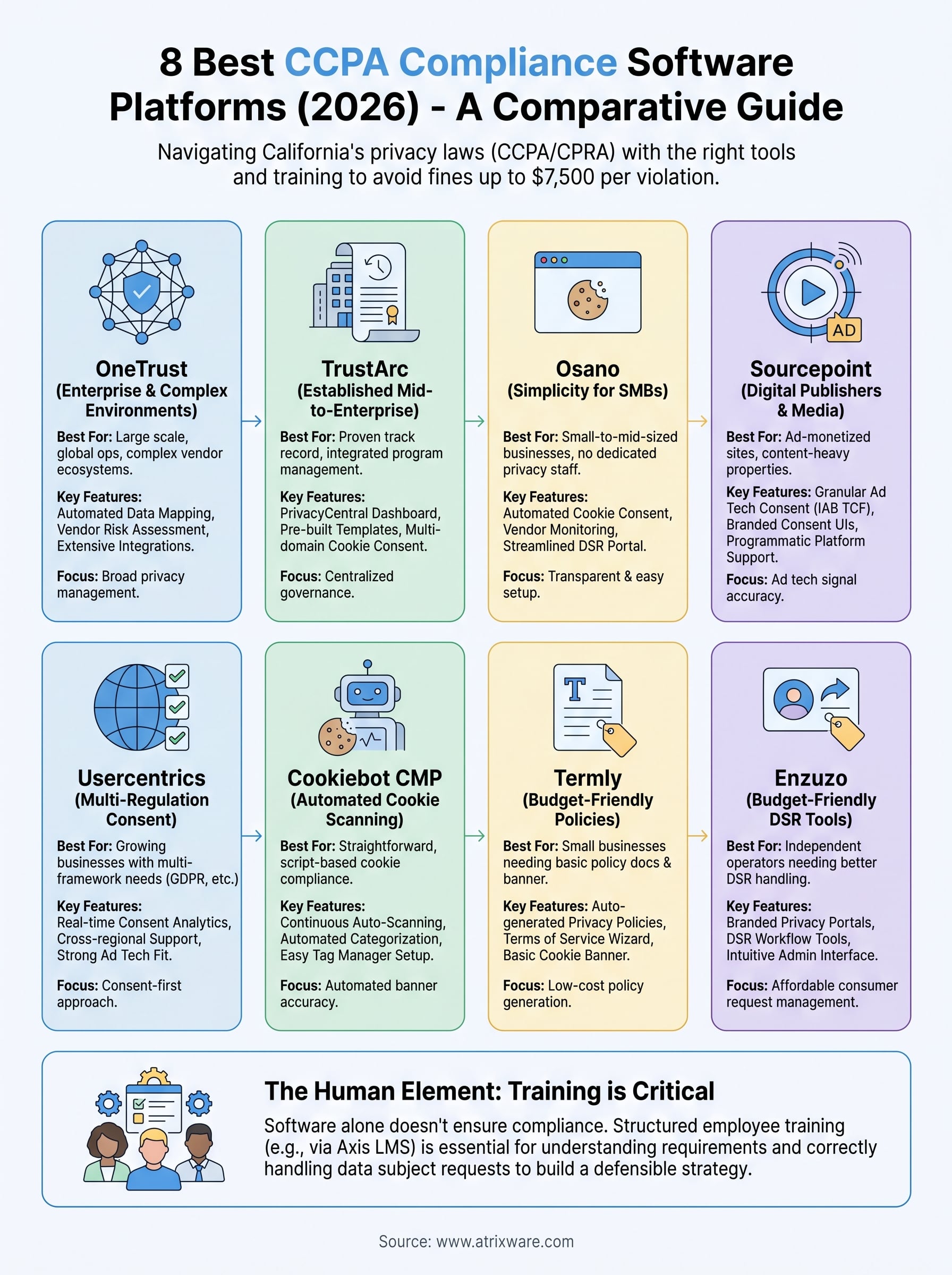
If you’re evaluating enterprise-grade CCPA compliance software, OneTrust consistently ranks at the top of shortlists for large organizations. The platform handles privacy management at scale, covering everything from data mapping to consent governance across multiple regulatory frameworks. Businesses with complex vendor ecosystems, global operations, or multi-regulation compliance needs tend to find OneTrust more capable than narrower point solutions.
What it does best
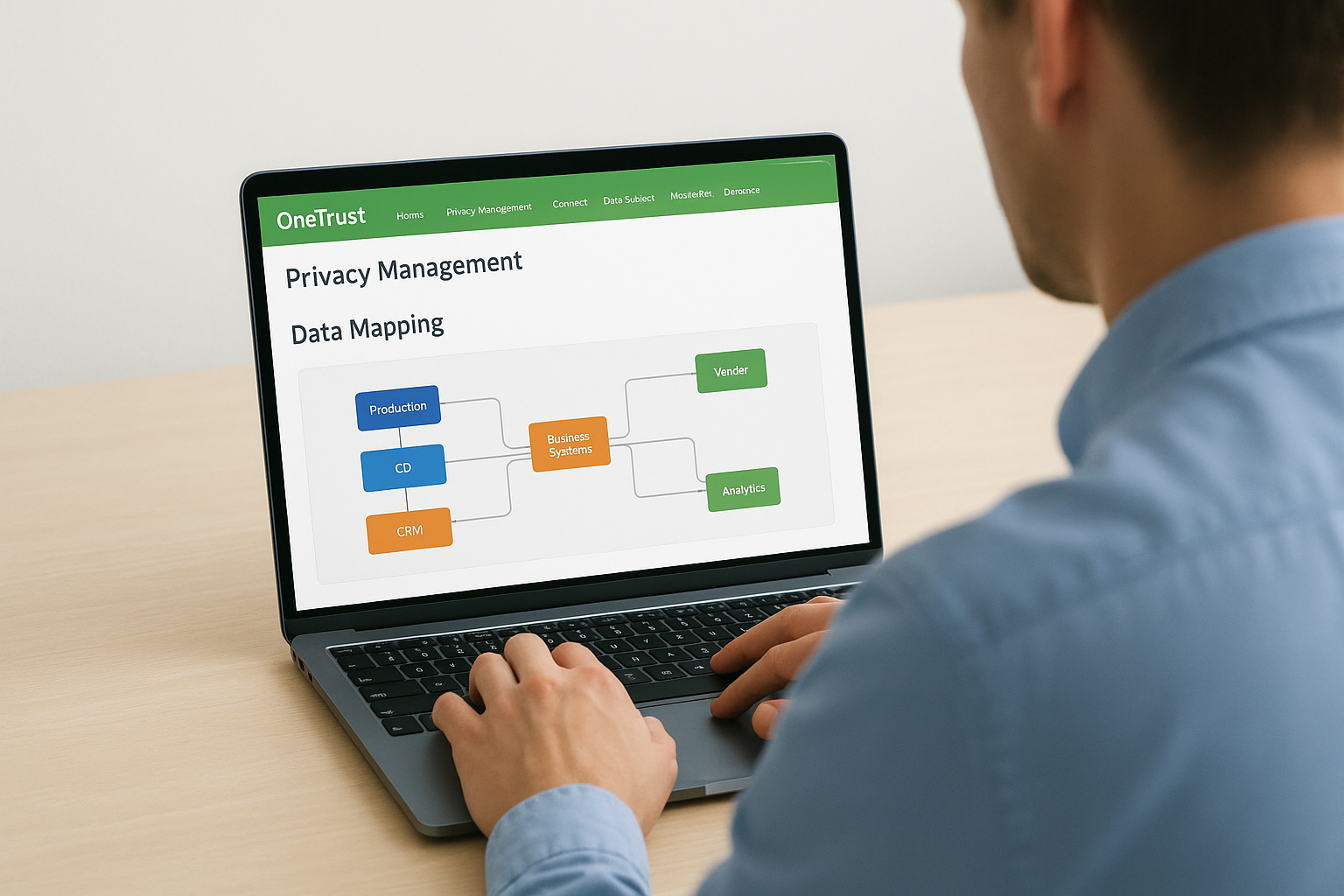
OneTrust excels at automated data discovery and mapping, letting you identify where personal information lives across your systems without manual spreadsheet work. The platform bundles a consent management platform, a data subject request workflow engine, and a vendor risk assessment module into one interface. A built-in cookie scanner also continuously monitors your web properties, keeping your consent banners accurate as your technology stack evolves over time.
CCPA and CPRA coverage to confirm
The platform covers the core CCPA obligations, but you should verify specific feature availability before signing. Key areas to confirm in your contract tier include:
- Opt-out of sale and sharing mechanics for your web properties
- Right to know, delete, and correct workflows under CPRA amendments
- Sensitive personal information controls and the right to limit use and disclosure
- Automated DSR routing and response tracking with audit logs
Some of these capabilities sit behind add-on modules rather than base packages, which directly affects your total cost.
Verify in writing exactly which CPRA-specific controls are included in your tier before you finalize any contract.
Setup, integrations, and admin workflow
Expect an implementation timeline of four to twelve weeks, depending on the size of your data environment and the number of integrations required. OneTrust connects with Salesforce, ServiceNow, Microsoft Azure, and hundreds of other platforms through a pre-built connector library. The admin interface covers a wide range of functions, but it carries a real learning curve, so budget time for dedicated administrator onboarding to avoid underutilizing the platform after launch.
Pricing and what drives total cost
Published pricing is not available directly on the OneTrust website. Your total contract cost scales based on the number of websites, active user counts, data processing records, and which modules you select. Mid-market organizations typically spend between $15,000 and $50,000 annually, with enterprise agreements running considerably higher. Factor in professional services fees for implementation, as these often add a meaningful amount to year-one costs.
2. TrustArc
TrustArc has been in the privacy space for over two decades, making it one of the more established names in ccpa compliance software. The platform targets mid-market and enterprise organizations that need a proven track record alongside a wide regulatory coverage footprint, including CCPA, CPRA, GDPR, and several other frameworks under one roof.
What it does best
TrustArc performs well when you need consent management and privacy program management integrated tightly together. Its PrivacyCentral module gives administrators a centralized dashboard to track compliance activities, manage assessments, and monitor risk across business units. The platform also includes pre-built privacy notice templates and a cookie consent tool that works across multiple domains, which reduces setup time compared to building everything from scratch.
CCPA and CPRA coverage to confirm
Before signing, confirm the following items are active in your specific tier:
- Opt-out of sale and sharing consent flows for California visitors
- Right to correct and right to limit sensitive personal information under CPRA
- DSR intake, routing, and response audit logs
- Automated data inventory updates tied to your integrations
Confirm that CPRA-specific rights are not locked behind a higher-tier upgrade before you commit to a contract.
Setup, integrations, and admin workflow
TrustArc connects with major CRM and marketing platforms, and most customers report a setup timeline of three to eight weeks. The admin interface is more approachable than OneTrust’s, though reporting depth is more limited at lower tiers.
Pricing and what drives total cost
TrustArc does not publish pricing publicly. Your cost scales with the number of domains, users, and modules selected, with annual contracts typically starting around $5,000 for smaller deployments and climbing significantly for enterprise configurations.
3. Osano
Osano is a privacy-focused ccpa compliance software platform built around simplicity and transparency. It targets small-to-mid-sized businesses that need solid consent management and data subject request handling without the overhead of an enterprise-grade deployment. If your team lacks dedicated privacy staff, Osano’s streamlined approach makes it easier to reach and maintain a defensible compliance posture.
What it does best
Osano’s cookie consent manager is its standout feature, automatically scanning your website and categorizing cookies before surfacing the appropriate opt-in or opt-out banner to visitors. The platform also includes a data subject request portal that handles intake and tracks response timelines, and a vendor monitoring tool that scores your third-party data processors against published privacy policies.
Osano’s vendor monitoring feature flags changes to third-party privacy policies automatically, which saves your team significant manual review time.
CCPA and CPRA coverage to confirm
Before finalizing your subscription, verify that your tier includes the following:
- Opt-out of sale and sharing consent flows for California-based visitors
- Right to correct and right to limit use of sensitive personal information under CPRA
- DSR response audit logs with exportable records
- Automated re-scanning for new cookies as your tech stack changes
Setup, integrations, and admin workflow
Most Osano customers complete initial setup in one to three days, which is considerably faster than enterprise alternatives. The platform integrates with common CMS and tag management tools, though deeper CRM or HR system integrations are limited compared to OneTrust or TrustArc.
Pricing and what drives total cost
Osano publishes tiered pricing starting around $199 per month for smaller sites, with costs scaling based on monthly sessions, number of domains, and the DSR management features you need. Annual plans reduce the per-month rate meaningfully.
4. Sourcepoint
Sourcepoint is a consent management and privacy compliance platform built primarily for digital publishers and media companies. If your business monetizes through advertising or operates content-heavy web properties, Sourcepoint offers more precision around ad tech consent signals than most general-purpose ccpa compliance software tools on this list.

What it does best
Sourcepoint’s core strength is consent signal accuracy for programmatic advertising ecosystems, including IAB TCF and US Privacy String support. The platform lets you customize consent UIs at a granular level, matching banner design to your site’s branding while controlling exactly which data processing purposes each visitor opts into or out of.
CCPA and CPRA coverage to confirm
The platform covers the major CCPA obligations, but certain CPRA-specific controls require careful verification before you sign. Confirm these items are included in your selected tier:
- Opt-out of sale and sharing flows for California visitors
- Right to correct and sensitive personal information controls under CPRA
- DSR intake workflows with audit logs
- Automated consent record storage and retrieval
Sourcepoint’s ad tech focus means some general privacy program management features require third-party tools to fill the gap.
Setup, integrations, and admin workflow
Sourcepoint integrates well with Google Ad Manager and major programmatic platforms, and most deployments wrap up within two to four weeks. The admin workflow is purpose-built for advertising teams, so non-advertising organizations may find the interface less intuitive than the alternatives reviewed above.
Pricing and what drives total cost
Sourcepoint does not publish pricing publicly. Annual contract costs scale based on monthly page views, domain count, and consent volumes, and enterprise-level deployments consistently require negotiated agreements rather than self-serve pricing.
5. Usercentrics
Usercentrics is a consent management platform that serves businesses ranging from growing startups to large enterprises. It competes directly in the ccpa compliance software market with a consent-first approach, giving you precise control over how your website collects and records visitor consent signals across multiple regulatory frameworks simultaneously.
What it does best
Usercentrics handles multi-regulation consent management cleanly, covering CCPA, CPRA, GDPR, and other frameworks through a single implementation. The platform’s real-time consent analytics dashboard lets you monitor opt-in and opt-out rates by region, which helps you spot potential compliance gaps before they become regulatory problems.
Usercentrics supports IAB US Privacy String and TCF 2.2, making it a strong fit if you run advertising alongside your core business operations.
CCPA and CPRA coverage to confirm
Before finalizing your subscription, verify your tier includes:
- Opt-out of sale and sharing consent flows for California visitors
- Right to correct and sensitive personal information controls under CPRA
- Consent record storage with exportable audit logs
- Automated re-scanning as your technology stack changes
Setup, integrations, and admin workflow
Most teams complete setup in one to three days using a JavaScript snippet or a Google Tag Manager integration. Usercentrics connects with popular CMS platforms including WordPress and Shopify, though deeper HR or CRM integrations require additional configuration compared to enterprise-tier alternatives.
Pricing and what drives total cost
Usercentrics offers published pricing starting around $60 per month for smaller sites, with costs scaling based on monthly sessions and domain count. Annual plans provide a meaningful discount over monthly billing, and enterprise configurations require custom quotes.
6. Cookiebot CMP
Cookiebot CMP, developed by Usercentrics, is a cookie consent and compliance platform that focuses on automated cookie scanning and consent collection. It suits businesses that need a straightforward, script-based ccpa compliance software solution without the complexity of a full-suite enterprise platform.
What it does best
Cookiebot automatically scans your website for cookies and trackers on a scheduled basis, categorizing them and updating your consent banner accordingly. This continuous scanning means your consent records stay accurate even as your third-party scripts change, which is one of the more common sources of compliance drift for growing businesses.
Cookiebot’s automatic rescan feature removes the manual burden of tracking new cookies added by analytics or marketing tags.
CCPA and CPRA coverage to confirm
Cookiebot covers core consent banner requirements, but you should verify your tier includes the following before committing:
- Opt-out of sale and sharing flows for California visitors
- Sensitive personal information controls and right-to-limit disclosures under CPRA
- Consent log storage with exportable audit records
- DSR intake capabilities or confirmed third-party integrations to handle requests
Setup, integrations, and admin workflow
You can install Cookiebot via a JavaScript snippet or a Google Tag Manager tag, and most implementations take less than a day. The platform integrates with common CMS tools, including WordPress. Deeper DSR workflow management is not built in natively, so plan to pair it with a separate tool if your compliance needs extend beyond consent.
Pricing and what drives total cost
Cookiebot publishes tiered pricing starting around $14 per month for smaller sites, scaling by page count and domain. Larger deployments require a custom quote, and annual billing lowers the effective monthly rate.
7. Termly and Enzuzo
Termly and Enzuzo are both budget-friendly ccpa compliance software options targeting small businesses and independent operators who need a functional consent management and privacy policy solution without a large upfront investment. Both platforms focus on simplifying cookie consent, privacy notices, and data subject request handling for teams without dedicated privacy staff.
What they do best
Termly provides auto-generated privacy policies, terms of service, and cookie consent banners through a straightforward setup wizard. Enzuzo covers similar ground but adds stronger DSR workflow tools and branded privacy portals, making it a slightly better fit if you receive regular consumer rights requests.
If you primarily need policy documents and a consent banner, both platforms let you reach a baseline compliance posture faster than enterprise alternatives.
CCPA and CPRA coverage to confirm
Before subscribing to either platform, verify your selected tier includes the following:
- Opt-out of sale and sharing consent flows for California visitors
- Right to correct and sensitive personal information controls under CPRA
- DSR intake with audit logs and response tracking
- Automated cookie rescanning as your tech stack changes
Setup, integrations, and admin workflow
Both platforms install via a JavaScript snippet or Google Tag Manager, and most teams complete setup in under a day. The admin interface on both tools is designed for non-technical users, which keeps the onboarding curve low.
CRM and HR integrations are minimal on both platforms, so plan to handle more complex data workflows with supplementary tools if your needs extend beyond consent and policy documents.
Pricing and what drives total cost
Termly offers a free plan with limited features, with paid plans starting around $14 per month. Enzuzo’s paid plans start near $29 per month, scaling by domain and feature set. Annual billing reduces your per-month cost on both platforms.
Your next step
Choosing the right ccpa compliance software comes down to your organization’s size, technical complexity, and budget. If you run a small site with minimal data processing, Termly, Enzuzo, or Cookiebot give you a defensible starting point at low cost. If you manage complex data environments across multiple systems, OneTrust or TrustArc offer the depth you need. Either way, software alone doesn’t fully protect you because your team also needs to understand what CCPA requires and how to respond correctly when a consumer exercises their rights.
Structured training fills that gap directly. Axis LMS lets you build and deliver CCPA compliance training to every employee who handles personal data, track completion, and maintain audit-ready records that show your organization took reasonable steps to comply. Take the LMS readiness quiz to find out where your training program stands and what you need to build next.
