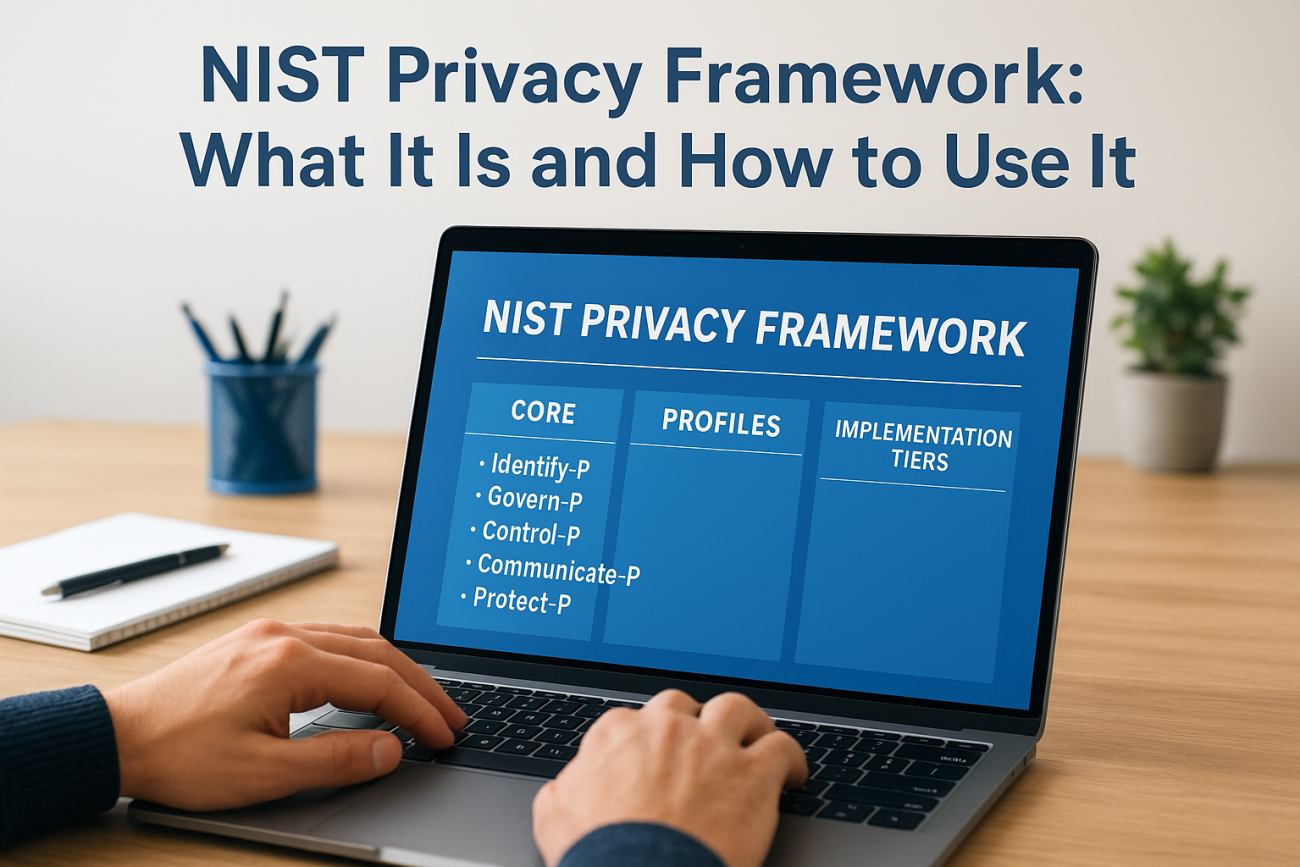
Every organization that collects, stores, or processes personal data faces a fundamental question: how do you manage privacy risk without grinding operations to a halt? The NIST Privacy Framework provides a structured, flexible answer, a voluntary tool developed by the National Institute of Standards and Technology that helps organizations identify and manage privacy risks while still building products and services people actually want to use.
Unlike rigid regulatory checklists, the framework gives you a common language and adaptable structure for privacy decision-making. It’s particularly relevant for organizations that handle employee data, customer records, or learner information through platforms like an LMS. At Atrixware, we build Axis LMS with compliance at the forefront, supporting standards like GDPR and FDA 21 CFR Part 11, so we understand firsthand how critical it is to operationalize privacy principles across your technology stack and training programs.
This guide breaks down what the NIST Privacy Framework actually is, walks through its core components, and shows you how to put it into practice within your organization. Whether you’re starting from scratch or tightening up an existing privacy program, you’ll leave with a clear path forward for managing privacy risk effectively.
What the NIST Privacy Framework covers
The NIST Privacy Framework is built around one central idea: privacy risk is not just a legal problem, it’s an operational one. The framework covers how organizations can identify, assess, and manage privacy risks that emerge when they collect or process personal data, from employee records to customer transactions to learner profiles. It’s designed to work across industries and organization sizes, so there’s no assumption that you’re a healthcare giant or a government agency. The framework applies the moment your organization touches personal information in any meaningful way.
Privacy risk goes beyond compliance checkboxes – the NIST Privacy Framework treats it as a continuous operational discipline that touches every part of your organization.
How the framework is organized
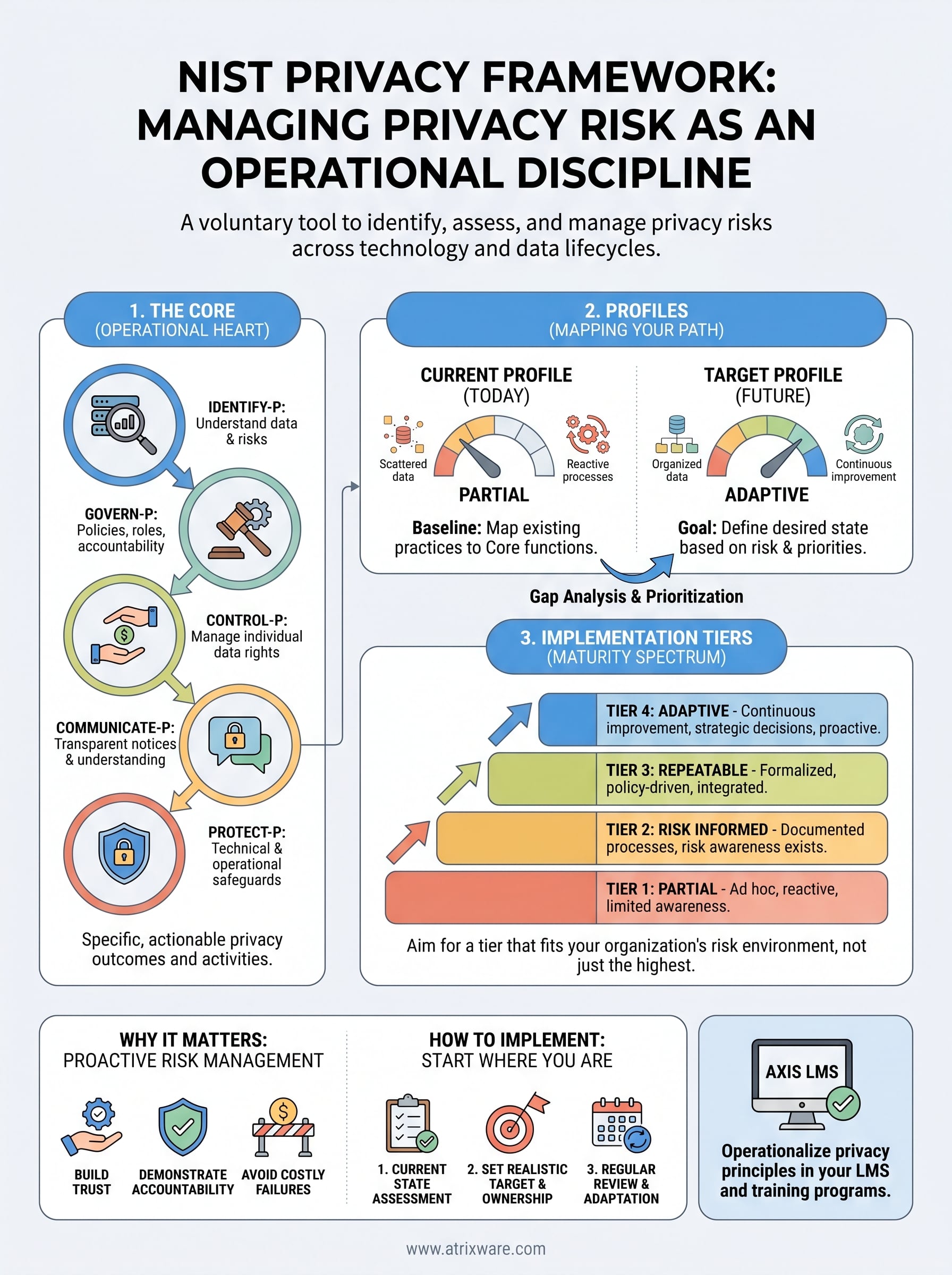
The framework organizes privacy management into three main components: the Core, Profiles, and Implementation Tiers. The Core is the operational heart – it lays out privacy outcomes and activities across five functions: Identify-P, Govern-P, Control-P, Communicate-P, and Protect-P. These functions give you a structured way to think about privacy activities without prescribing exactly how you must carry them out.
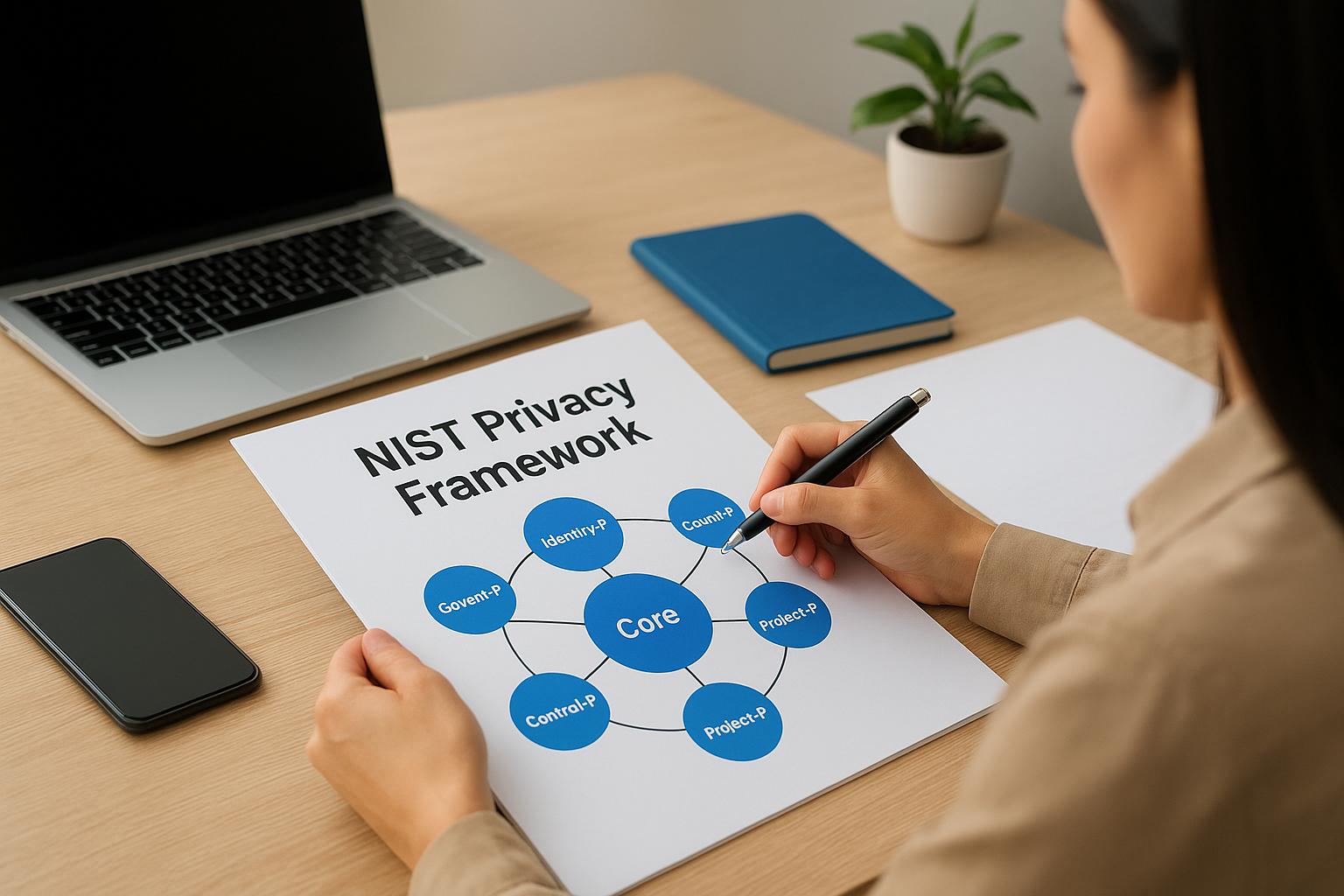
Profiles let you map your current privacy practices against a target state, so you can see where gaps exist and prioritize improvements. Implementation Tiers describe how mature and integrated your privacy risk management is, ranging from partial, reactive approaches to fully adaptive, organization-wide programs. Together, these three components give you a practical roadmap rather than an abstract ideal.
What the framework does not do
The framework is explicitly voluntary, which means it does not replace laws or regulations like GDPR, HIPAA, or CCPA. You still need to meet those legal obligations on their own terms. What the NIST Privacy Framework does instead is give you a structured foundation that makes compliance easier because you’ve already built coherent privacy practices into your operations.
It also doesn’t tell you exactly which technical controls to deploy or which vendors to use. The framework is technology-neutral and sector-agnostic, so it works whether your organization runs training on an LMS, manages HR records in a cloud platform, or processes transactions through an e-commerce system. Your specific tools and technical choices remain yours to make.
Who the framework is designed for
Organizations of all sizes and sectors can use the framework, but it’s especially valuable for teams that handle personal data as a regular part of delivering services. That includes HR departments managing employee records, L&D teams running learner data through training platforms, compliance officers tracking certification data, and IT teams overseeing data infrastructure.
The framework also works well for organizations that need to demonstrate accountability to customers, regulators, or partners. Because it provides a common language and documented structure, you can use it to show stakeholders that your privacy practices are intentional and systematic rather than improvised.
Why the NIST Privacy Framework matters
Privacy failures are expensive. Data breaches, regulatory fines, and eroded customer trust all carry real costs, and organizations that treat privacy as an afterthought tend to learn that lesson the hard way. The NIST Privacy Framework gives you a proactive approach instead, helping your team build structured, defensible privacy practices before problems surface rather than scrambling to respond after the fact.
Privacy risk is a business risk
Most organizations think about privacy primarily in terms of legal exposure, but the actual risk runs deeper. When personal data is mishandled, you don’t just face potential fines, you also risk damaging the trust that drives customer retention, partner relationships, and employee confidence. A learner who discovers their training data was poorly secured is unlikely to engage with your platform the same way again.
The framework pushes you to treat privacy risk management the same way you treat financial or operational risk: systematically, with clear ownership and documented processes. That shift in mindset is what separates organizations that consistently protect personal data from those that rely on luck.
Treating privacy as a business risk rather than a legal formality is the single most effective shift your organization can make toward sustainable compliance.
It gives you a structure regulators respect
Regulators across industries expect organizations to demonstrate intentional, documented privacy practices rather than just claim they take privacy seriously. The NIST Privacy Framework provides exactly that kind of documented structure. When a regulator or auditor asks how you manage privacy risk, you can point to a recognized, well-structured approach rather than piecing together an ad hoc explanation.
This matters beyond formal audits too. Customers and partners increasingly ask vendors how they handle personal data before signing contracts. Having a coherent privacy program grounded in a recognized framework gives you a credible, consistent answer. For organizations running training programs on an LMS, that accountability extends to protecting learner records, certification data, and HR information at every stage of the data lifecycle.
Core, profiles, and implementation tiers
The NIST Privacy Framework organizes its guidance into three distinct structural components: the Core, Profiles, and Implementation Tiers. Each one plays a different role in helping your organization build and measure a privacy program, and understanding how they interact is key to using the framework effectively rather than treating it as a static document you file away after an audit.
The Core
The Core is where the actual work happens. It provides a catalog of privacy outcomes and activities organized across five functions: Identify-P, Govern-P, Control-P, Communicate-P, and Protect-P. Each function breaks down further into categories and subcategories, giving you specific, actionable privacy activities to evaluate and adopt based on your organization’s context, not a mandatory checklist where every item applies equally to everyone.
Each function in the Core is designed to address a different stage of the privacy lifecycle, from understanding what data you hold to governing how it gets used to protecting it against unauthorized access. You select and prioritize activities from the Core based on your risk environment, which makes the framework adaptable to organizations of very different sizes and industries.
Profiles
Profiles let you document where your organization currently stands on privacy and where you want to be. You build a Current Profile by mapping your existing practices to the Core’s activities, then create a Target Profile that reflects your desired privacy posture. Comparing the two reveals specific gaps you need to close and helps you prioritize improvements based on business priorities and actual risk tolerance.
Your Target Profile should reflect realistic goals for your organization rather than a theoretical ideal that ignores operational constraints.
Profiles are also useful for communicating with stakeholders. A well-documented profile shows leadership, auditors, and partners that your privacy decisions are deliberate and grounded in a recognized structure.
Implementation Tiers
Implementation Tiers describe how mature and integrated your privacy risk management practices are, ranging from Tier 1 (Partial), which represents ad hoc and reactive approaches, to Tier 4 (Adaptive), where privacy risk management shapes strategic decisions and responds continuously to new conditions.
Reaching the highest tier is not the goal for every organization. The real objective is to operate at the tier that fits your risk environment and capacity, so your privacy program stays sustainable rather than becoming a burden your team cannot maintain.
The five core functions explained
The NIST Privacy Framework builds its Core around five functions that together cover the full scope of privacy risk management. Each function addresses a distinct aspect of how your organization handles personal data, from the moment you collect it to how you protect and communicate about it. Think of these functions as interconnected disciplines rather than sequential steps, since your organization works across all of them simultaneously as your program matures.
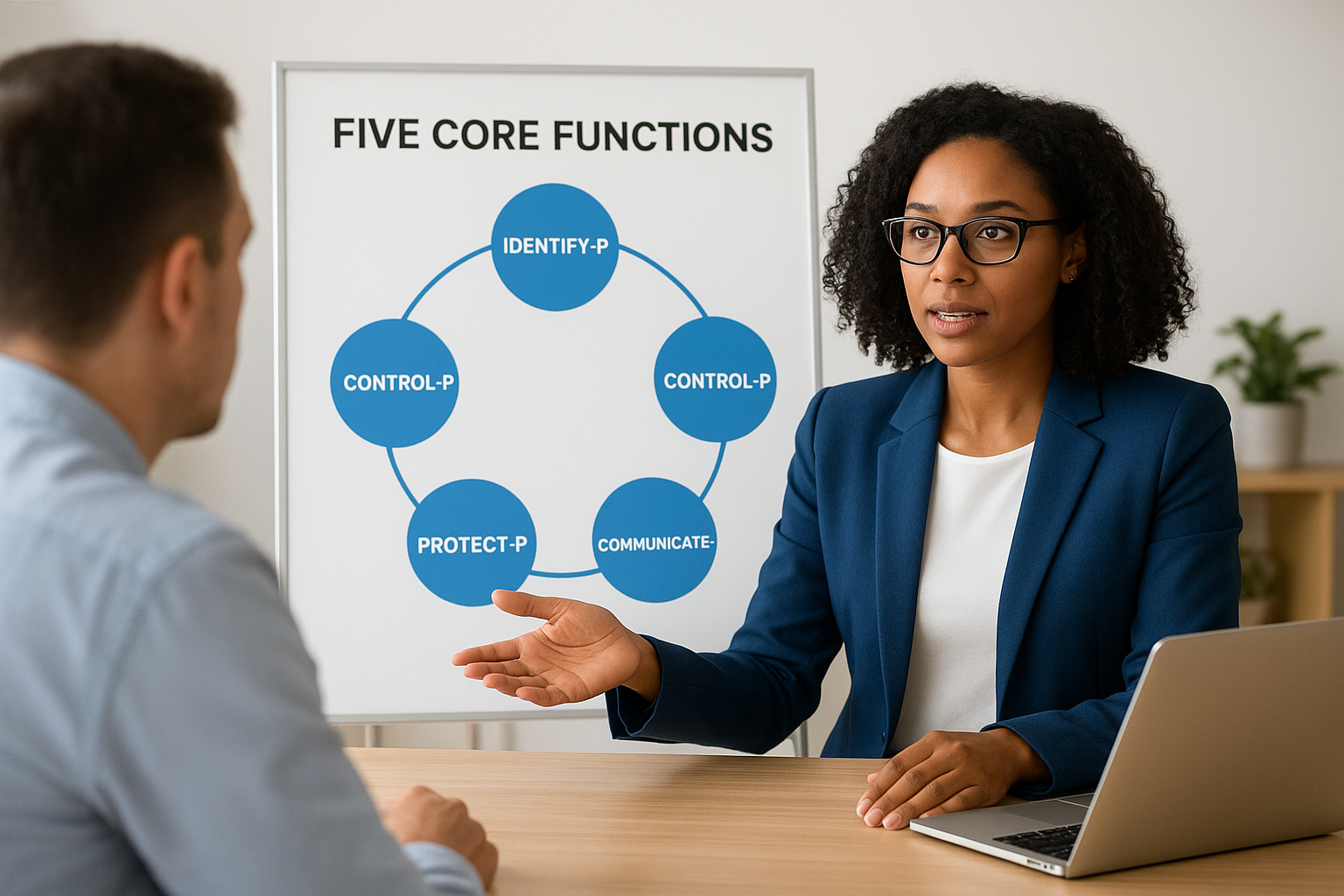
Identify-P and Govern-P
Identify-P focuses on helping your organization understand the privacy risks tied to your data processing activities. You map out what personal data you hold, who processes it, and under what conditions, so you can make informed risk decisions before problems occur rather than after.
Govern-P is where organizational accountability takes shape. It covers the policies, processes, roles, and responsibilities your organization puts in place to manage privacy across all operations. Without strong governance, even well-designed technical controls tend to collapse under day-to-day operational pressure.
Control-P and Communicate-P
Control-P addresses the mechanisms your organization uses to give individuals meaningful rights over their personal data, such as access requests, correction rights, and consent management. This function is especially relevant if your organization operates under GDPR or CCPA obligations.
Building rights management into your workflows from the start is far more sustainable than scrambling to handle requests on an ad hoc basis.
Communicate-P ensures that both your organization and the individuals whose data you process share an accurate understanding of how data is used. This covers privacy notices, transparency disclosures, and the ongoing communication that builds trust with learners, employees, and customers.
Protect-P
Protect-P covers the technical and operational safeguards your organization deploys to prevent breaches and unauthorized data access. This function connects directly to your broader security practices, including your LMS access controls and data minimization policies.
Strong Protect-P implementation typically includes these measures:
- Access controls: Restricting data access based on role and need
- Data minimization: Collecting only what a specific purpose requires
- Encryption: Securing data at rest and in transit
- Audit logs: Tracking who accessed or changed personal data and when
How to implement the framework in your org
Implementing the NIST Privacy Framework does not require a complete overhaul of your existing operations. You start where you are, assess your current practices against the Core’s five functions, and build from there in a way that fits your organization’s actual risk environment and operational capacity.
Start with a current state assessment
Your first step is to map your existing privacy practices to the Core’s categories and subcategories. Go through each function – Identify-P, Govern-P, Control-P, Communicate-P, and Protect-P – and document what your organization currently does in each area. You do not need to fill every gap immediately; the point is to build an honest baseline so your decisions about where to invest time and resources are grounded in reality rather than assumptions.
This assessment works best when you involve people from across your organization, not just your legal or IT team. HR managers, training coordinators, and platform administrators all handle personal data and can surface practices and gaps that a siloed review would miss.
Involving cross-functional stakeholders in your initial assessment produces a far more accurate picture of your actual privacy posture.
Set a realistic target profile and assign ownership
Once you have your current profile documented, build a target profile that reflects where you need to be given your risk environment, regulatory obligations, and business priorities. Keep the target realistic. Closing your most significant gaps first matters far more than racing toward the highest implementation tier immediately.
From there, assign clear ownership to each privacy function. Somebody needs to be responsible for governance, somebody for communications, and somebody for technical controls. Without named owners, privacy responsibilities tend to drift or get absorbed into other work until a problem forces attention back to them.
Track your progress against the target profile on a regular review cycle, whether quarterly or annually, so your privacy program stays current as your data practices, technology stack, and regulatory landscape evolve. Organizations running learner data through a platform like Axis LMS benefit from building these review cycles directly into their compliance and training management workflows.
Next steps for your privacy program
The NIST Privacy Framework gives you a proven structure, but the value only comes when you act on it. Start by completing your current state assessment this quarter, assigning clear owners to each core function, and setting a target profile that reflects your actual risk environment rather than an aspirational ideal you cannot sustain over time.
Your program will drift without a regular review cycle built into your operations. Build privacy review checkpoints into your existing compliance workflows so your program stays current as your data practices and technology stack change. If your organization manages learner data, certification records, or HR information through a training platform, those systems deserve direct attention in your Protect-P and Govern-P work. Axis LMS is built with compliance features designed to support exactly this kind of structured privacy approach. Take the LMS readiness quiz to find out where your training technology stands today.
