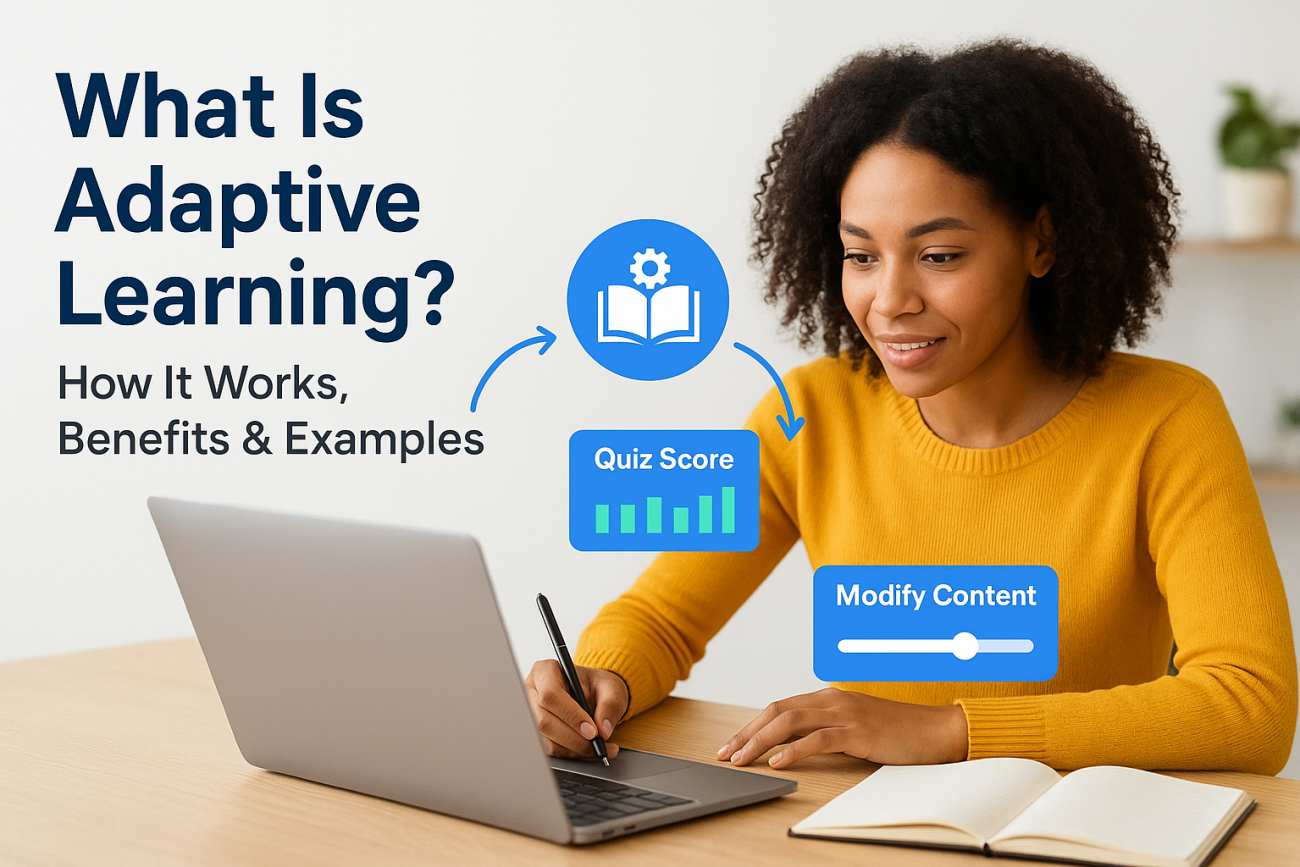
Not every learner moves at the same pace, retains information the same way, or starts with the same knowledge base. Traditional training programs ignore this reality, they deliver the same content, in the same order, to everyone. What is adaptive learning? It’s an approach that uses technology to adjust training content in real time based on how each individual performs, responds, and progresses.
Adaptive learning systems analyze learner behavior, things like quiz scores, time spent on modules, and repeated mistakes, then modify the difficulty, sequence, or type of content accordingly. The result is a personalized learning path that meets each person where they actually are, rather than where a course designer assumed they’d be. For organizations managing employee onboarding, compliance training, or customer education, this shift from one-size-fits-all to individualized instruction can dramatically improve outcomes.
At Atrixware, we build Axis LMS to help businesses deliver smarter, more effective training at scale. This article breaks down how adaptive learning works, the specific benefits it brings to corporate training programs, and real-world examples of organizations putting it into practice.
What Adaptive Learning Is and Is Not
The term "adaptive learning" gets used loosely, and that looseness creates real confusion. Some platforms label any course with a branching scenario as adaptive. Others apply the term to basic personalization features like letting learners choose their own module order. Understanding what adaptive learning actually means, and what it does not mean, helps you make smarter decisions about your training strategy and avoid investing in tools that promise more than they deliver.
What adaptive learning actually is
At its core, adaptive learning is a data-driven instructional approach where the system continuously collects information about a learner’s performance and adjusts the experience in real time. When you answer a question incorrectly, the system does not simply move on. It routes you to remedial content, additional practice, or an alternative explanation that addresses the specific gap in your understanding. Every interaction feeds back into the system, which refines the learning path forward before presenting the next piece of content.
Adaptive learning treats training as a dynamic conversation between the learner and the content, not a fixed script everyone reads the same way.
Think of it as a continuous feedback loop. Your responses signal where your understanding breaks down, and the system closes those gaps before introducing new material. This is what is adaptive learning in its clearest form: a system that responds to the individual based on demonstrated behavior, not a course designer’s assumption about where the average learner should be at a given point.
What adaptive learning is not
Adaptive learning is not the same as self-paced learning, even though the two often appear together in training programs. Self-paced learning lets you move through content on your own schedule, but the content itself stays identical for everyone. Adaptive learning, by contrast, modifies the content, difficulty level, or sequence based on actual performance data, not just personal pace or preference.
It is also not the same as personalized learning, though the terms overlap frequently. Personalized learning often refers to choices a learner makes consciously, such as selecting topics of interest or setting individual goals. Adaptive learning is driven by behavioral signals and system algorithms, not learner preferences alone. The system makes instructional decisions on your behalf based on what your performance data demonstrates, not what you think you want to study next.
Finally, adaptive learning is not a single product or off-the-shelf technology. It is a pedagogical approach that different platforms implement to varying degrees of sophistication, which means the quality and depth of the adaptation can differ significantly from one system to the next.
How Adaptive Learning Works
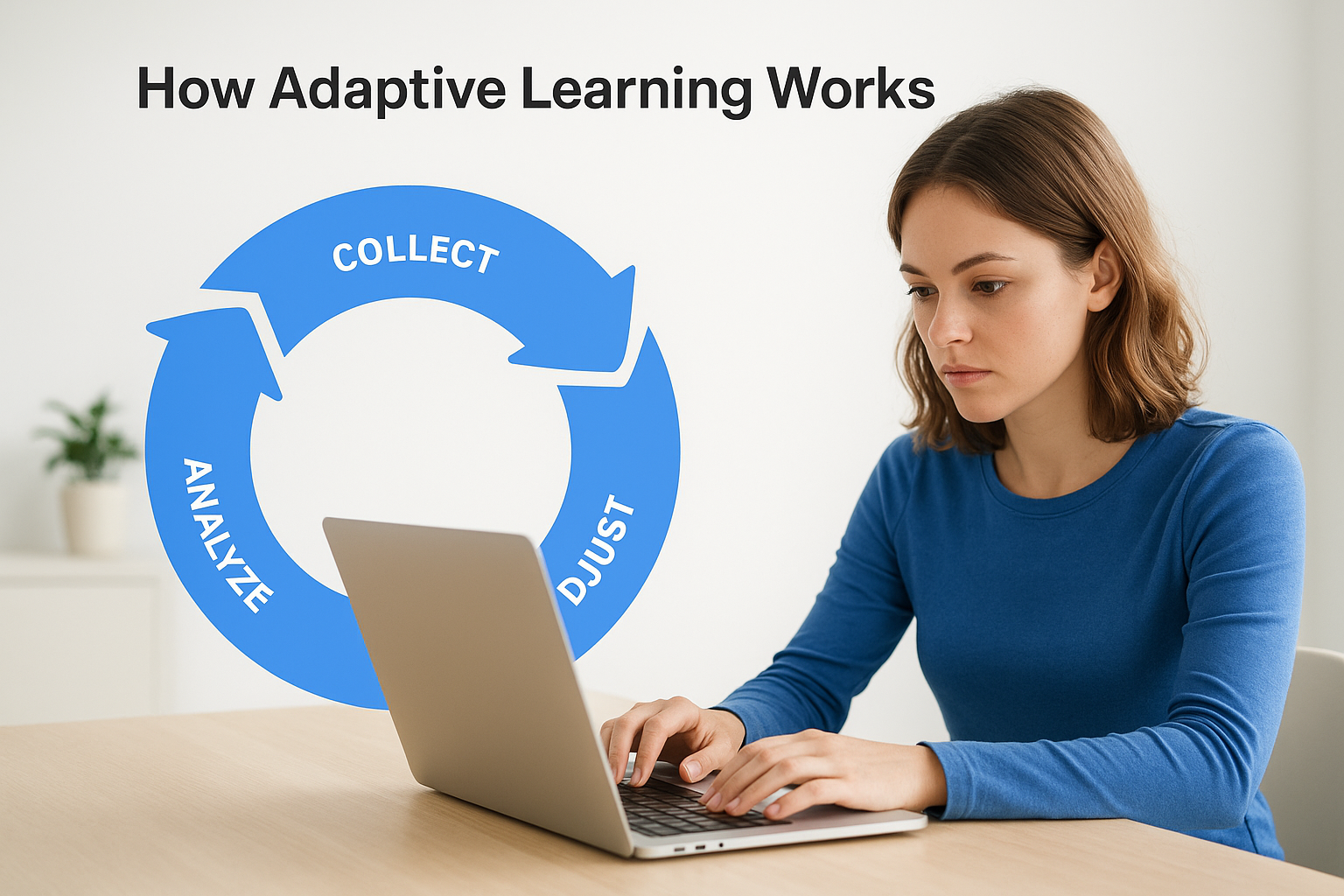
Understanding what is adaptive learning becomes clearer when you look at the mechanics underneath it. At its core, the system runs on a continuous cycle: collect data, analyze it, and adjust the content path before you see the next screen. That cycle repeats with every interaction you complete, building a more accurate picture of your knowledge and skill gaps over time.
The Data Collection Layer
The system starts by tracking every response you give, including the answers you select, how long you spend on each question, which items you skip, and how often you retry a section. These signals go beyond a simple right-or-wrong score. Time-on-task data can reveal whether you struggled before landing on the correct answer, even if the answer itself appears correct. That granular input is what separates genuine adaptation from basic quiz branching.
The more interaction data the system captures, the more precisely it can identify where your understanding breaks down and route you to the content that fixes it.
The Decision Engine
Once the system collects your performance data, an algorithm compares your results against a predefined competency model that maps skills, knowledge areas, and learning objectives. Based on that comparison, the engine decides how to route your next learning experience. Your next piece of content is not predetermined; it is calculated based on what you just demonstrated. This is what makes adaptive learning fundamentally different from a static course that every learner completes in the same sequence.
The engine typically adapts content in three ways:
- Routing you to remedial material when you miss key concepts
- Increasing difficulty when you consistently perform well
- Presenting the same concept in a different format, such as a scenario or video, when your response patterns suggest the original delivery did not land
Why Adaptive Learning Matters
Understanding what is adaptive learning gets you only so far if you cannot connect it to real business outcomes. Training time is expensive, and any system that wastes it by repeating material learners already know costs your organization money, attention, and momentum. Adaptive learning addresses that problem directly by routing learners only through content they actually need, which compresses time-to-competency without sacrificing depth or rigor. For organizations running onboarding, compliance training, or product certification at scale, that efficiency gain is significant.
When learners spend less time covering ground they have already mastered, they have more capacity to focus on the concepts that actually challenge them.
It Closes Knowledge Gaps Before They Become Problems
In compliance training and technical onboarding, a missed concept in week one often compounds into a larger performance gap by week three. Adaptive learning catches those gaps early because it evaluates performance at a granular level throughout the course, not just at the end. Instead of waiting until a final assessment to discover that someone misunderstood a key procedure, the system identifies the gap in real time and delivers targeted content that corrects the misunderstanding before the learner moves forward. That intervention keeps small errors from growing into costly ones.
It Keeps Learners Engaged
Learners disengage when training feels either too easy or too difficult. Both conditions signal a mismatch between the content and the learner’s current level. Adaptive learning keeps difficulty calibrated to each person’s demonstrated performance, which maintains a level of challenge that encourages focus without triggering frustration. When your learners feel that the material is relevant to where they actually are, completion rates and knowledge retention both improve because the experience feels purposeful rather than generic and repetitive.
Examples of Adaptive Learning in Practice
Seeing what is adaptive learning in action makes the concept concrete. Real-world applications span industries from healthcare to financial services, and the common thread across all of them is the same: the system responds to individual performance data rather than delivering a fixed curriculum to every learner regardless of what they already know or how quickly they retain new material.
Compliance Training
Compliance training is one of the clearest use cases for adaptive learning. When your organization runs mandatory training on topics like data privacy or workplace safety, not every employee starts from the same baseline. A new hire might need foundational explanations, while a senior manager may have completed similar training in a previous role. An adaptive system identifies each person’s existing knowledge through an initial diagnostic, then routes them through only the content that fills actual gaps. This means experienced employees are not sitting through material they mastered years ago, while newer team members still receive the full depth of instruction they need.
Adaptive compliance training reduces unnecessary seat time for experienced employees while ensuring newer staff never skip the foundational concepts that regulatory requirements demand.
Product and Customer Education
Customer training programs benefit from adaptive learning when your product serves users with different technical backgrounds. A software company, for example, can deploy an adaptive course that routes technical users directly to advanced configuration modules while guiding less experienced users through foundational setup steps first. Both groups reach the same outcome, working proficiency with the product, but through paths calibrated to their actual starting point. This approach reduces support tickets, improves product adoption rates, and delivers a more satisfying first experience for every customer segment you serve.
How to Implement Adaptive Learning in Training
Putting what is adaptive learning into practice requires more than selecting a platform. You need to lay groundwork before you build a single course module, because adaptive systems rely on structured inputs to make meaningful routing decisions. The clearer your learning objectives and competency definitions are from the start, the more accurately the system can personalize each learner’s path.
Map Competencies Before You Build
Adaptive systems require a clear competency model to route learners correctly. List every skill and knowledge area your training covers, then assign priority based on business impact. Correctly interpreting a regulatory requirement carries more weight than knowing its legislative history, so your model should reflect that hierarchy. Without this map, the system cannot determine which gaps to address first or how aggressively to reinforce missed concepts.
When building your competency map, prioritize these three elements:
- Core knowledge areas the learner must demonstrate before advancing
- Skill thresholds that trigger remedial routing when missed
- Priority weighting for each competency based on job impact
Design Assessments That Generate Actionable Data
Your assessments are the data source that drives every adaptive decision the system makes. Write questions that isolate specific concepts rather than combining multiple ideas in a single item, because bundled questions obscure exactly where a learner’s understanding breaks down. Scenario-based items produce richer behavioral signals than recall questions because they reveal whether a learner can apply knowledge, not just recognize it.
The quality of your adaptation is only as strong as the quality of the data your assessments generate.
Choose the Right LMS
The LMS you select needs to support competency-based routing and real-time content adjustment natively, not as a bolt-on feature. Verify that the platform tracks granular response data rather than just module completion status.
Also confirm that your existing content library is compatible with the platform’s standards before you commit. Rebuilding your entire content catalog to match a new system’s format adds time and cost that delays your launch.
Final Takeaways
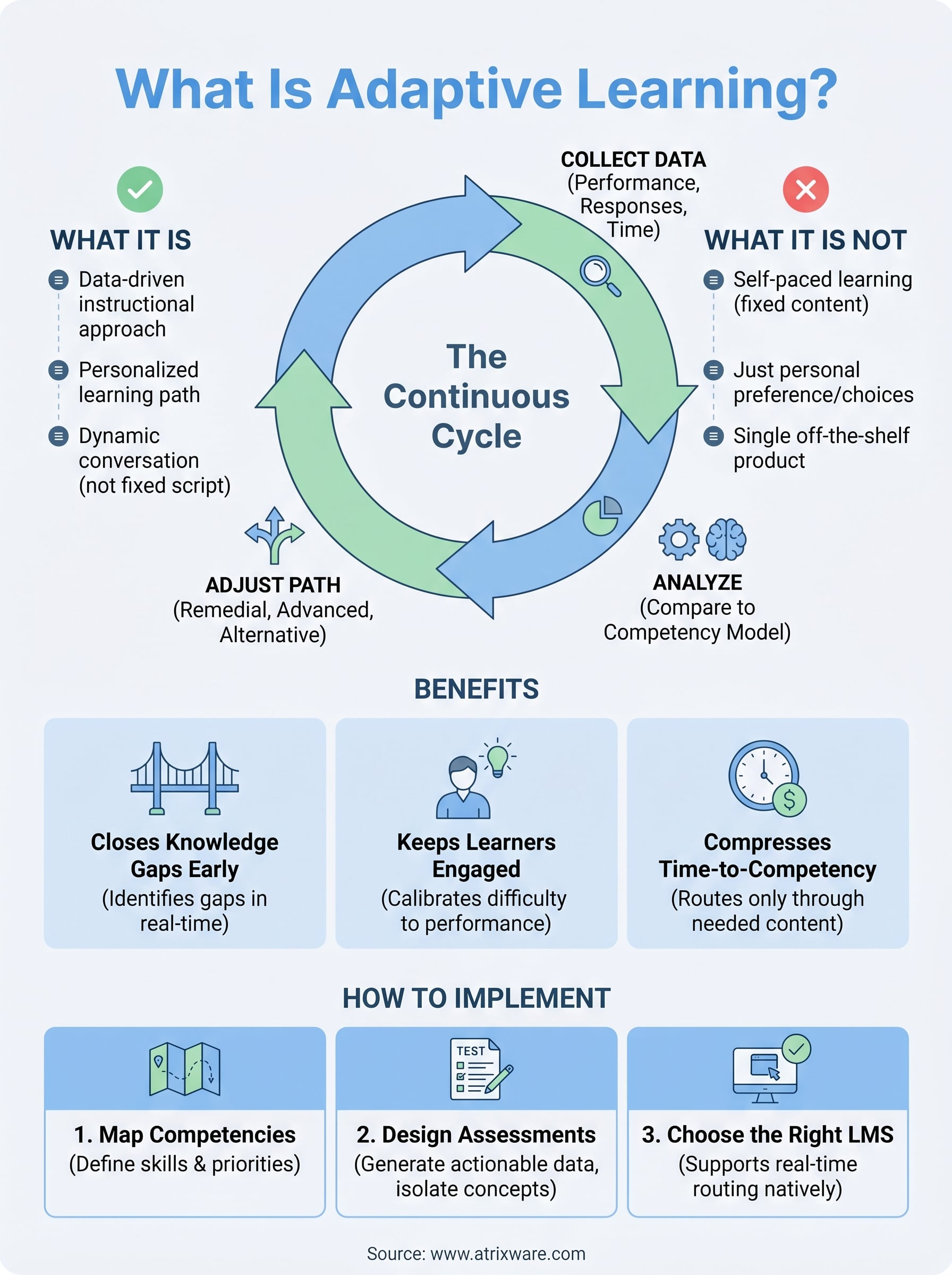
What is adaptive learning, in practical terms? It is a system that collects performance data in real time and uses it to route each learner through content that matches their actual skill gaps, not a standardized path built around an average learner who does not exist. When you implement it correctly, it reduces wasted seat time, improves knowledge retention, and catches skill gaps early before they compound into larger performance problems.
Getting there requires more than picking the right platform. You need a solid competency model, assessments that generate actionable data, and an LMS that supports real-time content routing natively. Every piece of infrastructure you build before launch directly determines how precisely your system can adapt. If you are ready to see how a purpose-built platform handles this in practice, explore the Axis LMS admin demo and walk through the features yourself.
