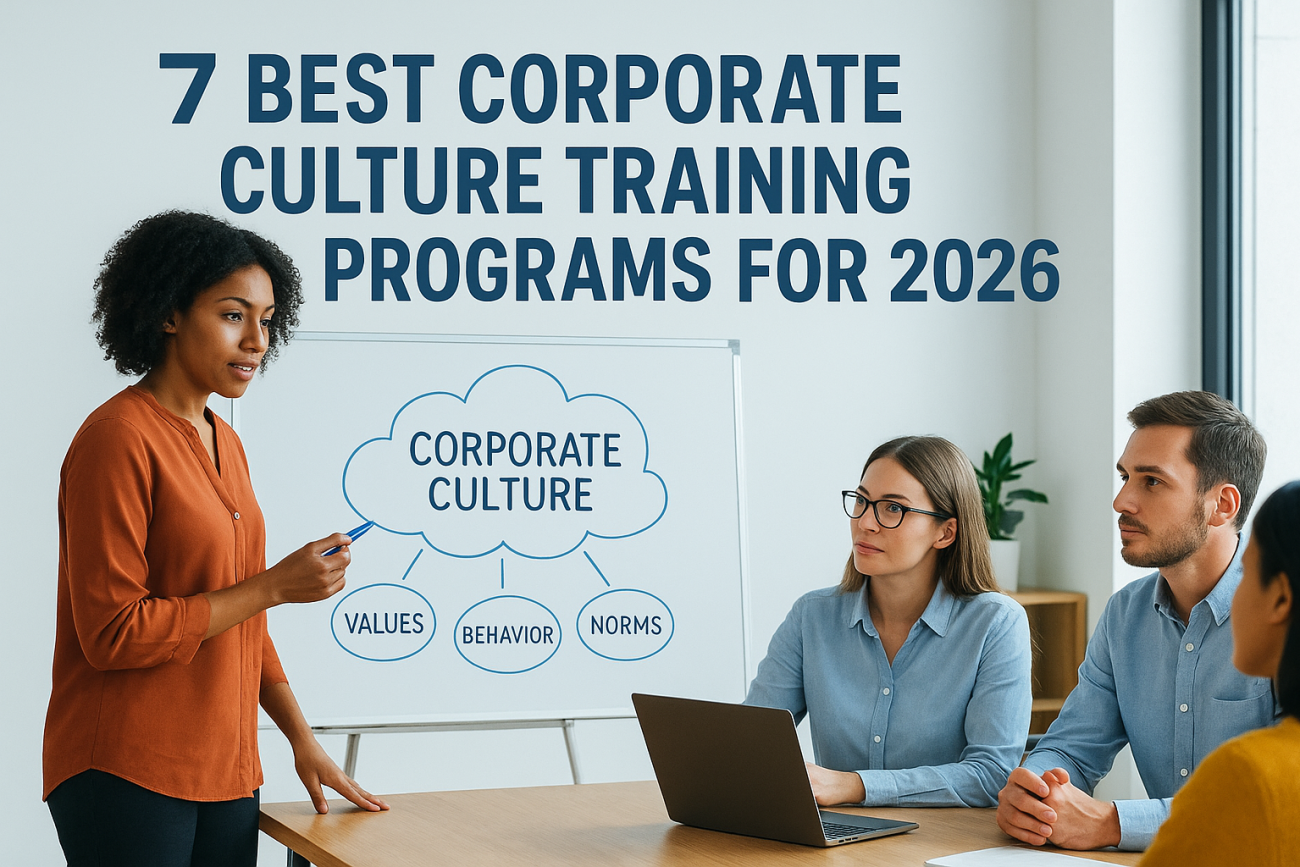
Culture doesn’t fix itself. You can write a mission statement, hang it on the wall, and still watch turnover climb because nobody actually trained managers on how to live it out day to day. If you’re searching for training corporate culture programs, you already know the gap between stated values and everyday behavior is where good companies quietly fall apart, and that an LMS can help build a positive company culture by closing it.
This list answers a specific question: which programs actually change how people behave at work, not just how they feel about a slide deck. We looked at content quality and how each program handles manager accountability, since culture lives or dies at the team-lead level, not in HR’s inbox, which is the same reason companies train their next managers through a leadership development program.
Below you’ll find seven programs worth your 2026 training budget, covering everything from onboarding-stage values training to ongoing reinforcement for existing teams. We also cover what to look for in delivery format and how to measure the effectiveness of an LMS system so you know whether the training actually moved the needle, something a flexible LMS like Axis makes far easier once you’ve picked your program and need to roll it out, measure engagement, and report results across departments.
1. Axis LMS for company-wide culture training
What it covers
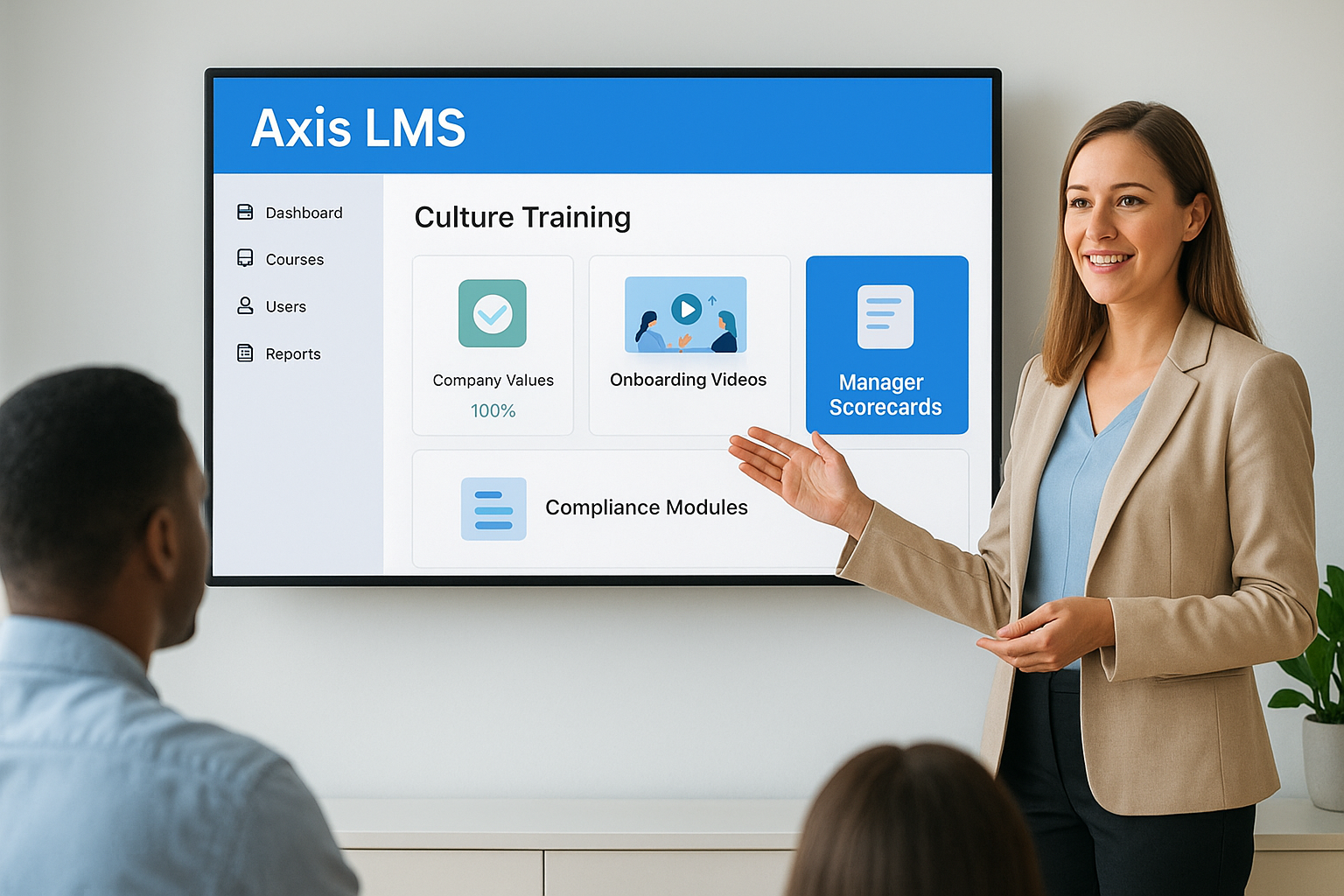
Axis LMS isn’t a pre-built culture course you sit through once. It’s the delivery system that lets you build your own training corporate culture program and actually track whether it sticks. You upload your values framework, onboarding videos, manager scorecards, and compliance modules, then push them out to every department through a single dashboard. The Axis LMS platform for employee training handles the drag-and-drop course building, so your L&D team can turn a two-hour culture workshop into a self-paced module without touching code. Reporting tools then show you exactly who finished the training, who’s stalled halfway through, and which teams need a manager to step in.
Culture training only works if you can prove it happened and measure what changed afterward.
Who it’s for
Axis suits organizations that need culture consistency across multiple locations, departments, or a mix of in-office and remote staff, which means factoring organizational culture into e-learning from the start. HR managers building a formal onboarding pipeline use it to pair values training with compliance modules like GDPR or FDA 21 CFR Part 11 in one workflow. Sales enablement and channel training teams like it because the same system that teaches culture also handles partner certification, so nothing lives in three different tools.
Format and duration
There’s no fixed course length here since you control the content. Most clients build a culture track running four to six weeks during onboarding, then follow with quarterly refreshers of 20 to 30 minutes. The platform supports virtual classroom sessions alongside self-paced video and quizzes by integrating live training into Axis LMS, and automated communication tools nudge learners who fall behind without a manager having to chase anyone down manually.
Pricing
Axis LMS pricing is customized based on user count, feature set, and whether you need SSO, API integrations, or e-commerce for selling training externally. Small teams typically start in the low hundreds per month, while enterprise deployments with HR system syncing and custom branding run higher. Contact Atrixware directly for Axis LMS pricing plans matched to your headcount and integration needs, since bundling compliance and culture training into one license usually costs less than running separate tools.
2. Harvard’s building organizational cultures course
What it covers
Harvard Business School Online runs a course built around how leaders shape and shift organizational culture at scale, using case studies from real companies that rebuilt their values after a merger, scandal, or rapid growth spurt. The curriculum leans on Harvard’s case-method teaching, so instead of lecture slides you work through decisions made by actual executives and debate what you’d do differently. It’s a strong pick if you want workplace culture training grounded in research rather than motivational talk, since faculty tie every module back to published studies on trust, accountability, and behavior change.
A culture course only earns its price tag if it changes a decision you make next week, not just your opinion.
Who it’s for
This course targets senior leaders and HR executives who set culture strategy rather than the managers who execute it day to day. It suits a training corporate culture initiative aimed at the top of the org chart, where decisions about values actually get made.
Format and duration
The course runs fully online over roughly eight weeks, with weekly modules, discussion boards, and a handful of live cohort sessions. Expect four to six hours of coursework weekly, self-paced within each week’s deadline.
Pricing
Harvard Business School Online prices this course around $1,750, occasionally discounted for early enrollment or reflected in cohort-based university pricing. No LMS is included, so you’ll still need somewhere to track who finished it.
3. IE Business School’s building culture in a scale-up
What it covers

IE Business School built this program specifically for founders and executives navigating the messy stretch between 50 and 500 employees, when the culture that worked with a founding team of ten starts cracking under hiring pressure. The course walks through scale-up culture frameworks, covering how to codify unwritten norms before new hires dilute them and how to redesign onboarding so culture survives rapid headcount growth. Unlike broad training corporate culture courses aimed at any company size, this one assumes you’re already past the startup stage and racing to professionalize without losing what made the team work in the first place.
Culture breaks fastest during hypergrowth, not decline, so scale-up leaders need training built for that specific moment.
Who it’s for
Founders, COOs, and VPs of People at venture-backed companies get the most from this course, since the case studies focus on funding rounds, rapid hiring, and the tension between speed and cohesion. Slower-growing established firms will find less relevance here.
Format and duration
Sessions run as a compact, cohort-based online program lasting roughly three weeks, with live faculty-led discussions supplementing recorded lectures. Expect three to five hours weekly, plus a peer group project applying the framework to your own company.
Pricing
Pricing sits in the $1,200 to $1,500 range depending on cohort timing, with details published directly on the IE Business School executive education site.
4. LinkedIn Learning’s fueling your company culture
What it covers
LinkedIn Learning offers a short, practical course aimed at managers who need a quick primer on training corporate culture without committing to a semester-long program. The lessons cover how to define culture in concrete behavioral terms, how to spot when stated values and actual practice have drifted apart, and how to run team conversations that surface friction before it turns into resignations. It’s less academic than the university courses on this list and more of a tactical toolkit you can apply the same afternoon you watch it.
A one-hour course that changes one meeting habit beats a semester course that changes none.
Who it’s for
Middle managers and team leads get the most value here, especially those who inherited a team culture rather than building one from scratch. HR generalists also use it as a quick refresher before rolling out a broader workplace culture training initiative internally.
Format and duration
The course runs under two hours total, split into short video segments of five to fifteen minutes each, fully self-paced with no live component. That makes it easy to assign as a prerequisite inside a longer onboarding track, especially if you create role-based learning paths for new crews rather than asking anyone to block off a full day.
Pricing
Access comes through a LinkedIn Learning subscription, which starts around $29.99 monthly or bundles into a LinkedIn Premium plan. There’s no standalone purchase option, so you’re paying for platform access rather than the single course.
5. Wharton’s power of team culture course
What it covers
Wharton’s online course zeroes in on team-level culture rather than the company-wide statements that dominate most training corporate culture programs. Faculty from the University of Pennsylvania walk through research on psychological safety, norms formation, and how small teams develop rituals that either reinforce or quietly undermine stated company values. The course is built around team culture dynamics, meaning you spend less time on mission statements and more time on how a specific team of eight people actually behaves under deadline pressure.
Culture lives inside teams first, and a course that ignores team dynamics is training the wrong unit.
Who it’s for
Middle managers and department heads running teams of five to twenty people benefit most, since the frameworks apply directly to daily standups, performance reviews, and conflict resolution. Executives looking for company-wide strategy should look elsewhere on this list.
Format and duration
The program runs asynchronously over four weeks through Wharton Online, requiring three to four hours weekly. There are no live sessions, though discussion forums let cohort members compare notes on applying frameworks to their own teams.
Pricing
Wharton prices the course around $1,400, occasionally bundled into broader executive education tracks at a discount. Details and enrollment dates are published on the Wharton Online site. As with the other university offerings here, you’ll need a separate system to track completion and tie it back to performance data.
6. Dale Carnegie’s free culture workshop
What it covers
Dale Carnegie runs a no-cost introductory workshop built around its classic principles of trust, communication, and leadership, repackaged for teams trying to fix a stalled training corporate culture initiative without spending a training budget on it first. The session covers how frontline behavior shapes employee engagement, how managers give feedback that actually lands, and how to spot the small daily habits that quietly erode trust between departments. It’s intentionally light on theory and heavy on role-play exercises, since Dale Carnegie’s whole model rests on practicing behavior change rather than just discussing it.
Free training only earns its keep if it changes a habit before the invoice for the paid course arrives.
Who it’s for
Small business owners and HR generalists testing the waters before committing to a paid program get the most value here. It also works as a low-risk way to gauge whether your management team will actually engage with culture training before you invest in something longer.
Format and duration
Sessions run as a single live webinar, typically ninety minutes, hosted periodically throughout the year with limited seats per cohort. Recordings sometimes become available afterward, though live registration guarantees a spot.
Pricing
The workshop costs nothing to attend, though Dale Carnegie uses it as an entry point toward paid, longer-format leadership and culture programs. Check the Dale Carnegie course catalog for upcoming session dates, since availability rotates and doesn’t stay open year-round.
7. SHRM’s building a strong organizational culture toolkit
What it covers
SHRM built this as a resource kit rather than a single course, aimed at HR practitioners who need a culture audit framework they can run internally without hiring outside consultants. The toolkit includes assessment templates, sample survey questions, and step-by-step guidance for diagnosing where your training corporate culture effort is breaking down, whether that’s onboarding, manager behavior, or recognition programs. SHRM leans on its own research base and member surveys, so the recommendations come backed by data pulled from thousands of HR departments rather than a single case study.
A toolkit only works if it hands you a diagnosis, not just a definition of culture.
Who it’s for
HR generalists and people-ops teams at small and mid-sized companies get the most out of this, especially those without budget for a dedicated organizational culture consultant. It suits organizations already members of SHRM, since much of the toolkit sits behind member access.
Format and duration
Unlike the university courses above, there’s no fixed schedule here. You download the materials and work through them at your own pace, typically over two to three weeks alongside an internal culture audit. Some content pairs with SHRM’s live webinars, though the core toolkit is self-directed.
Pricing
Access comes bundled into a SHRM membership, which runs roughly $259 annually for individuals. Corporate membership tiers cost more but include multiple seats, useful if several HR staff need access simultaneously.
Building a culture strategy that sticks
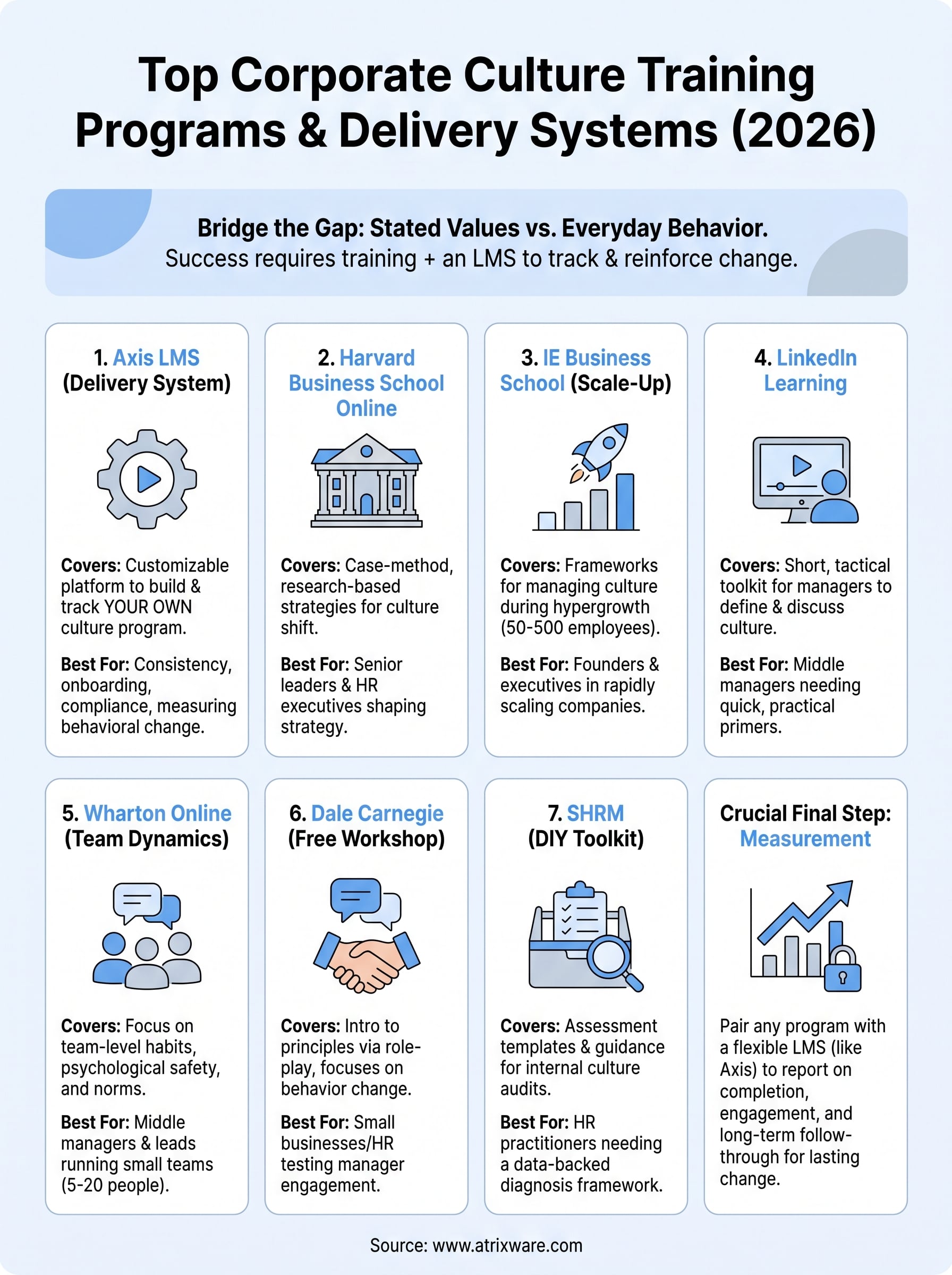
Picking a course off this list solves half the problem. The other half is delivery: getting the right people through the right modules, tracking who actually finished, and proving to leadership that the investment changed behavior instead of just checking a compliance box. Training corporate culture without a system to measure it is just an expensive workshop that fades by Friday.
Whichever program you choose, from Harvard’s case studies to Dale Carnegie’s free workshop, pair it with an LMS that reports honestly on completion, engagement, and manager follow-through. That’s the piece most companies skip, and it’s why culture initiatives stall out after the first quarter. Axis LMS was built to house exactly this kind of ongoing training, not a one-time course. If you’re not sure whether your current setup can handle it, check how ready your organization is for an LMS with our free assessment and find out where the gaps actually are before you commit to a program.
