
Regulatory deadlines don’t wait for you to find the right course. Whether you’re closing a GDPR gap, meeting FDA 21 CFR Part 11 requirements, or just trying to keep your team’s certifications current, searching for compliance training courses online usually starts the same way: too many options, not enough clarity on which ones actually hold up during an audit.
This guide cuts through that noise. You’ll get a straight comparison of the strongest compliance online training courses available right now, including who each one fits best, what it costs, and where it falls short. No fluff about "industry-leading" platforms with nothing to back it up.
We built this list from the perspective of people who manage training day to day, not marketers. That means real attention to reporting depth, renewal tracking, and how well each option supports a full compliance and risk training program rather than a single one-off course. By the end, you’ll know exactly which platform matches your team’s size, industry, and regulatory pressure heading into 2026.
1. Axis LMS by Atrixware
Atrixware built Axis LMS around a simple idea: compliance training only counts if you can prove it happened. That’s the gap most generic learning platforms miss, and it’s why Axis LMS shows up first on any serious list of compliance training courses online.
What it offers
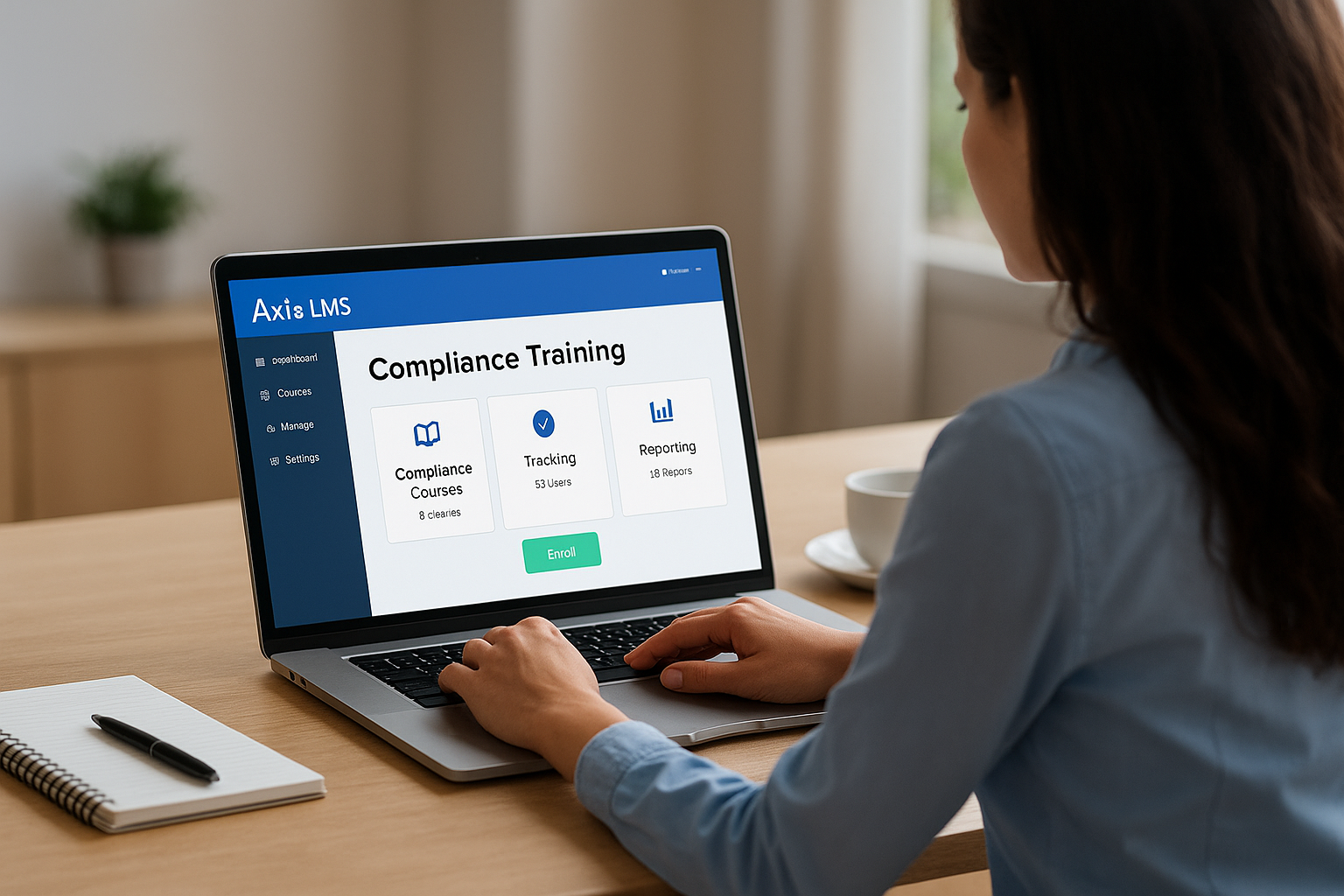
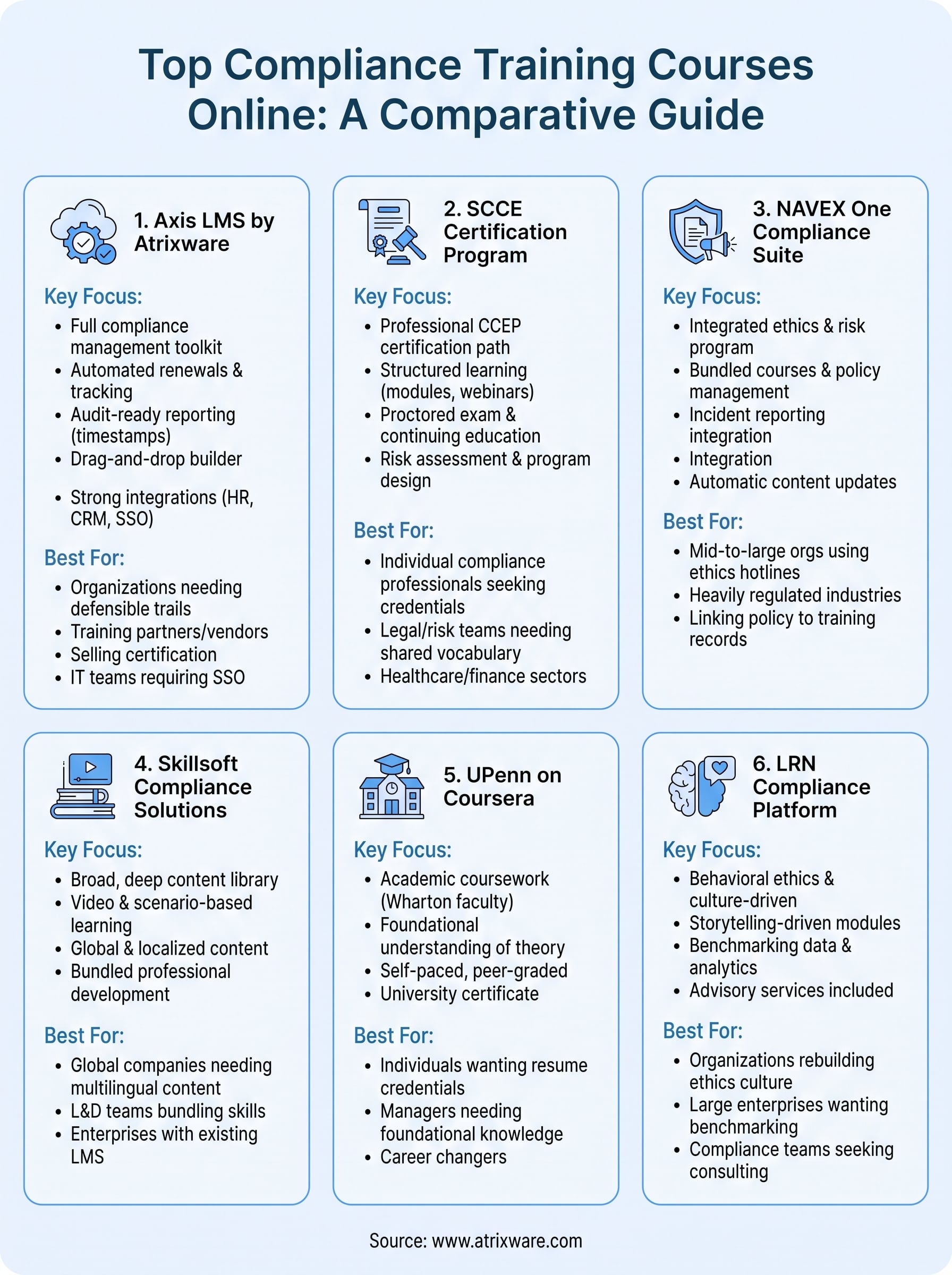
Axis LMS gives you a full compliance management toolkit, not just a course library. You get built-in tracking for GDPR, FDA 21 CFR Part 11, and other regulatory frameworks, plus automated renewal reminders for CEUs and re-certifications so nothing lapses quietly. The drag-and-drop course builder lets your team assemble or update training fast, without waiting on a developer. Reporting is where it separates from competitors: on-demand and scheduled reports pull exactly the audit trail a regulator or internal auditor expects, down to individual completion timestamps.
If your training platform can’t produce an audit-ready report in under a minute, it’s not really a compliance tool.
On the integration side, Axis LMS connects to HR and CRM systems like ADP, BambooHR, Salesforce, and Zoho, and supports SAML SSO through Okta, Azure, and Ping Identity. That matters once you’re managing compliance across departments instead of a single team. An integration builder with over 5,000 connections and a REST API round out the setup for organizations that need custom workflows.
Who it’s for
Axis LMS fits organizations that need more than a checkbox course, from mid-sized companies onboarding new compliance hires to enterprises managing training across multiple business units. It works well for:
- HR and compliance officers who need defensible audit trails
- Companies training channel partners or external vendors on regulatory standards
- Organizations selling compliance certification to customers or partners
- IT teams that require SSO and system-level integration before rollout
Small teams benefit too, since the interface doesn’t demand technical staff to run day to day.
Pricing
Atrixware doesn’t publish flat rate cards, because pricing scales with user count, hosting choice (cloud or self-hosted), and which modules you need, like e-commerce for selling training or advanced branding controls. You’ll get a quote after a short scoping call, and most organizations find it competitive against enterprise suites once you account for the built-in compliance features that other platforms charge extra for as add-ons.
2. SCCE certification program
The Society of Corporate Compliance and Ethics, better known as SCCE, takes a different approach than a course library. It’s built around professional certification, specifically the Certified Compliance and Ethics Professional (CCEP) credential, which carries real weight in regulated industries like healthcare and finance.
What it offers
Unlike a single course, SCCE runs a structured path toward CCEP or CCEP-International certification, combining self-paced modules, live webinars, and in-person conferences. Coursework covers risk assessment, investigations, and program design rather than one narrow regulation. Candidates sit for a proctored exam after completing the prerequisite training hours, and certification requires ongoing continuing education to stay active.
A certification means nothing to an employer if it expires quietly in a drawer, so SCCE ties renewal directly to continuing education credits.
Who it’s for
SCCE suits individual compliance professionals building a career credential more than organizations training an entire workforce. It works well for:
- Compliance officers who need a recognized credential for promotion or job searches
- Legal and risk teams wanting a shared vocabulary across departments
- Professionals in healthcare, finance, or government contracting where CCEP is often expected
Teams looking for a full compliance and risk training program across hundreds of employees will find this route too narrow and too slow.
Pricing
SCCE membership runs a few hundred dollars annually, and the CCEP exam itself costs several hundred more, with training materials and conference attendance priced separately. Budget $1,000 to $2,000 per person once you factor in prep courses and renewal fees over time.
3. NAVEX One compliance training suite
NAVEX built its name on ethics and risk management software before expanding into training, and that history shows in how the platform handles governance, risk, and compliance together. It’s less a course catalog and more a compliance and risk training program wrapped around policy management and incident reporting.

What it offers
NAVEX One bundles pre-built courses on harassment prevention, anti-bribery, and data privacy with a policy management module that tracks acknowledgments alongside training completions. That pairing matters for auditors who want to see policy sign-off and training records in one place, not two separate systems. Content updates automatically when regulations shift, so you’re not manually rewriting modules every time a state passes new legislation.
Training and policy tracking living in separate systems is how compliance gaps slip through unnoticed.
Who it’s for
NAVEX fits mid-size to large organizations that already use, or plan to use, its ethics hotline and risk assessment tools. It works well for:
- Legal and ethics teams managing whistleblower reporting alongside training
- Companies in heavily regulated industries needing frequent content updates
- Organizations that want policy acknowledgment tied directly to training records
Smaller teams without a dedicated compliance department often find the suite more than they need.
Pricing
NAVEX doesn’t list public pricing, and quotes depend on employee headcount, which modules you license, and whether you bundle the hotline and policy tools with training. Expect enterprise-level contracts, generally starting in the tens of thousands annually once you add multiple modules.
4. Skillsoft compliance solutions
Skillsoft has been in the corporate learning business for decades, and its compliance library reflects that scale. Rather than a niche tool, it’s a broad content library that plugs into whatever LMS you already run, which makes it a common pick for companies that want courses without switching platforms.
What it offers
Skillsoft’s compliance catalog covers workplace harassment, data security, anti-corruption, and industry-specific regulations across dozens of countries, with content localized into multiple languages. Courses lean on video and scenario-based learning rather than text-heavy slides, and the library gets refreshed regularly as laws change. It also bundles in broader professional development content, so compliance training sits alongside leadership and technical courses in one subscription.
A content library only works as a real compliance and risk training program if someone is tracking completions and renewals outside of it.
Who it’s for
Organizations that already run their own LMS but need a deep, ready-made course catalog will get the most value here. It suits:
- Global companies needing multilingual compliance content
- L&D teams that want compliance bundled with broader skills training
- Enterprises comfortable managing tracking and reporting in a separate system
Pricing
Skillsoft sells through annual subscriptions priced per learner, and costs vary widely based on catalog access and company size. Smaller teams can expect somewhere in the low thousands annually, while enterprise deals covering thousands of employees run well into six figures, quoted directly through a sales rep.
5. University of Pennsylvania compliance courses on Coursera
Wharton’s compliance offerings on Coursera take a completely different angle than the platforms above. Instead of software you deploy across a workforce, you get academic coursework built by university faculty, aimed at building genuine understanding of regulatory frameworks rather than just checking a box.
What it offers
The program covers courses like "Corporate Governance and Compliance" and related risk management topics, taught through recorded lectures, case studies, and peer-graded assignments. You work through the material at your own pace, with quizzes gating progress into the next module. There’s no live cohort pressure here, so it suits self-directed learners who want depth over speed. Completion earns a certificate from Penn, which carries academic weight but doesn’t function as a regulatory credential the way CCEP does.
A university certificate proves you understand compliance theory, not that your company has an auditable training record.
Who it’s for
This path fits individuals more than organizations. It works well for:
- Compliance professionals wanting a resume credential from a recognized business school
- Managers who need foundational knowledge before overseeing a compliance function
- Career changers moving into risk or governance roles
Companies searching for compliance training courses online to roll out across hundreds of employees should look elsewhere, since there’s no tracking, reporting, or renewal management built in.
Pricing
Coursera prices this through its subscription model, generally $49 to $79 monthly, or you can audit much of the content free without earning the certificate. Total cost depends on how many months it takes you to finish.
6. LRN compliance training platform
LRN built its reputation on ethics-driven compliance programs, arguing that rules-based training alone doesn’t change behavior. That philosophy shapes everything on the platform, from course tone to how outcomes get measured, making it a distinct entry among compliance training courses online for companies that care about culture, not just checkboxes.
What it offers
LRN’s catalog centers on behavioral ethics content covering anti-corruption, harassment prevention, and code-of-conduct training, delivered through storytelling-driven modules rather than dry legal recitations. The platform includes benchmarking data, so you can compare your organization’s ethics culture scores against industry peers over time. LRN also offers advisory services alongside the software, pairing consultants with your compliance team to design a broader compliance and risk training program rather than dropping in generic courses.
Training that changes behavior beats training that only satisfies a checkbox, and that’s the gap LRN is built to close.
Who it’s for
Organizations rebuilding their ethics culture after an incident, or trying to get ahead of one, get the most value here. It suits:
- Companies undergoing regulatory scrutiny that need documented culture improvement
- Large enterprises wanting benchmarking data against industry ethics standards
- Compliance teams that want consulting support, not just a course library
Smaller teams without budget for advisory services may find the platform heavier than necessary.
Pricing
LRN doesn’t publish rates publicly, and contracts typically bundle software access with advisory hours, pushing costs well above simple course-library subscriptions. Expect enterprise-level pricing, with quotes built around headcount and how much consulting support your program requires.
Picking the right course for your team
Match the tool to the problem, not the other way around. If you’re one person chasing a credential, SCCE or Penn’s Coursera program will serve you fine. If you’re managing training across an entire workforce with audit deadlines and renewal cycles, a course library alone won’t hold up when a regulator asks for proof. That’s the difference between taking compliance online training courses and running an actual compliance and risk training program with tracking, reporting, and accountability built in.
Axis LMS was built for that second scenario, where you need drag-and-drop course creation, automated renewal reminders, and audit-ready reporting in one system instead of three. If you’re still not sure which category your organization falls into, take the LMS readiness quiz to see exactly where you stand before you commit budget to any platform on this list.
