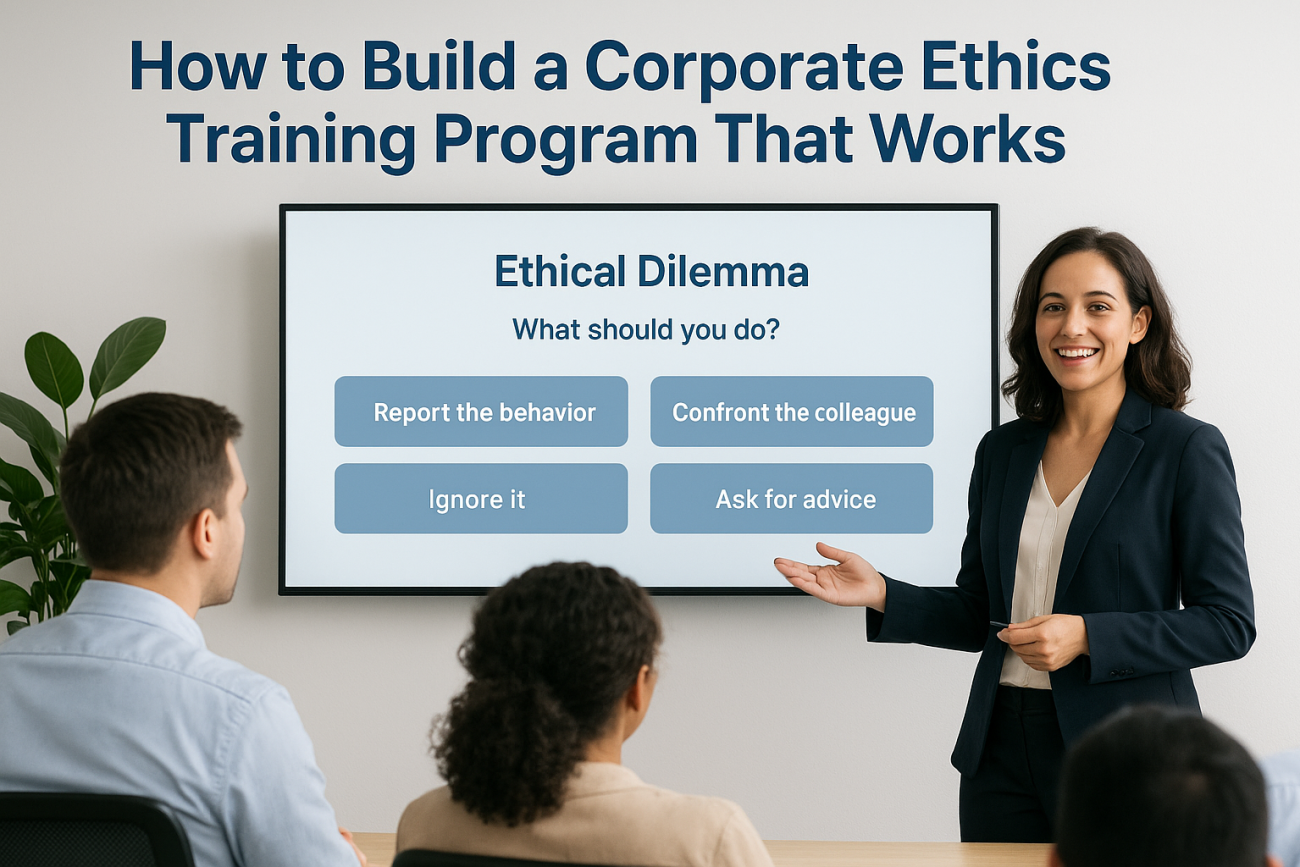
Most corporate ethics training fails the same way. Employees click through a 30-minute slide deck once a year, pass a quiz they can guess, and forget it by lunch. Then something goes wrong, and the company points to a completion record that proves nothing about behavior.
Here is the short answer. A program that works uses real scenarios from your own workplace, is short enough to finish without resentment, and tracks results beyond completion. You do not need an expensive provider or a generic free course. You need a clear code of conduct, role-based content, and a system that assigns, reminds, and records everything.
This guide walks through the steps we see working for teams using Axis LMS: setting goals, choosing topics such as conflicts of interest, harassment, bribery, and data privacy, writing examples people recognize, and building courses. You will also learn how to schedule refreshers and automate reminders, and how to read reports that show where your risks actually sit.
Why ethics training often fails
Weak programs tend to break in one of three places. If you can spot yours, you avoid rebuilding the wrong thing. The table shows each pattern, and the sections below explain why it happens and what to do about it.
| Failure | What it looks like | What fixes it |
|---|---|---|
| Checkbox mindset | One annual course, 100% completion, no change in behavior | Short, recurring lessons |
| Generic content | Examples from another industry or another decade | Scenarios from your own workplace |
| No measurement | Reports that show completions only | Behavior and risk metrics |
Checkbox training teaches people to click
Annual marathon sessions create the illusion of coverage. Employees remember very little after one long session, so a once-a-year course leaves the other 364 days with no reinforcement. People also notice when leadership treats the course as paperwork, and they copy that attitude. If your CEO skips the training, nobody believes it matters.
Fixing this starts with format. Lessons of 10 to 15 minutes spread across the year beat one long course, and managers find them far easier to schedule around real work.
Generic content feels irrelevant
Off-the-shelf courses, including many free ones, show actors in offices that look nothing like yours. A field sales rep faces different pressure than a payroll clerk. When examples feel foreign, employees decide the rules do not apply to them. Role-based scenarios and your own code of conduct close that gap.
Free courses still have a place. Use one as a baseline for topics like harassment or bribery, then add a short module covering your policies, your reporting channel, and the gray areas your people actually face.
Completion rates hide the real risk
Many teams report only that 98% finished. That number says nothing about whether people know when to speak up or whether they trust the reporting channel. Track hotline use, the quiz questions people miss most, and how long it takes issues to surface.
A completion record shows who clicked, not who understood.
Your LMS can pull this data, so the real work is deciding what to measure before you build anything. Step 1 covers exactly that.
Step 1. Assess risks and set clear objectives
Start with your risks, not a course catalog. Effective corporate ethics training targets the situations your people actually face, so you need evidence of where problems occur before you pick a single topic.
Run a simple risk assessment
Spend a week gathering data you already have. Talk to HR, legal, and finance, then rank risks by likelihood and impact so the biggest ones get the most training time.
- Review past incidents, hotline reports, and exit interview comments.
- Interview managers in sales, procurement, and finance, where pressure is highest.
- List your legal exposure, such as state harassment training laws and anti-bribery rules like the FCPA.
- Score each risk from 1 to 5 for likelihood and impact.
Set objectives you can measure
Every top risk gets one objective tied to behavior. Vague goals like "raise awareness" cannot be tested, so write targets with a number and a date.
| Risk | Objective | Metric |
|---|---|---|
| Gifts and bribery | Reps report gifts over $50 before accepting them | Gift disclosures logged per quarter |
| Harassment | Managers know how to escalate within 24 hours | Scenario quiz score of 85% or higher |
| Data privacy | Fewer misdirected emails with customer data | Incidents down 25% in 12 months |
If you cannot measure an objective, you cannot train toward it.
Finally, write the objectives down and share them with leadership. These targets also become the reports you build in Step 4, so agree on them now rather than after launch.
Step 2. Write a code of conduct and choose topics
Your risk assessment tells you what to cover. Now you need a document to teach from. A code of conduct is the source material for all corporate ethics training, so write it before you build a single lesson.
Write a code of conduct people will actually read
Aim for five to ten pages in plain language. Legalese gets skimmed, and skimmed rules get broken. Each section should state the rule, give one example, and tell people who to contact when they are unsure. Include these essentials:
- Core values, in one short paragraph
- Rules for your top risks from Step 1
- Reporting channels, including an anonymous option
- A clear no-retaliation statement
- Consequences for violations
Choose topics that match your risks
Pick four to six topics for year one instead of twenty. Assign each to the roles that face it most, so a procurement buyer is not sitting through content built for the help desk. Here is a starting point:
| Topic | Who needs it most | Example scenario |
|---|---|---|
| Conflicts of interest | Procurement, managers | A buyer’s brother owns a bidding vendor |
| Harassment and discrimination | All staff, managers | A joke in a team chat makes a colleague uncomfortable |
| Bribery and gifts | Sales, finance | A client offers event tickets during a contract renewal |
| Data privacy | Support, HR, IT | An employee emails a customer list to a personal account |
Cover fewer topics well, and tie every one to a specific rule in your code.
Once the code and topic list are approved, have legal and HR review them. Then you can turn those example scenarios into lessons in Step 3.
Step 3. Design scenario-based, ongoing training
Now you turn the scenarios from Step 2 into lessons. Effective corporate ethics training has people practice decisions instead of reading rules. Build each lesson around one dilemma and make the learner choose what to do.
Build branching scenarios
Start with a real situation, such as the buyer whose brother owns a bidding vendor. Pull details from your own anonymized incidents so employees recognize the setting. Wrong answers should teach, not punish, so show the consequence of every choice. Use this four-part structure:
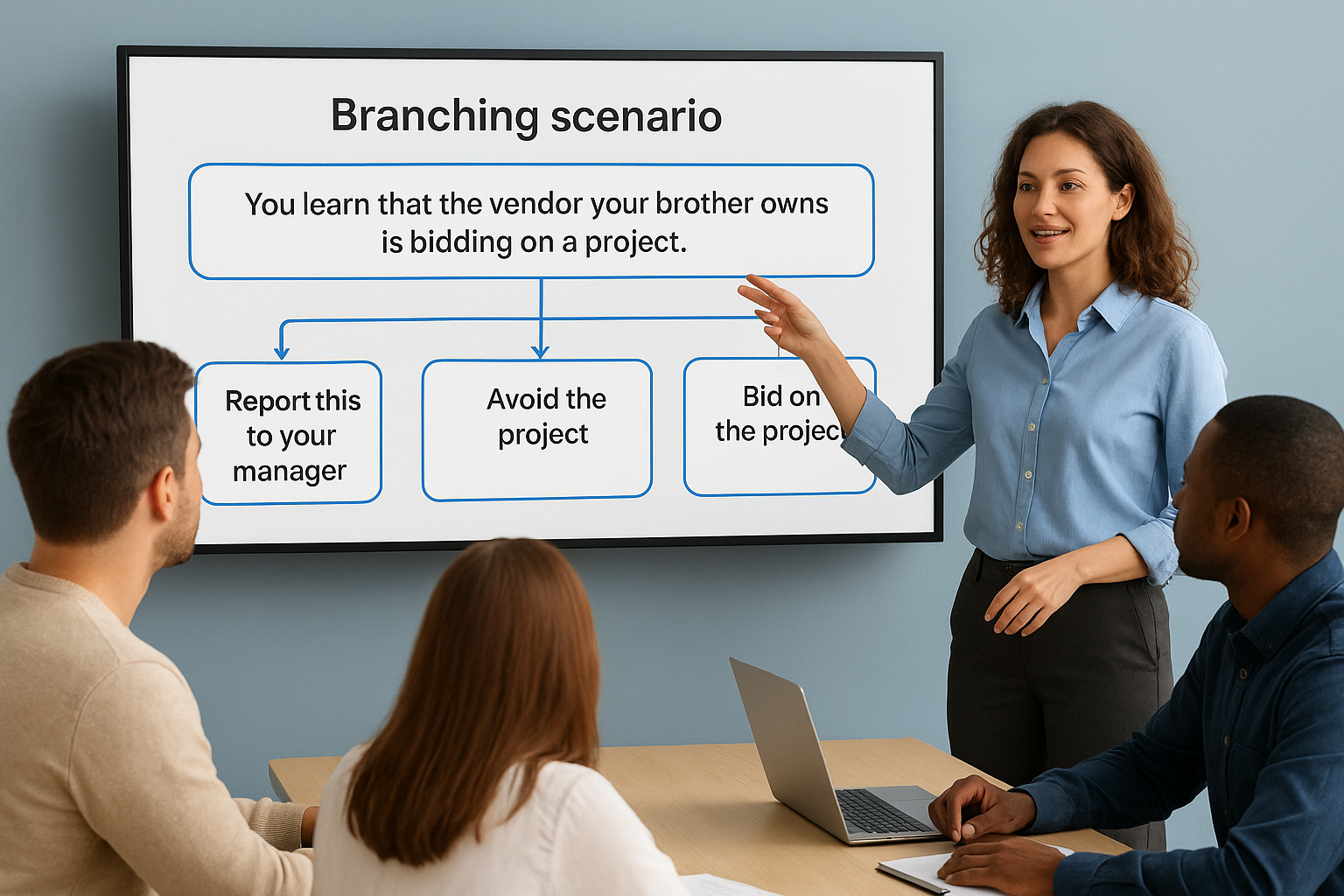
- Set the scene in two or three sentences.
- Offer three realistic choices, including one tempting wrong answer.
- Show what happens after each choice.
- Point back to the exact rule in your code of conduct.
Keep lessons short and recurring
Short lessons beat long ones. Keep each to 10 to 15 minutes and spread them across the year. The drag-and-drop course builder in Axis LMS lets you assemble these quickly, and automated enrollments and reminders mean you never chase anyone by email. A cadence like this works for most teams:
| When | What | Length |
|---|---|---|
| First 30 days | Code of conduct and reporting channels | 20 minutes |
| Quarterly | One scenario lesson on a top risk | 10 to 15 minutes |
| Annually | Refresher quiz and policy acknowledgment | 10 minutes |
Ten minutes four times a year beats one hour once.
Finally, give managers their own scenarios. They field questions and set the tone, so they need to practice responding to a concern before a real one lands on their desk.
Step 4. Deliver, track and measure results
Launch is where good programs often go quiet. Delivery and measurement keep the work from fading, so set the schedule before you announce anything and decide who reviews the reports each quarter.
Automate delivery
Manual enrollment breaks the first time someone changes roles. Connect your LMS to your HR system so assignments follow the employee and new hires start training without anyone sending an email. Set it up in this order:
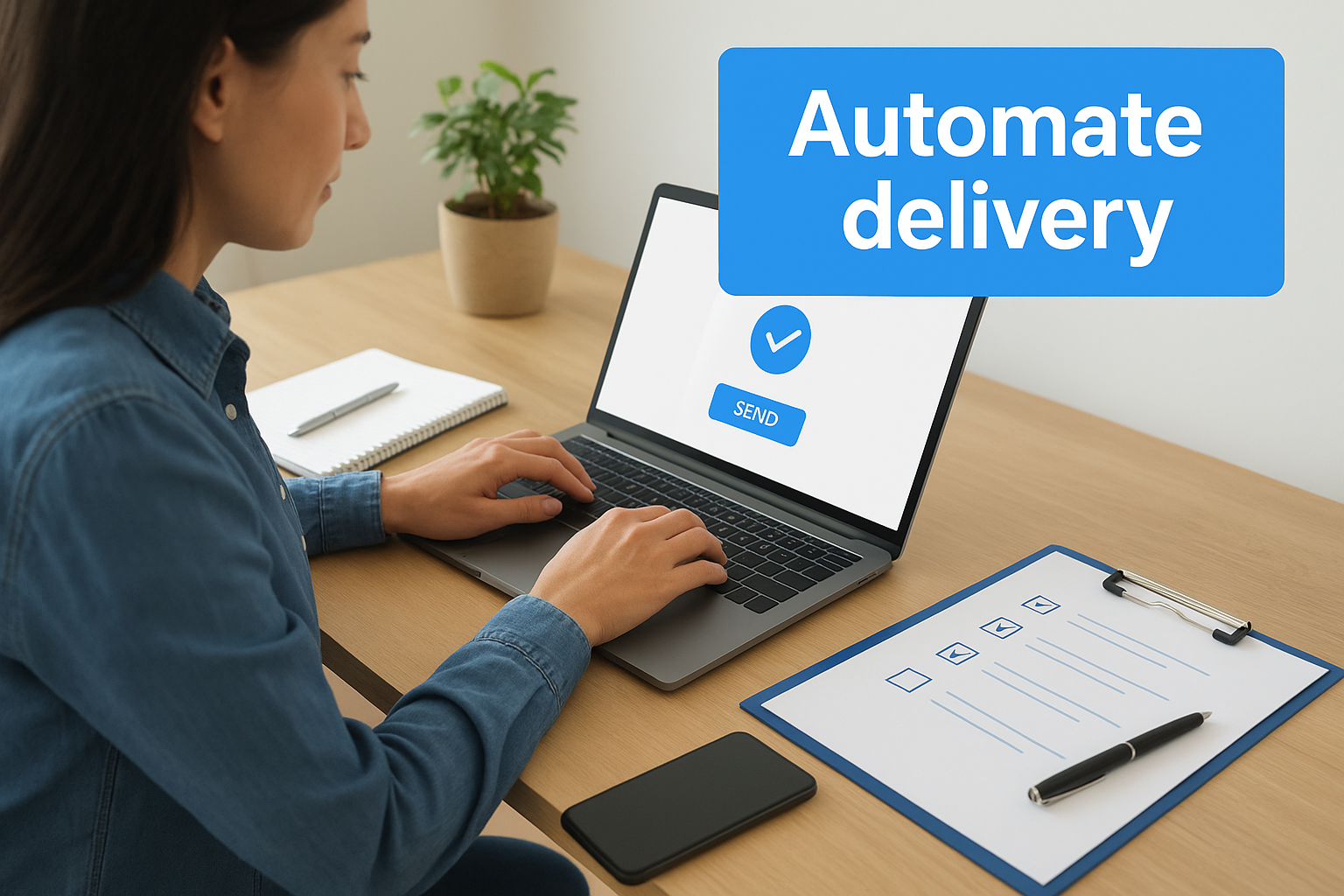
- Sync users from your HR system, such as ADP or BambooHR.
- Assign each lesson by role, using your topic table from Step 2.
- Set due dates, with reminders at 7 days and 2 days.
- Send managers a weekly list of overdue staff.
Track behavior, not just completion
Completion still matters for audits, but it is only the floor. Pair it with signals that show whether people understood the rules and whether they use the reporting channel.
| Metric | What it tells you | Warning sign |
|---|---|---|
| Quiz misses by question | Which rules people misread | Below 85% correct |
| Reports per quarter | Whether people trust the channel | Zero, or a sudden spike |
| Days to resolve a report | How fast issues surface | Over 30 days |
| Overdue rate by team | Where managers skip training | Above 10% |
Silence from your reporting channel is a warning, not a success.
Review and adjust
Every quarter, sort quiz questions by miss rate and rewrite the three worst scenarios. Then compare results with the targets you set in Step 1, such as gift disclosures logged. Keep acknowledgment and completion records exportable, because auditors and regulators will ask for them.
Making ethics training stick
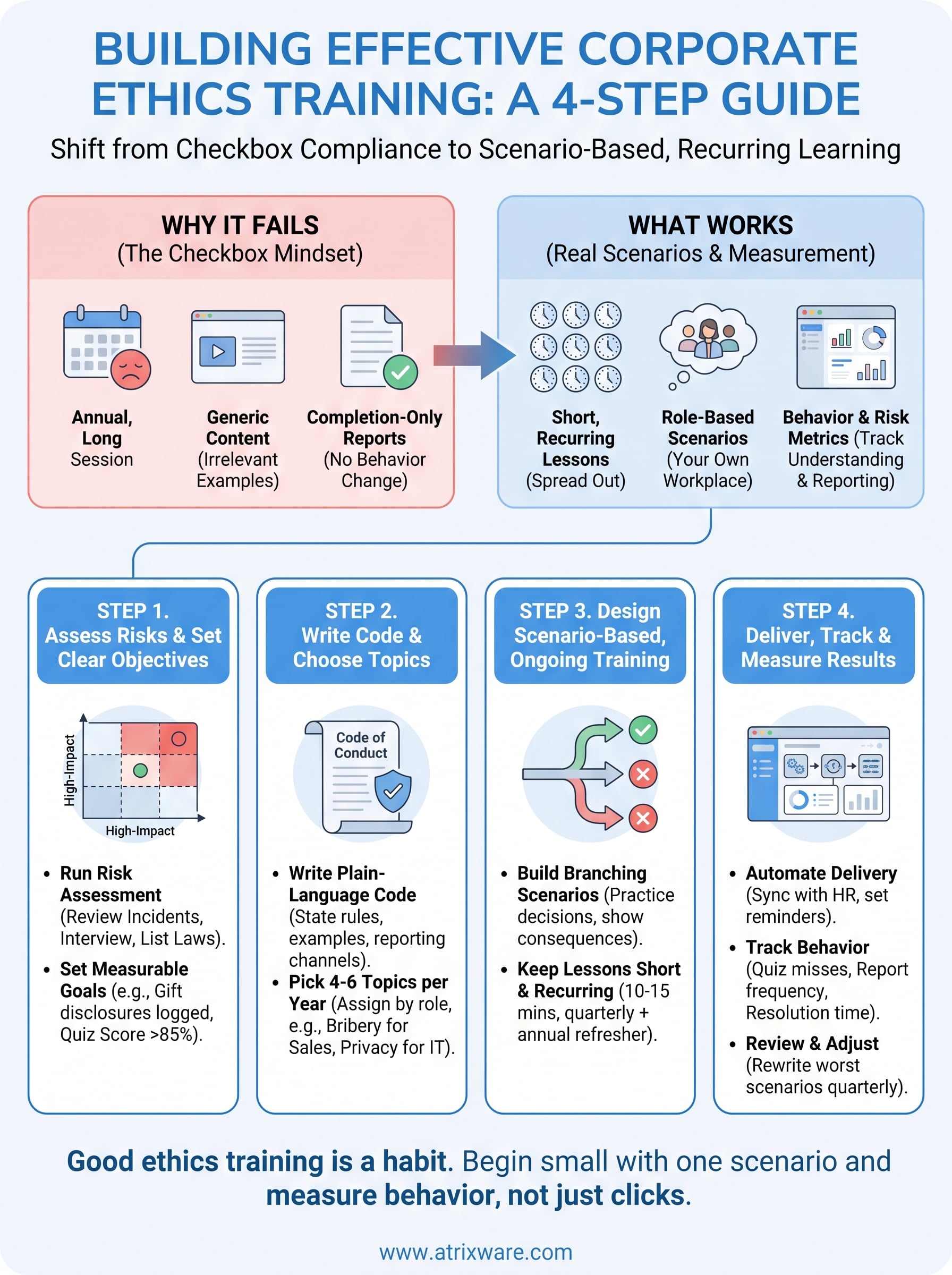
Good corporate ethics training is a habit, not a course. Assess your risks, write a code people will read, teach through scenarios, and measure behavior instead of clicks. Each step feeds the next, and short, recurring lessons keep the rules alive between audits.
Begin small. Pick your top risk, write one scenario from your own workplace, and schedule it for next month. Then review the results and rewrite what missed. Steady improvement beats a big launch that fades by spring.
If you want a system that handles assignments, reminders, and reporting for you, see the Axis LMS admin demo and check how it fits your program before you build.
