
If you sell online training, or any digital product on a recurring basis, you already know that getting paid shouldn’t be the hard part. But without the right subscription billing software, managing recurring charges, failed payments, plan upgrades, and invoicing across hundreds or thousands of customers turns into a full-time job. At Atrixware, our Axis LMS includes built-in e-commerce for selling training, but we regularly hear from customers who need a dedicated billing platform to handle complex subscription logic beyond course purchases.
The options have grown significantly, and not every platform solves the same problems. Some focus on dunning management and revenue recovery, others on usage-based pricing or hybrid billing models. A few handle the full quote-to-cash cycle. Picking the wrong one means bolting on workarounds, or worse, losing revenue to churn you could have prevented.
This guide breaks down six subscription billing platforms worth evaluating in 2026. We compared them on pricing flexibility, integrations, automation capabilities, and how well they scale. Whether you’re launching your first subscription offering or replacing a system you’ve outgrown, you’ll find a clear picture of what each platform does best, and where it falls short.
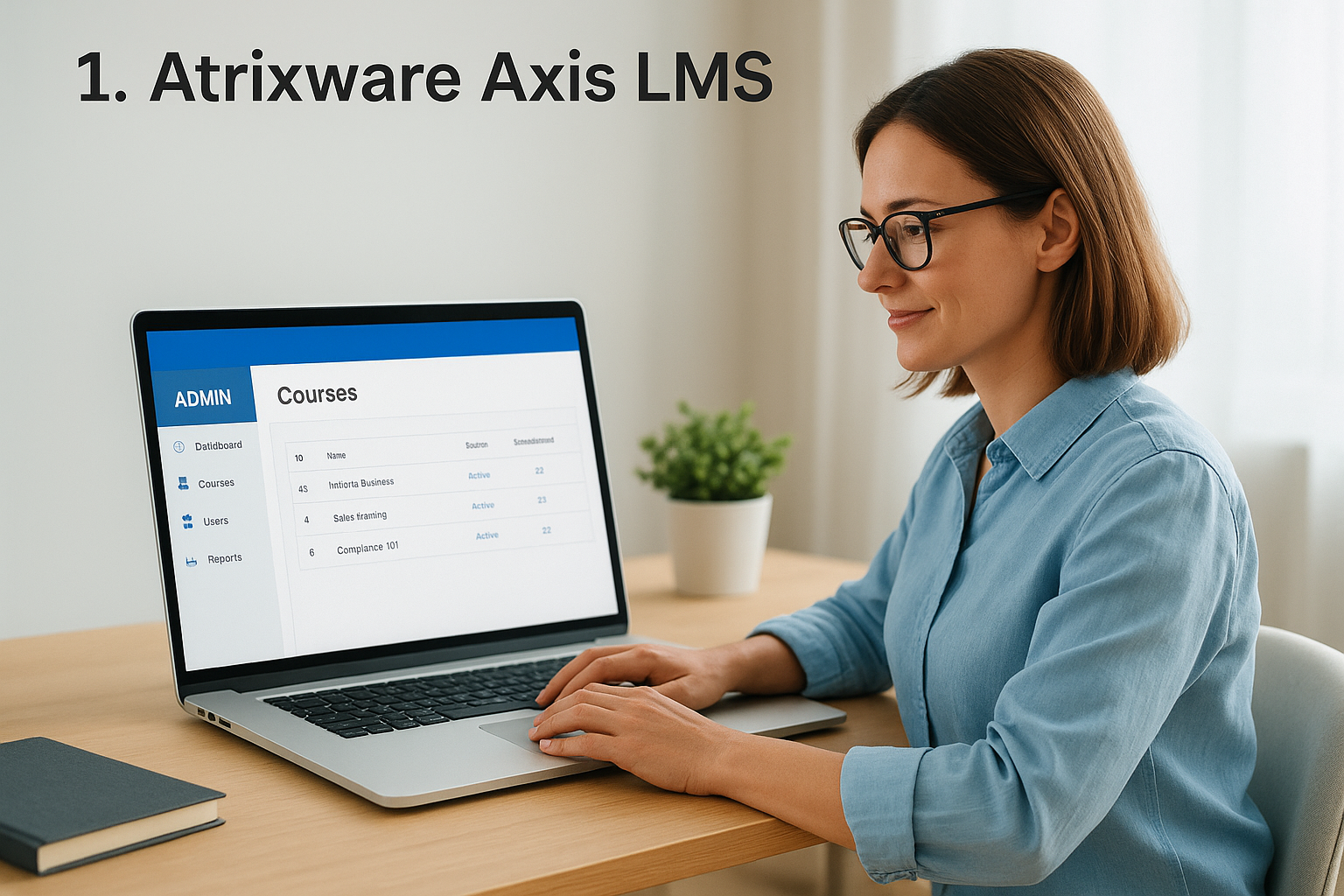
1. Atrixware Axis LMS
Axis LMS is a cloud-based learning management system built specifically for businesses that deliver and sell training. Unlike the other platforms on this list, it is not standalone subscription billing software. Instead, it bundles e-commerce and recurring billing directly into the training delivery platform, which makes it a strong fit for a specific type of buyer.
What it does well
Axis LMS handles the full cycle of selling training: course bundling, seat licensing, and recurring subscription plans are all built into the same system where your content lives. You manage learners, automate enrollment, and process payments without jumping between tools. The integrated approach reduces the friction of connecting a separate billing platform to a separate LMS.
If your business model is built around selling online training, consolidating billing and course delivery in one system removes a significant layer of technical overhead.
Where it can fall short
Axis LMS is purpose-built for training businesses, so it does not offer the deep billing logic or revenue analytics that a dedicated platform like Stripe Billing or Chargebee provides. If your subscription model involves usage-based pricing, complex proration, or multi-currency invoicing at scale, you will likely hit limitations. It also lacks the quote-to-cash workflow tools that larger finance teams rely on.
Best-fit use cases
This platform works best when your primary product is training content. Corporate L&D teams selling external training, associations offering member education, and compliance training providers who want a single platform for content and commerce all benefit from Axis LMS. If billing is a secondary need tied directly to course access, it covers the core requirements cleanly.
Key billing features to verify
Before committing, confirm that Axis LMS supports automated recurring billing and plan upgrade logic for your specific use case. Check how it handles failed payments and whether dunning automation is included. Verify the available payment gateway integrations to make sure they align with your existing stack.
Pricing and cost model
Atrixware offers tiered pricing based on the number of active users, with custom enterprise plans available. There is no per-transaction fee on top of the subscription cost. You can request a demo directly through the Atrixware website to get a quote tailored to your user volume and feature requirements.
2. Stripe Billing
Stripe Billing is one of the most widely adopted subscription billing software platforms in the market, built directly on top of Stripe’s payment infrastructure. It gives developers and product teams an API-first foundation to automate and customize complex recurring billing workflows at scale.
What it does well
Stripe Billing handles usage-based billing, tiered pricing, and flat-rate subscriptions with consistent precision. Its API documentation is thorough and well-maintained, which means your engineering team can build exactly the billing logic your business needs without significant workarounds or custom patches.
Stripe’s smart dunning tools automatically retry failed payments and send customizable reminder emails, which directly reduces involuntary churn.
Where it can fall short
Stripe Billing is developer-heavy by design. If your team lacks engineering resources or dedicated technical support, configuring advanced billing scenarios takes meaningful time and effort. Non-technical finance and operations teams often find the dashboard and reporting tools less intuitive than alternatives like Chargebee or Maxio.
Best-fit use cases
This platform suits SaaS companies and digital product businesses that have in-house development capacity and need maximum flexibility in subscription plan structure. It scales reliably from early-stage startups to high-volume enterprises.
Key billing features to verify
Confirm that Stripe Billing supports your specific pricing model, whether that is per-seat, metered usage, or multi-currency invoicing. Also review the proration logic for mid-cycle plan changes and check the dunning configuration options before committing.
Pricing and cost model
Stripe charges 0.5% of recurring revenue on its base Starter plan and 0.8% on the Scale plan, with standard payment processing fees applied on top. There is no flat monthly platform fee at the entry tier.
3. Recurly
Recurly is a dedicated subscription billing software platform that has been focused on subscription management since 2009. It serves mid-market and enterprise companies that need reliable recurring billing automation without building everything from scratch through an API.
What it does well
Recurly excels at revenue recovery and dunning management. Its Account Updater feature automatically refreshes expired card details, and its retry logic is configurable, so you control when and how often failed payments get retried. The reporting and analytics dashboard gives finance teams clear visibility into MRR, churn, and subscriber lifecycle metrics without requiring a data analyst to pull the numbers.
Recurly’s revenue recovery tools have a direct impact on reducing involuntary churn, which is often the largest source of subscription revenue loss for growing businesses.
Where it can fall short
Recurly’s API flexibility is more limited than Stripe Billing’s, so highly custom billing logic may require workarounds. Some users also report that plan migration and complex proration scenarios need careful configuration to behave as expected, particularly during high-volume billing cycles.
Best-fit use cases
Recurly fits mid-market SaaS and media companies that want a polished out-of-the-box experience and strong churn reduction tools. It works well for teams where finance and operations own the billing stack, not engineering.
Key billing features to verify
Confirm that Recurly supports your specific pricing tiers and trial period logic. Also check how it handles multi-currency billing and what gateway options are available in your region.
Pricing and cost model
Recurly charges a monthly platform fee plus a percentage of revenue, with pricing tiers based on your billing volume. You need to contact their sales team for exact figures, as public pricing scales with your revenue and feature requirements.
4. Chargebee
Chargebee is a subscription billing software platform built for businesses that need strong revenue operations tools alongside billing automation. It sits between the developer-first approach of Stripe Billing and the enterprise complexity of Zuora, making it a practical choice for growing SaaS and service companies that want control without requiring deep engineering involvement.
What it does well
Chargebee handles complex pricing models and subscription lifecycle management through a well-designed interface that non-technical teams can operate confidently. It supports flat-rate, tiered, volume, and usage-based pricing out of the box. The revenue recognition and reporting tools give finance teams real visibility into MRR, ARR, and churn without requiring custom data exports or a dedicated analyst.
Chargebee’s no-code pricing experiments let your team test new billing models without involving engineering, which directly speeds up go-to-market timelines.
Where it can fall short
Chargebee’s advanced automation and analytics features sit behind higher pricing tiers, so smaller teams may run into limitations before they expect to. Several users also report that customer support response times slow down outside standard business hours, which matters when billing issues surface at inconvenient times.
Best-fit use cases
Chargebee fits B2B SaaS companies and digital subscription businesses that need flexible billing logic paired with clean integrations into tools like Salesforce and HubSpot, without building everything through an API.
Key billing features to verify
Confirm that Chargebee supports your specific dunning configuration and proration rules before committing. Also verify which payment gateways are available in your target region.
Pricing and cost model
Chargebee provides a free plan covering up to $250K in cumulative billing, after which it moves to paid tiers priced on revenue volume and feature set.
5. Zuora
Zuora is an enterprise-grade subscription billing software platform built for large organizations managing high-volume, complex billing operations. It focuses heavily on the quote-to-cash workflow, making it a dominant choice among publicly traded companies and large enterprises with dedicated revenue operations teams.

What it does well
Zuora handles multi-product, multi-currency, and usage-based billing at a scale that most other platforms on this list cannot match. Its native revenue recognition module aligns with ASC 606 and IFRS 15 standards, which matters significantly for companies that undergo regular financial audits or plan to go public.
Zuora’s built-in revenue recognition tools reduce the manual work your finance team spends reconciling deferred revenue at month-end.
Where it can fall short
Zuora carries a steep learning curve and a substantial implementation timeline. Most organizations require a dedicated implementation partner and several months of configuration before going live. Its cost structure also puts it firmly out of reach for smaller or mid-market businesses without a dedicated revenue operations or finance engineering team.
Best-fit use cases
Zuora fits large enterprises and high-growth SaaS companies that operate across multiple geographies, sell complex product bundles, and need audit-ready financial reporting baked directly into their billing platform.
Key billing features to verify
Confirm that Zuora’s pricing model support and integration connectors align with your existing ERP and CRM systems before starting an evaluation. Also review its order management capabilities if you handle multi-element contract arrangements.
Pricing and cost model
Zuora does not publish pricing publicly. You need to request a custom quote through their sales team, and costs scale based on billing volume, user count, and modules selected.
6. Maxio
Maxio was formed through the merger of SaaSOptics and Chargify, combining subscription billing software with financial operations tools in a single platform aimed at B2B SaaS companies. That combination gives it unusual depth on the revenue reporting side compared to most pure billing tools.
What it does well
The platform handles complex B2B billing scenarios cleanly, including contract-based billing, one-time charges alongside recurring subscriptions, and multi-attribute pricing models. Its financial reporting layer gives your finance team direct visibility into MRR, ARR, and deferred revenue without requiring a separate analytics tool.
Maxio’s native financial operations layer keeps billing data and revenue reporting in sync automatically, which reduces reconciliation errors at month-end close.
Where it can fall short
Its user interface feels less polished than Chargebee or Recurly, particularly for teams onboarding without prior experience on the platform. Its consumer-facing subscription features are also more limited, making it a weaker choice for B2C businesses with high subscriber volumes.
Best-fit use cases
This platform works best for B2B SaaS companies that sell annual or multi-year contracts and need strong revenue recognition reporting alongside subscription management. It fits businesses where finance teams own the billing stack rather than engineering or product.
Key billing features to verify
Confirm that Maxio supports your specific contract and proration logic before committing. Also check how it handles mid-contract amendments and credit adjustments, since those workflows vary depending on your sales motion.
Pricing and cost model
Maxio does not publish pricing publicly. You need to contact their sales team for a custom quote, with costs based on your billing volume and selected features.
Next steps for picking a platform
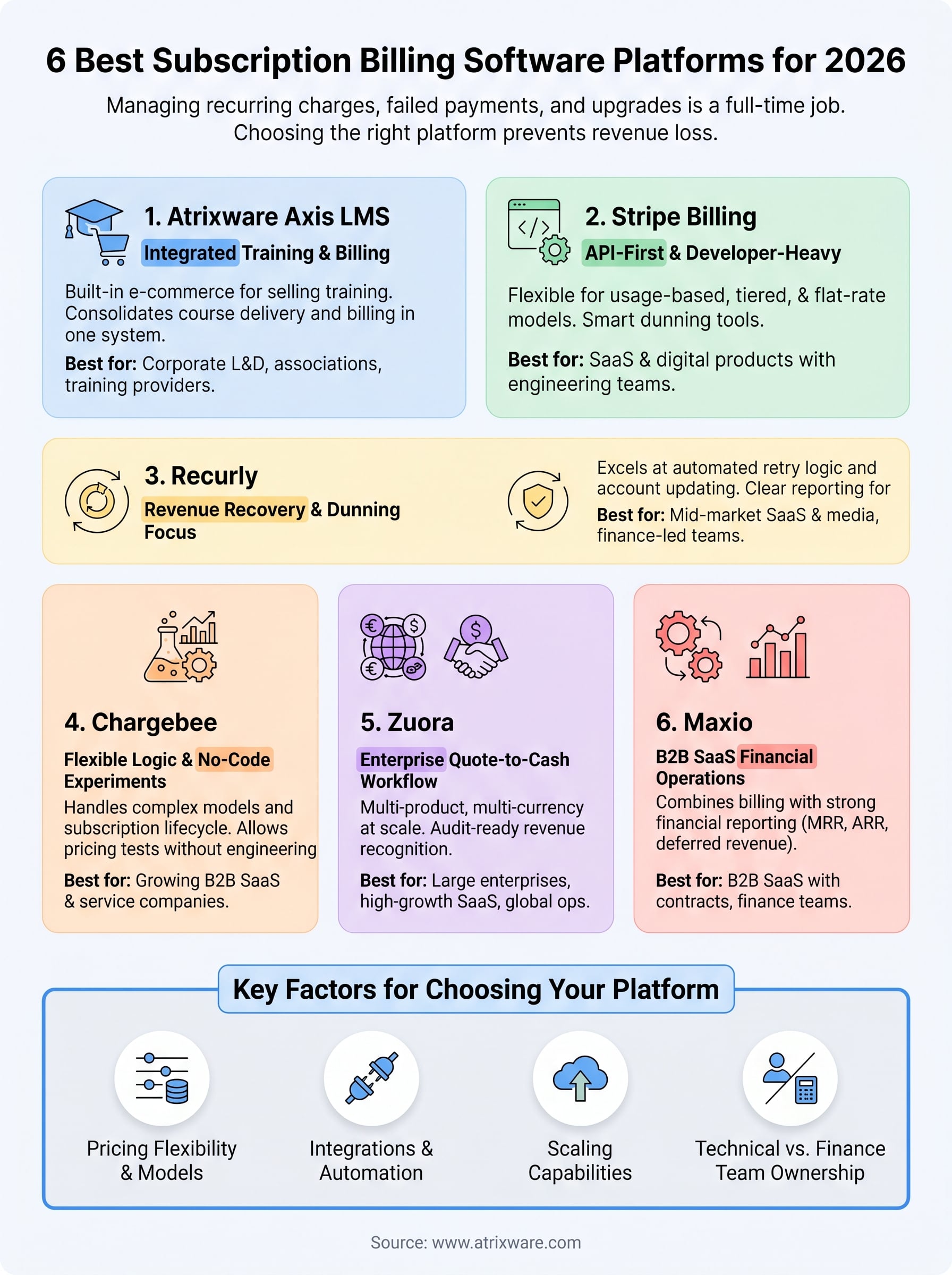
Choosing the right subscription billing software comes down to matching platform capabilities to your actual business model. If your product is online training, you likely need a system that handles course access, enrollment, and recurring payments without forcing you to connect multiple tools. If you run a broader SaaS or digital product business, the depth of your billing logic, your team’s technical resources, and your revenue reporting needs should drive the decision.
Start by listing your non-negotiable billing requirements, such as dunning automation, multi-currency support, or usage-based pricing, and eliminate any platform that cannot meet them out of the box. Then factor in your team’s technical capacity. A developer-heavy platform like Stripe Billing requires engineering investment that not every team can sustain.
If selling training is central to your model, take the Axis LMS readiness quiz to see whether a combined LMS and e-commerce platform fits your needs before committing to a standalone billing tool.
