
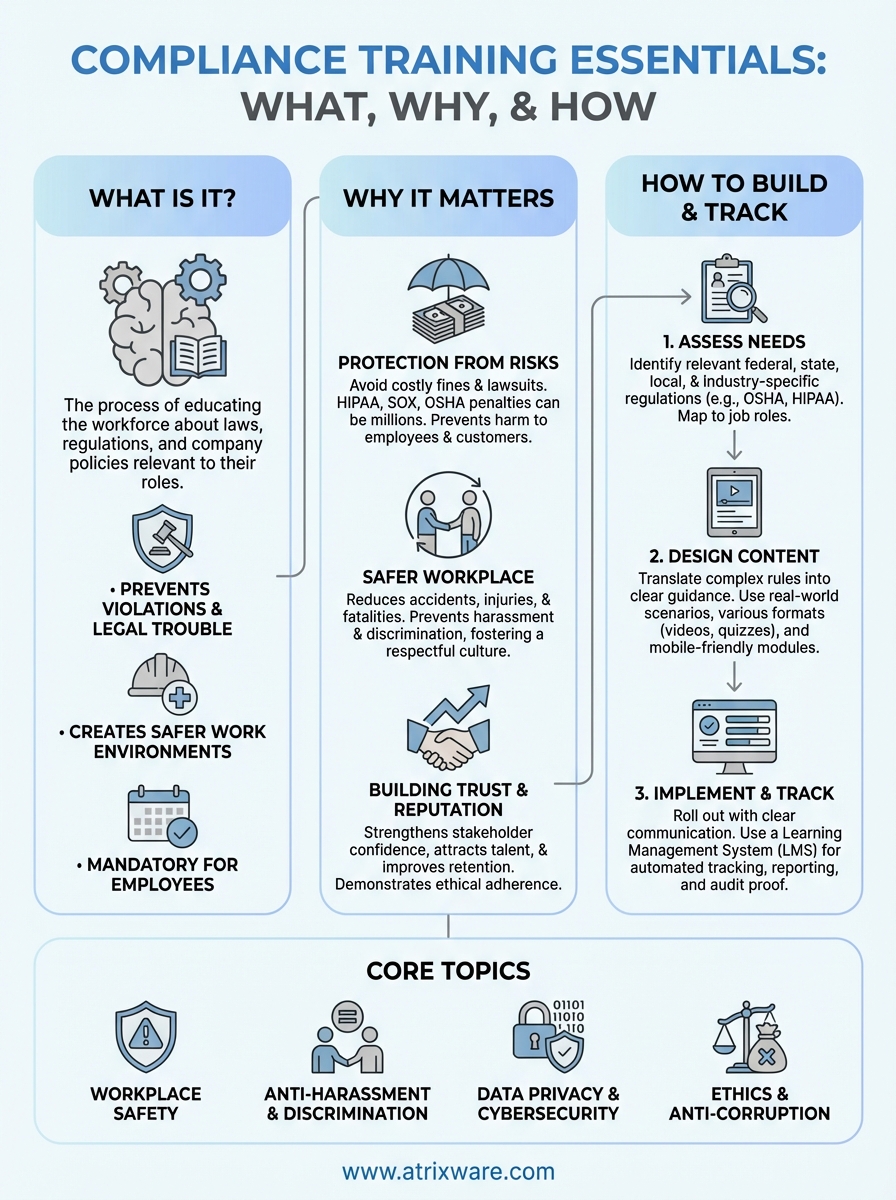
Your employees need to understand the rules that govern their work. Compliance training is the process of educating your workforce about laws, regulations, and company policies that apply to their specific roles and industry. This mandatory training helps prevent violations, protects your organization from legal trouble, and creates a safer work environment for everyone.
This guide walks you through everything you need to know about compliance training. You’ll learn why it matters for your organization, how to build an effective program from scratch, and what topics should be included. We’ll explore real examples across different industries and show you the tools that make delivery and tracking easier. Whether you’re starting your first compliance program or looking to improve an existing one, you’ll find practical steps to ensure your team stays informed and your organization stays protected.
Why compliance training matters
Understanding what is compliance training helps you recognize its critical role in protecting your organization. Compliance training shields your business from costly violations while creating a workplace where employees know exactly what’s expected of them. When you implement proper training, you reduce risks across every level of your organization and build a culture that values legal and ethical conduct. This isn’t just about checking boxes; it’s about protecting your people and your business from serious consequences.
Protection from legal and financial risks
Your organization faces significant penalties when employees violate regulations. Non-compliance fines can reach millions of dollars, depending on your industry and the severity of the violation. In healthcare, HIPAA violations carry penalties up to $1.5 million per year for each violation category. Financial institutions face equally steep consequences for failing to meet anti-money laundering requirements. Beyond fines, you risk lawsuits from employees or customers who suffer harm due to compliance failures. Proper training helps your team understand these regulations before mistakes happen, saving you from expensive legal battles and regulatory sanctions.
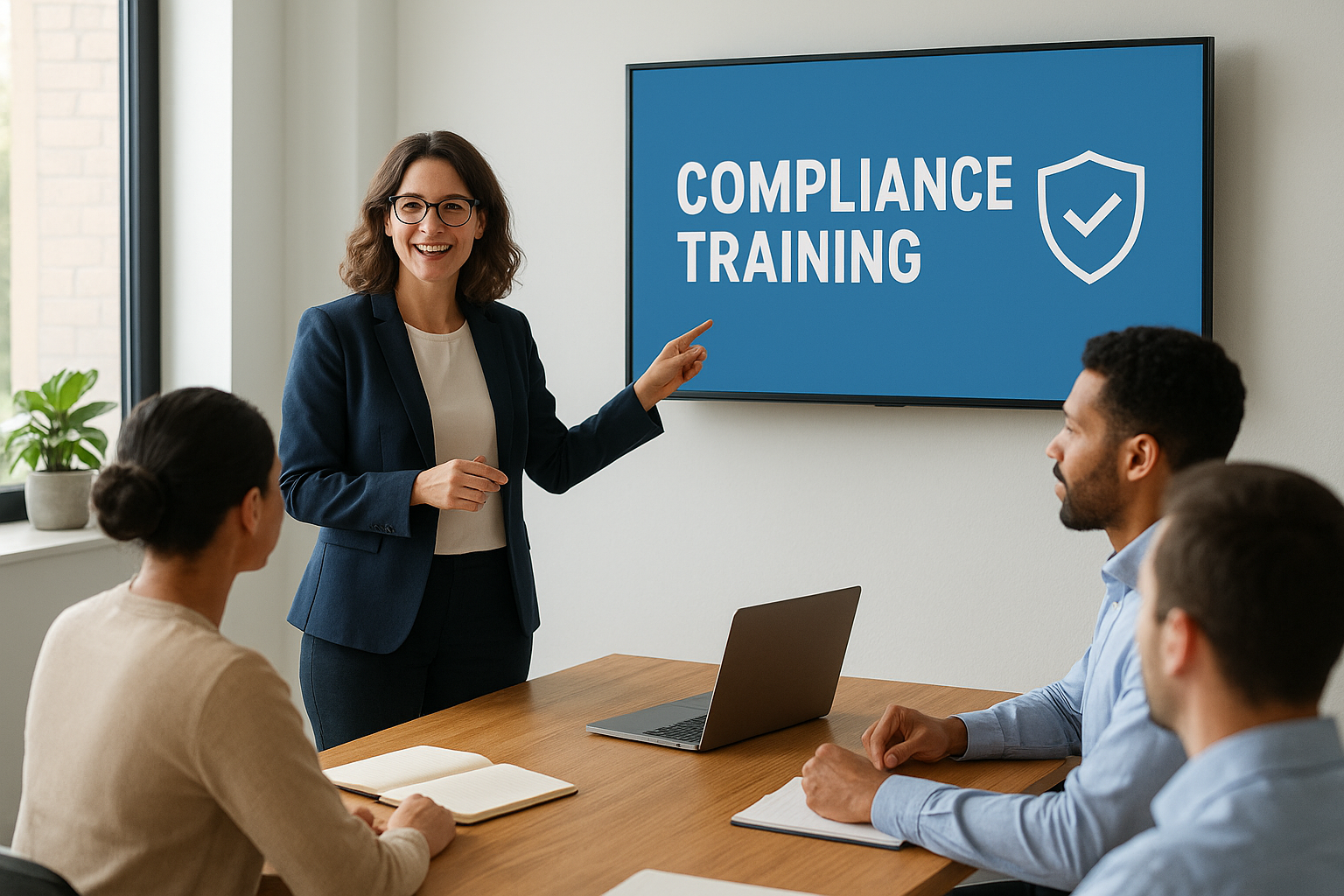
Effective compliance training transforms regulatory requirements into everyday practices that protect both your organization and the people you serve.
Creating a safer workplace
Compliance training directly impacts the physical safety of your workforce. Workplace safety regulations exist to prevent injuries, illnesses, and fatalities that occur when employees don’t follow proper procedures. OSHA reports that companies with strong safety training programs see fewer accidents and lower workers’ compensation costs. You also protect employees from harassment and discrimination through training that establishes clear behavioral standards. This education helps prevent hostile work environments and ensures everyone understands their rights and responsibilities. When your team knows how to identify and report safety hazards or inappropriate conduct, you catch problems early.
Building trust and reputation
Your company’s reputation depends on how well you handle compliance. Customers trust organizations that demonstrate consistent adherence to industry standards and ethical practices. A single data breach or safety violation can destroy years of reputation building and drive clients to your competitors. Investors and partners also evaluate your compliance track record before committing resources to your organization. Strong training programs signal that you take these responsibilities seriously, which strengthens stakeholder confidence. This trust translates into business advantages like better customer retention, easier recruitment of top talent, and improved relationships with regulatory bodies.
How to build a compliance training program
Building a compliance training program requires a strategic approach that addresses your organization’s specific legal requirements while engaging your workforce. You need to identify relevant regulations, create targeted content, and establish systems that track completion and effectiveness. This systematic process ensures your program protects your organization while meeting all mandatory training obligations. The following steps guide you through creating a program that works for your team.
Assess your compliance needs
Start by identifying all regulations that apply to your industry and business operations. Federal laws like OSHA workplace safety standards apply to most organizations, but you also face industry-specific requirements such as HIPAA for healthcare or SOX for publicly traded companies. State and local regulations add another layer of complexity, particularly for harassment prevention training, which varies by location. Review your business activities to determine which regulations affect different departments and job roles. Your legal team or compliance officer should help you create a comprehensive list of training requirements, including renewal schedules and certification needs.
Different roles within your organization require different training programs. Managers need additional training on preventing harassment and handling employee complaints, while finance teams focus on anti-fraud and data security protocols. Frontline workers in manufacturing or construction require extensive safety training, whereas office employees might prioritize cybersecurity and data privacy. Map your compliance requirements to specific job functions to avoid wasting time on irrelevant training and ensure everyone receives instruction tailored to their actual risks and responsibilities.
Design effective training content
Your training content must translate complex regulations into clear, practical guidance that employees can apply immediately. Break down legal language into straightforward explanations of what employees should do, what they should avoid, and why these rules exist. Include real-world scenarios that reflect situations your team actually encounters, making the training relevant and memorable. Use examples specific to your industry and workplace rather than generic cases that feel disconnected from daily operations.
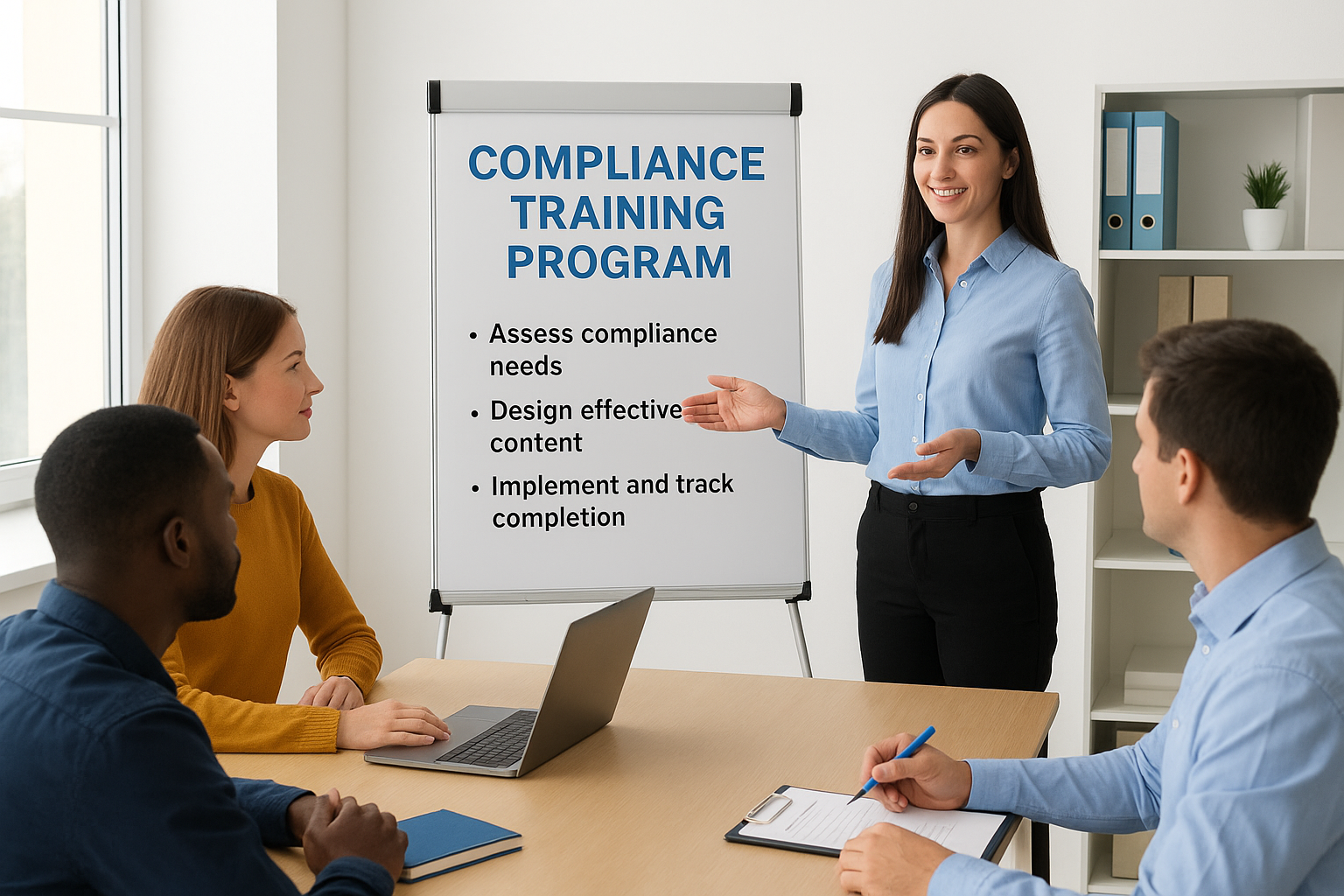
Training that connects regulations to real workplace situations transforms abstract rules into actionable knowledge your team will remember and apply.
Choose delivery methods that reach your entire workforce effectively. Online modules work well for office employees who can complete training at their desks, but frontline workers need mobile-accessible options they can use during breaks or before shifts. Mix formats like videos, interactive quizzes, and downloadable reference guides to accommodate different learning preferences. Keep modules short and focused, typically 10 to 20 minutes each, so employees can complete training without disrupting their work schedules.
Implement and track completion
Roll out your program with clear communication about why the training matters, when employees must complete it, and how to access materials. Send reminders through multiple channels such as email, your LMS, and manager announcements to ensure everyone receives the message. Provide technical support for employees who struggle with the platform or have questions about requirements, removing barriers that prevent timely completion.
Track completion rates, quiz scores, and certification status through your learning management system. This documentation proves compliance during audits and helps you identify employees who need follow-up training or assistance. Generate automated reports that show completion by department, role, and deadline, allowing you to spot problems early and intervene before non-compliance becomes an issue.
Core topics in compliance training
Understanding what is compliance training means recognizing the core subject areas that protect your organization and workforce. Your training program should address mandatory topics based on your industry, location, and business activities. These foundational areas form the backbone of most compliance programs, though your specific requirements will vary depending on applicable regulations. Covering these topics thoroughly ensures your employees understand their responsibilities and your organization meets legal obligations.
Workplace safety and health
Your employees need training on physical safety standards that prevent injuries and illnesses at work. OSHA regulations require you to educate workers about hazards specific to their environment, whether that means chemical exposure in a laboratory, fall risks in construction, or ergonomic practices in an office. Training must cover proper use of equipment, emergency procedures, hazard reporting, and personal protective equipment requirements. This education reduces accidents and helps you maintain a safe workplace that complies with federal and state safety laws.
Regular safety refreshers keep critical procedures fresh in your team’s minds. You should update training whenever you introduce new equipment, change processes, or respond to incidents that reveal gaps in understanding. Annual recertification ensures employees maintain their knowledge and you document ongoing compliance with safety regulations.
Anti-harassment and discrimination
Your organization must train employees to recognize and prevent workplace harassment, including sexual harassment, bullying, and other unwelcome conduct. This training explains what behaviors cross the line, how to report incidents, and the consequences of violations. Managers need additional instruction on investigating complaints, maintaining confidentiality, and preventing retaliation against employees who report problems. Many states mandate specific anti-harassment training with minimum time requirements and regular renewal schedules.
Discrimination training extends beyond harassment to cover protected characteristics under federal and state law. You teach employees about equal opportunity principles, unconscious bias, and inclusive workplace practices. This education helps prevent discriminatory decisions in hiring, promotion, compensation, and daily interactions that could expose your organization to legal claims.
Data privacy and cybersecurity
Protecting sensitive information requires training on data handling practices and security protocols. Your employees must understand which information qualifies as confidential, how to store and transmit data securely, and what to do if they suspect a breach. Industry-specific regulations like HIPAA for healthcare or PCI DSS for payment processing add specialized requirements you must address. Cybersecurity training teaches employees to recognize phishing attempts, use strong passwords, and follow protocols that prevent unauthorized access to your systems.
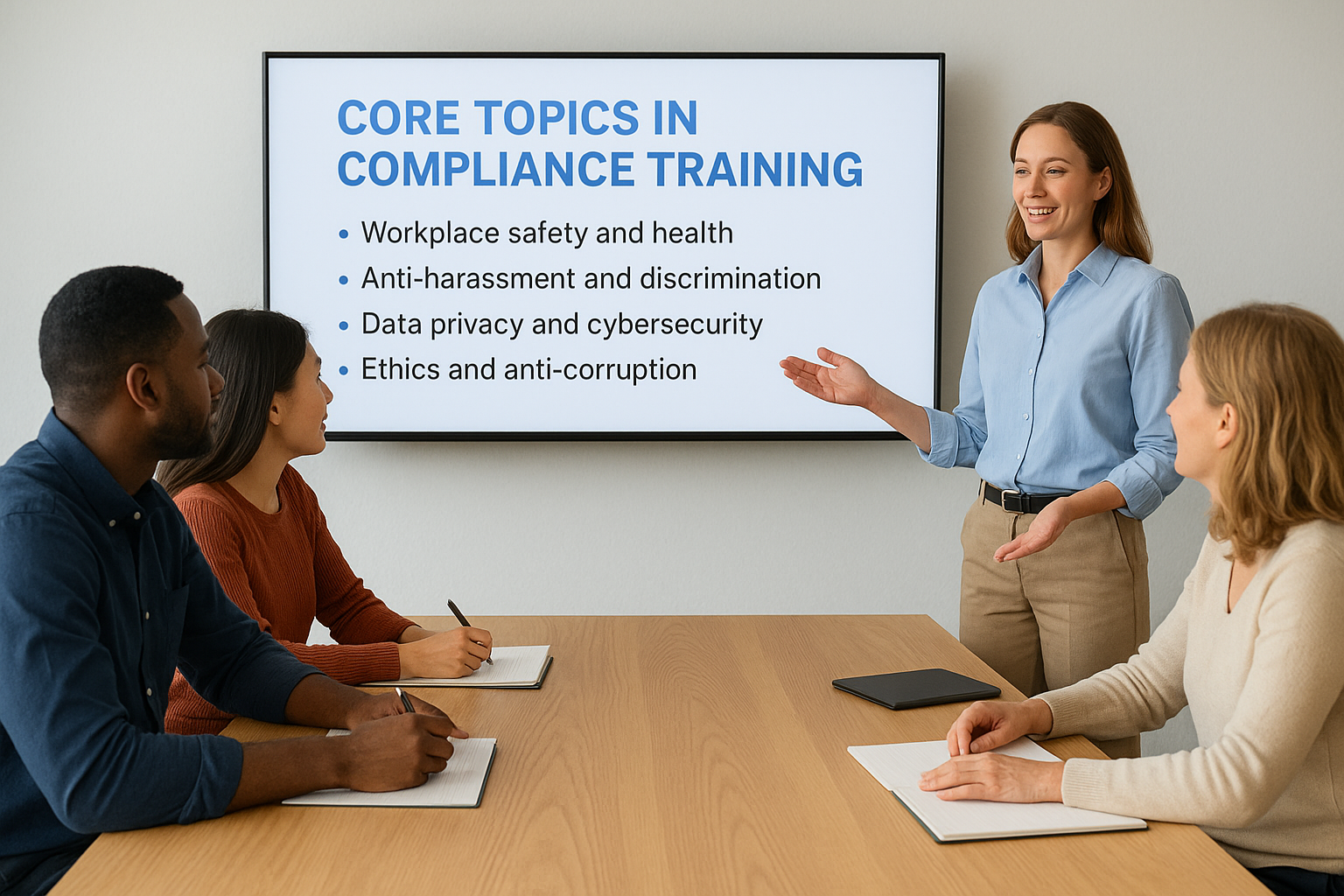
Training employees to protect data before a breach occurs costs far less than responding to violations and rebuilding trust after sensitive information falls into the wrong hands.
You need to update privacy training regularly as new threats emerge and regulations evolve. The rise of remote work has created additional security challenges that require fresh guidance on securing home networks and devices used for business purposes.
Ethics and anti-corruption
Your compliance program should include training on ethical decision-making and your organization’s code of conduct. Employees need guidance on conflicts of interest, accepting gifts, using company resources appropriately, and reporting ethical concerns without fear of retaliation. This training clarifies gray areas where the right course of action might not be obvious and provides resources for seeking guidance when dilemmas arise.
Anti-corruption and fraud prevention training becomes critical for organizations in regulated industries or those doing business internationally. You must educate employees about laws like the Foreign Corrupt Practices Act, anti-bribery regulations, and financial reporting requirements. This instruction helps prevent violations that carry severe penalties and protects your organization’s reputation in the marketplace.
Compliance training examples and scenarios
Seeing what is compliance training in action helps you understand how to apply these principles in your organization. Real-world scenarios demonstrate how different industries face unique compliance challenges and how training addresses these specific risks. These examples show you what effective training looks like across various workplace settings and help you identify relevant situations for your own team.
Healthcare compliance in practice
A hospital nurse receives training on HIPAA regulations through interactive scenarios that mirror daily work situations. The training presents a case where a family member asks about a patient’s condition over the phone. Your employee must verify the caller’s identity, confirm the patient authorized information sharing, and determine what details they can legally disclose. This scenario-based approach teaches staff to protect patient privacy while providing appropriate care coordination.

Medical billing teams complete separate training on proper coding practices and fraud prevention. They learn to recognize red flags like duplicate billing, unbundling services, or coding for procedures not performed. Your training includes actual examples of billing errors that resulted in False Claims Act violations, showing employees the real consequences of mistakes or intentional fraud.
Manufacturing and construction safety
Your factory workers participate in lockout-tagout training that prevents injuries during equipment maintenance. The program walks employees through step-by-step procedures for shutting down machinery, applying locks, verifying zero energy states, and safely performing repairs. You supplement this instruction with hands-on demonstrations where workers practice the process under supervision before performing it independently.
Construction site supervisors receive training on fall protection requirements that exceeds basic worker instruction. Your program covers selecting appropriate safety equipment, inspecting gear for damage, calculating proper anchor points, and documenting safety checks. Scenarios present common situations like working near roof edges or on scaffolding, requiring supervisors to identify hazards and implement correct protection measures.
Training that mirrors your actual work environment transforms compliance rules into automatic responses your team applies correctly under pressure.
Financial services and data security
Bank employees complete anti-money laundering training that teaches them to spot suspicious transactions requiring reports to federal authorities. Your program presents customer scenarios involving cash deposits just below reporting thresholds, wire transfers to high-risk countries, or unusual account activity patterns. Employees practice documenting concerns and following escalation procedures without alerting customers to ongoing investigations.
Customer service representatives handling payment information receive PCI DSS compliance training specific to phone interactions. They learn never to write down full card numbers, how to truncate account information in notes, and procedures for securely processing transactions. Your training addresses common mistakes like emailing sensitive data or discussing account details in open office areas where others might overhear.
Tools that support compliance training
Delivering and managing what is compliance training effectively requires technology that handles distribution, tracking, and reporting. You need software solutions that automate training assignments, record completion data, and provide documentation for audits. The right tools simplify administration while ensuring every employee receives required training on schedule. Modern platforms reduce your manual workload and help you demonstrate compliance to regulators and stakeholders.
Learning management systems
A learning management system serves as your central hub for deploying compliance training across your organization. Your LMS assigns courses automatically based on job roles, locations, or hire dates, removing the need to manually track who needs which training. These platforms record completion dates, quiz scores, and certification renewals in a database you can access during audits or inspections. You generate reports showing compliance rates by department, identify employees who missed deadlines, and send automated reminders to keep everyone on track.
Modern systems integrate with your existing HR and payroll software, synchronizing employee data and eliminating duplicate data entry. This connection ensures new hires receive onboarding compliance training immediately and departing employees get removed from active rosters automatically. Your administrators save hours each week on tasks the system handles without intervention.
The right learning management system transforms compliance training from a manual tracking burden into an automated process that protects your organization while freeing your team to focus on strategic priorities.
Content authoring platforms
You need tools that let you create custom training content without hiring developers or instructional designers. Content authoring platforms provide templates and drag-and-drop interfaces for building courses, quizzes, and interactive scenarios that address your specific policies and procedures. Your subject matter experts update materials quickly when regulations change or you identify gaps in existing training, keeping your program current without lengthy production cycles.
These platforms often include multimedia capabilities for adding videos, images, and audio that make dry regulatory content more engaging. You create mobile-friendly courses that employees access on any device, expanding training opportunities beyond traditional desktop computers.
Final thoughts
Understanding what is compliance training gives you the foundation to protect your organization and empower your workforce. Your compliance program keeps employees informed about legal requirements, reduces risk exposure, and creates a workplace culture built on ethical standards and accountability. The investment in proper training prevents costly violations while demonstrating your commitment to following regulations that govern your industry.
Building an effective program requires identifying your specific compliance needs, creating engaging content that employees actually remember, and implementing systems that track completion reliably. Your learning management system automates much of this work, sending reminders, recording certifications, and generating audit reports that prove compliance when regulators ask. This technology transforms training from a manual administrative burden into a streamlined process that scales with your organization’s growth and adapts to changing regulatory requirements.
Explore how Axis LMS simplifies compliance training with automated workflows, comprehensive tracking, and intuitive tools that help you deliver required training efficiently across your entire workforce.

5 thoughts on “What Is Compliance Training? Definition, Topics, Examples”
Comments are closed.