Choosing the right learning management system can make or break your training program. Docebo LMS has become a notable player in the corporate learning space, particularly for organizations interested in AI-powered features and extensive third-party integrations. But with so many LMS options available, understanding exactly what Docebo offers, and where it falls short, is essential before committing.
Whether you’re evaluating Docebo for employee onboarding, customer education, compliance tracking, or channel partner training, you need clear answers about capabilities and costs. This guide covers the platform’s core features, pricing structure, integration options, and how it stacks up against alternatives.
As the team behind Axis LMS, we’ve helped organizations navigate the complexities of corporate training for years. We’ll walk you through what Docebo brings to the table so you can make an informed decision about whether it’s the right fit, or if another solution might better serve your learning goals.
Why organizations choose Docebo LMS
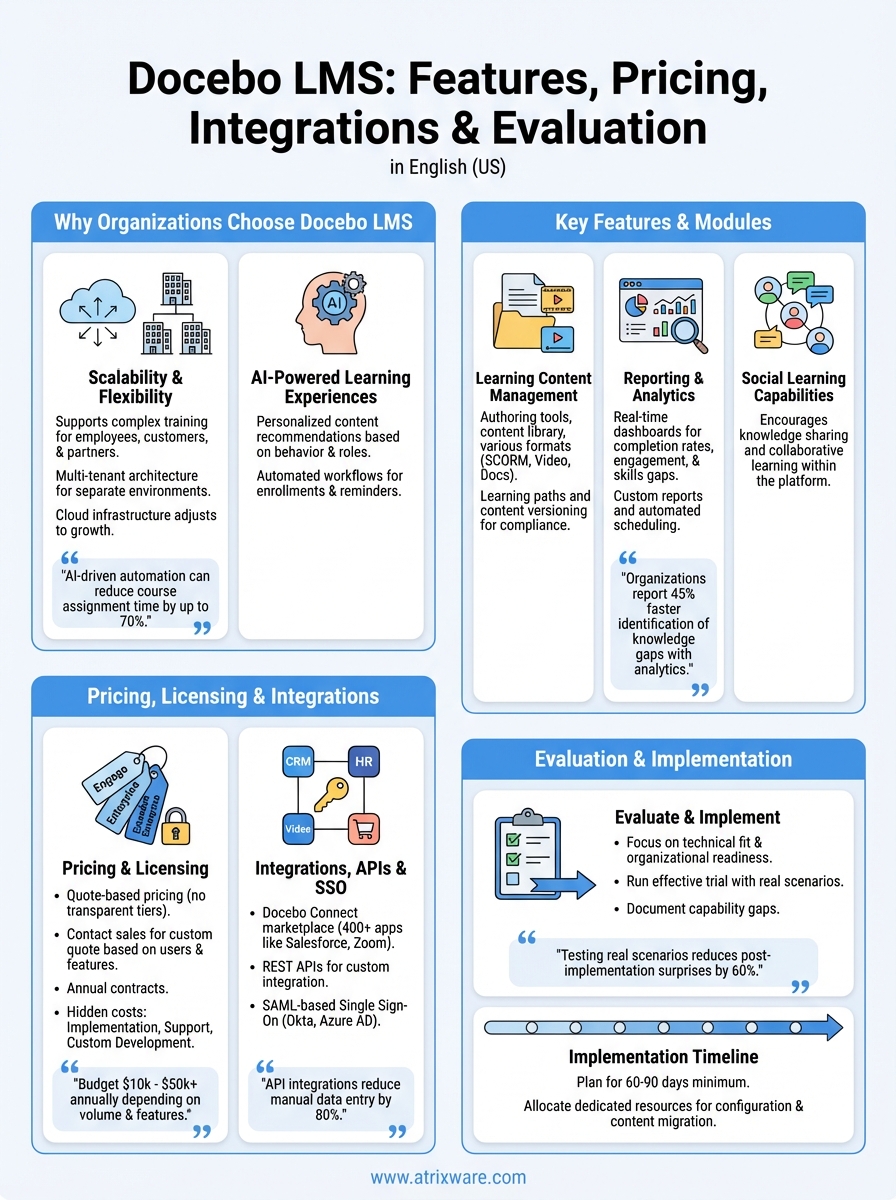
Organizations turn to Docebo LMS when they need a platform that handles complex training scenarios across multiple audiences. The system supports employee development, customer education, and partner training within a single environment, eliminating the need to manage separate platforms for different learner groups. Companies with distributed teams particularly value the ability to deliver consistent training experiences regardless of location or department.
Scalability for growing training programs
You can expand your training operations without hitting technical limitations that plague many legacy systems. Docebo’s cloud infrastructure automatically adjusts to accommodate increased user volumes, additional courses, and higher content demands as your organization grows. This flexibility matters when you’re onboarding hundreds of new employees quarterly or launching training programs for thousands of channel partners.
The platform’s multi-tenant architecture lets you create separate learning environments for different business units while maintaining centralized administration and reporting. You retain control over branding, course catalogs, and user permissions for each group without duplicating administrative effort across multiple instances.
AI-powered learning experiences
Docebo integrates artificial intelligence throughout the learning journey to personalize content recommendations and automate administrative tasks. The system analyzes learner behavior patterns and suggests relevant courses based on job roles, skill gaps, and career progression paths. This reduces the manual work your training team spends matching learners with appropriate content.
"AI-driven automation in Docebo LMS can reduce course assignment time by up to 70% compared to manual processes."
Automated workflows handle routine tasks like course enrollments, deadline reminders, and certificate distribution, freeing your team to focus on strategic training initiatives rather than administrative overhead.
Key features and modules in Docebo LMS
Docebo LMS delivers a comprehensive feature set designed to support diverse training initiatives across your organization. The platform combines content management tools, social learning capabilities, and advanced analytics within a unified interface. You can build custom learning paths, deliver instructor-led training sessions, and track compliance requirements without juggling multiple systems or manual processes.

Learning content management
Your training team can create, organize, and deliver courses using Docebo’s authoring tools and content library. The platform supports various content formats, including SCORM packages, videos, documents, and interactive assessments. You can structure learning paths that automatically guide learners through sequential courses based on their role, department, or skill development needs.
Content versioning lets you update training materials while maintaining historical records for compliance audits. This matters when regulatory requirements change or product updates demand curriculum revisions across hundreds of active courses.
Reporting and analytics capabilities
You gain visibility into training effectiveness through real-time dashboards that track completion rates, assessment scores, and learner engagement metrics. Custom reports pull data across multiple dimensions, including department performance, course effectiveness, and individual learner progress toward certification requirements.
"Organizations using Docebo’s analytics features report 45% faster identification of knowledge gaps compared to manual tracking methods."
Automated report scheduling delivers insights to stakeholders without manual data compilation, saving your team hours of spreadsheet work weekly.
Docebo LMS pricing, licensing, and costs
Docebo LMS operates on a quote-based pricing model rather than publishing transparent pricing tiers. You’ll need to contact their sales team to receive a custom quote based on your user count, feature requirements, and contract length. This approach works well for large enterprises with complex needs but creates uncertainty for mid-sized organizations trying to budget for training technology investments.
Subscription models and tiers
The platform offers three main editions: Engage, Enterprise, and Extended Enterprise. Each tier includes progressively advanced features, from basic learning management in Engage to multi-domain support and advanced AI capabilities in Extended Enterprise. Annual contracts represent the standard billing cycle, with pricing calculated per active user or total learner seats depending on your chosen model.
"Organizations should budget $10,000 to $50,000+ annually for Docebo LMS, depending on user volume and feature requirements."
Hidden costs and considerations
Beyond base subscription fees, you may encounter implementation costs for system configuration, data migration, and integration setup. Additional expenses include premium support packages, custom development work, and fees for exceeding storage limits. Factor in training time for administrators and content creators when calculating total ownership costs.
Integrations, APIs, and SSO options
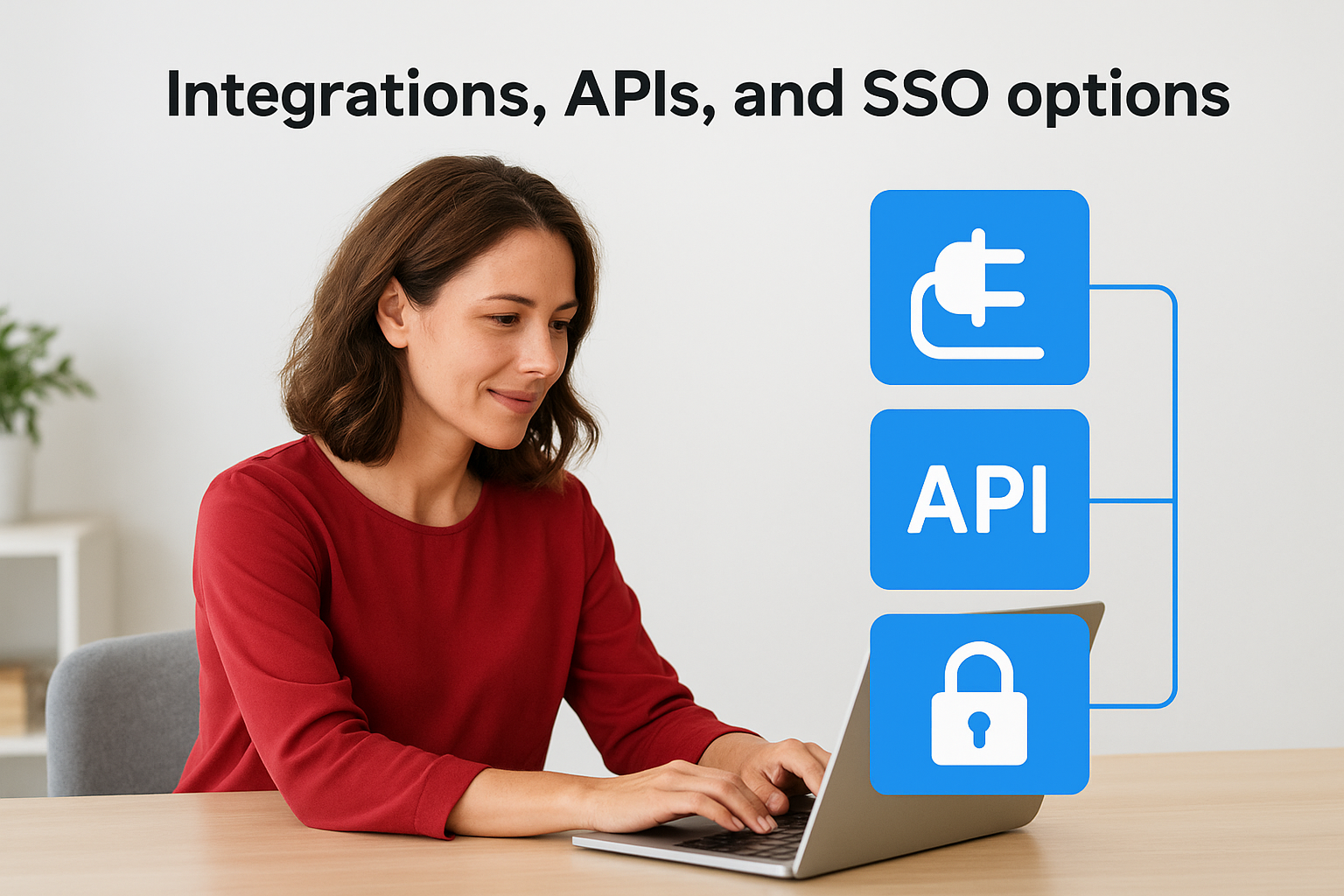
Docebo LMS connects with business systems you already use through pre-built integrations and custom development options. The platform maintains an app marketplace featuring connections to popular CRM, HR, content authoring, video conferencing, and e-commerce tools. You can sync user data from systems like Salesforce, Microsoft Dynamics, or Workday to automate enrollment and maintain accurate learner records without manual data entry.
Third-party application connections
The Docebo Connect marketplace provides over 400 pre-configured integrations covering video conferencing platforms, content libraries, collaboration tools, and business intelligence systems. You can link your LMS to Zoom for virtual classroom sessions, connect content libraries like LinkedIn Learning, or integrate analytics tools like Tableau for advanced reporting dashboards. Integration setup typically requires administrator-level permissions and configuration mapping between systems.
API access and single sign-on
Docebo offers REST APIs that let your development team build custom integrations when pre-built options don’t meet specific workflow requirements. You can automate user provisioning, course assignments, and data extraction for custom reporting needs through API calls. SAML-based single sign-on eliminates separate login credentials by authenticating users through your existing identity provider like Okta, Azure Active Directory, or OneLogin.
"API-driven integrations reduce manual data entry by 80% and eliminate sync errors between systems."
How to evaluate and implement Docebo LMS
Your evaluation process should focus on technical fit and organizational readiness before signing a contract. Start by mapping your specific training requirements against Docebo’s capabilities, including the number of learners you’ll support, content types you’ll deliver, and integration needs with existing business systems. Request a detailed demo that covers your actual use cases rather than generic platform tours, and involve stakeholders from IT, training, and finance departments in the assessment.
Running an effective evaluation process
You need to test Docebo LMS with real training scenarios during your trial period. Upload sample courses, configure user roles matching your organizational structure, and run reports that mirror your actual compliance or performance tracking needs. Document gaps between the platform’s capabilities and your requirements so you understand what customization or workarounds you’ll need post-implementation.
"Organizations that test real-world scenarios during evaluation reduce post-implementation surprises by 60%."
Implementation timeline and resources
Plan for 60 to 90 days minimum for basic implementation, though complex integrations and data migrations can extend this timeline significantly. Allocate dedicated resources for system configuration, content migration, and administrator training throughout the process. Your implementation team should include technical staff for integrations, training specialists for content development, and change management resources to drive user adoption across your organization.
Final take
Docebo LMS delivers a robust feature set particularly suited for large enterprises with complex training needs across multiple audiences. The platform’s AI-powered capabilities and extensive integration marketplace make it a strong contender if you need advanced automation and third-party connections. However, the quote-based pricing model and potentially lengthy implementation timeline may not align with every organization’s budget or urgency.
Your decision should weigh Docebo’s capabilities against your specific training requirements, technical resources, and timeline constraints. Mid-sized organizations often find that platforms with transparent pricing and faster deployment cycles better serve their immediate needs without sacrificing essential functionality.
If you’re still determining what features you actually need in an LMS, take our LMS readiness quiz to clarify your requirements. You might discover that Axis LMS offers the scalability, integration capabilities, and user experience you’re seeking with more straightforward pricing and implementation.
