Every training program generates data. Completion rates, assessment scores, time spent on modules, engagement patterns, it’s all there. But raw numbers sitting in a dashboard don’t tell you whether your training actually works. That’s where learning analytics in corporate training comes in: the practice of collecting, measuring, and interpreting learner data to improve training outcomes and prove business impact.
The challenge most organizations face isn’t a lack of data. It’s knowing what to do with it. Which metrics actually matter? How do you connect learning outcomes to business results? And perhaps most importantly, how do you build a system that turns insights into action? These are the questions that separate companies running training programs from companies driving measurable performance improvements.
At Atrixware, we built Axis LMS with comprehensive reporting and analytics tools because we understand that effective training requires more than content delivery, it requires evidence. This guide walks you through everything you need to know about implementing learning analytics in your organization, from selecting the right metrics to demonstrating ROI to stakeholders who want to see results.
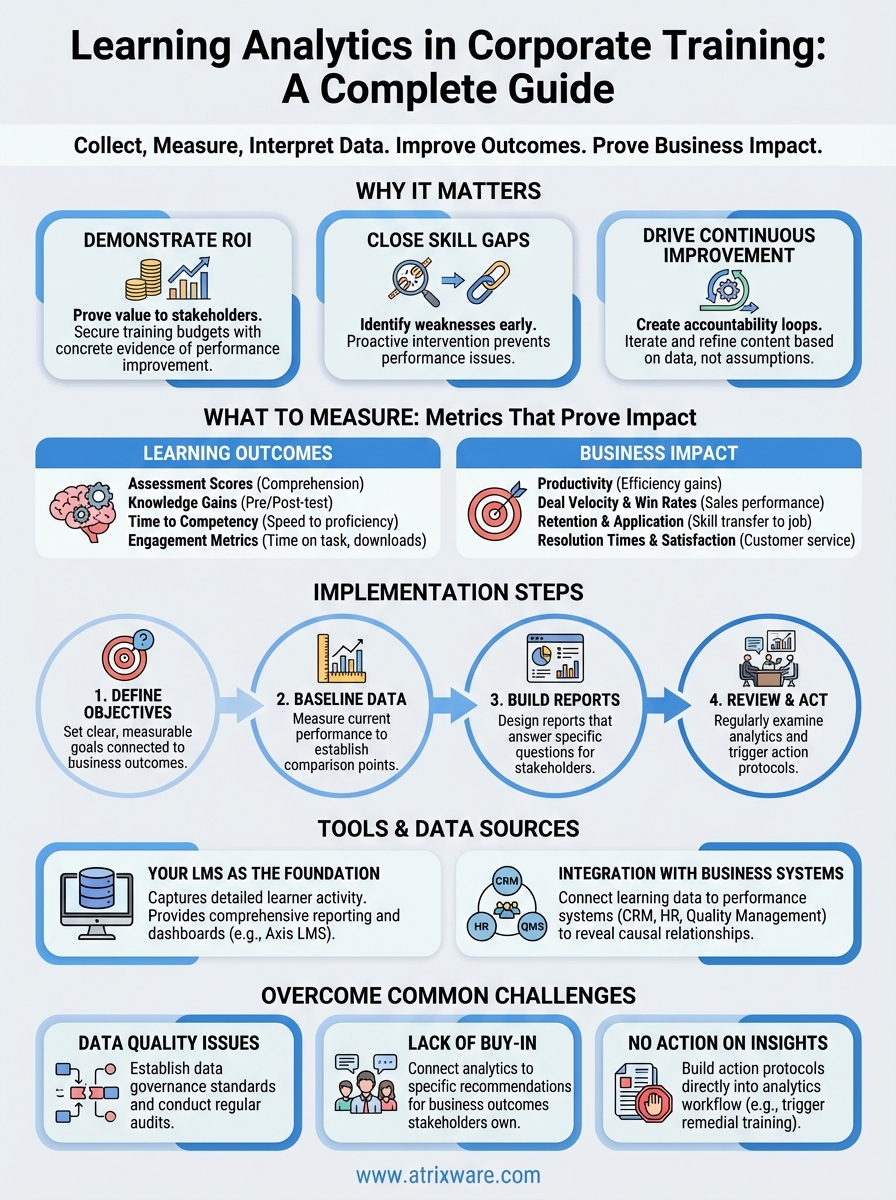
Why learning analytics matters in corporate training
Most L&D departments operate with limited visibility into whether their training programs actually work. You roll out courses, track completion rates, and hope for the best. But when leadership asks for proof that training investments deliver results, you’re left pointing to engagement metrics that don’t connect to business outcomes. Learning analytics in corporate training changes this dynamic by transforming raw data into evidence that training creates measurable value.
The business case for data-driven training
Your training budget competes with every other department for resources. Without concrete evidence that training improves performance, you’re vulnerable when budget cuts come around. Analytics gives you the ammunition you need: proof that employees who completed your sales training closed deals 15% faster, or that your compliance program reduced incidents by 40%. These aren’t soft metrics. They’re business outcomes that CFOs and CEOs understand.
Organizations that leverage analytics also allocate resources more effectively. Instead of spreading your budget across every possible training initiative, you identify which programs produce the strongest results and double down on what works. You stop wasting money on courses that generate completion certificates but don’t change behavior.
Analytics transforms training from a cost center into a strategic business function with quantifiable returns.
Closing skill gaps before they become performance gaps
You can’t fix problems you don’t know exist. Analytics surfaces patterns that remain invisible without systematic measurement. Maybe your product team consistently struggles with a specific module, indicating a knowledge gap that affects product launches. Or your customer service scores correlate directly with completion of a particular training sequence, revealing exactly where to focus improvement efforts.
Early identification means early intervention. You spot struggling learners before they fail, high-potential employees who need stretch assignments, and teams that require additional support. This proactive approach prevents performance issues rather than reacting to them after they’ve already impacted business results.
Accountability and continuous improvement
Training programs improve only when you measure and iterate. Analytics creates accountability loops that drive continuous enhancement. You test different instructional approaches, measure learner outcomes, and refine content based on evidence rather than assumptions. This systematic improvement compounds over time, making each iteration more effective than the last.
Your stakeholders also gain transparency into training effectiveness. Managers see which team members completed required training and how they performed. Executives track organization-wide skill development against strategic goals. This visibility builds trust in your training function and ensures alignment between learning initiatives and business priorities.
What to measure: metrics that prove impact
Not all metrics deserve your attention. You could track dozens of data points, but only a handful actually tell you whether training drives results. The key is separating vanity metrics that look impressive on reports from performance indicators that reveal real impact. Focus your measurement strategy on metrics that connect directly to business outcomes and help you make decisions about program improvements.
Learning outcome metrics
Start with the data that tells you whether learners actually acquired skills and knowledge. Assessment scores reveal comprehension levels and identify specific areas where learners struggle. Track pre-test and post-test performance to measure knowledge gains from your training. Time to competency shows how quickly learners reach proficiency, which directly affects productivity.
Completion rates matter, but context matters more. A 90% completion rate means nothing if learners abandon courses right before critical content. Look at module-level completion patterns to identify where learners drop off. Engagement metrics like time on task, attempts to master content, and resource downloads indicate whether your training holds attention and provides value.
The metrics you choose determine which improvements you prioritize and which business conversations you can confidently enter.
Business impact metrics
Your stakeholders care about results, not learning activities. Connect training data to performance outcomes that affect revenue, efficiency, and quality. Track productivity metrics before and after training interventions. For sales teams, measure deal velocity, win rates, and average contract value. For customer service, monitor resolution times, satisfaction scores, and escalation rates.

Retention and application metrics reveal whether skills transfer from training to actual work. Conduct follow-up assessments 30, 60, and 90 days post-training to measure knowledge retention. Use performance observations and manager feedback to verify that learners apply new skills on the job. These indicators prove that learning analytics in corporate training delivers lasting behavior change, not temporary knowledge bumps.
How to implement learning analytics step by step
You don’t need a massive data science team to implement learning analytics in corporate training. What you need is a clear process that starts with business questions and ends with actionable insights. Most organizations fail because they collect everything and analyze nothing, or they build complex dashboards that nobody uses. The right approach focuses on specific outcomes you want to improve and works backward to identify the data that informs those improvements.
Define business objectives first
Your analytics strategy starts with questions, not data. What performance gaps are you trying to close? Which business metrics need improvement? Are you reducing onboarding time, improving sales performance, or ensuring compliance? Write down three to five specific outcomes that matter to your organization. These objectives determine which data you collect and how you measure success.
Connect each objective to measurable targets. Instead of "improve sales training," specify "increase first-quarter sales rep quota attainment from 60% to 75%." This clarity guides your entire analytics approach and gives you a concrete benchmark against which to measure progress.
Clear objectives transform data collection from a fishing expedition into a targeted investigation that produces useful insights.
Start with baseline data collection
Establish your current state before you change anything. Measure existing performance levels, skill gaps, and training outcomes. This baseline gives you the comparison point you need to prove improvement. Identify the specific data points that connect to your objectives, then verify that your systems can actually capture this information accurately.
Focus on data quality over data quantity. Five reliable metrics beat twenty inconsistent ones. Ensure your learning management system tracks the right activities, integrates with performance systems, and maintains clean records that support analysis.
Build reporting frameworks that matter
Create reports that answer specific questions for specific audiences. Your executives need quarterly business impact summaries. Managers want team-level performance dashboards. Your L&D team requires detailed learner analytics that inform content improvements. Design each report around the decisions it supports, not around every available data point.
Schedule regular review cycles where stakeholders examine analytics and take action based on findings. Monthly reviews keep insights fresh and prevent analysis paralysis.
Tools and data sources you need
Your analytics infrastructure doesn’t require expensive enterprise software or specialized data science platforms. What you need is a learning management system that captures detailed learner activity and integrates with the business systems that track performance outcomes. Most organizations already have the core technology required to implement learning analytics in corporate training effectively. The gap isn’t tools, it’s connecting the data sources you already use into a coherent measurement system that reveals the relationship between learning activities and business results.
Your learning management system as the foundation
Your LMS serves as the primary data collection engine for learning analytics. It tracks every interaction learners have with training content: which modules they complete, how long they spend on each section, assessment scores, attempts to master concepts, and resource downloads. Choose an LMS that provides comprehensive reporting capabilities rather than basic completion tracking. You need granular visibility into learner behavior, not just pass/fail records.
Look for systems that offer customizable dashboards where different stakeholders can access relevant analytics without manual report generation. Your LMS should also maintain historical data that lets you analyze trends over time and measure the cumulative impact of training initiatives. At Atrixware, we built Axis LMS with robust reporting tools specifically because real-time insights drive better training decisions.
The right LMS transforms training delivery from a content distribution function into a strategic data asset that informs business decisions.
Integration with business systems
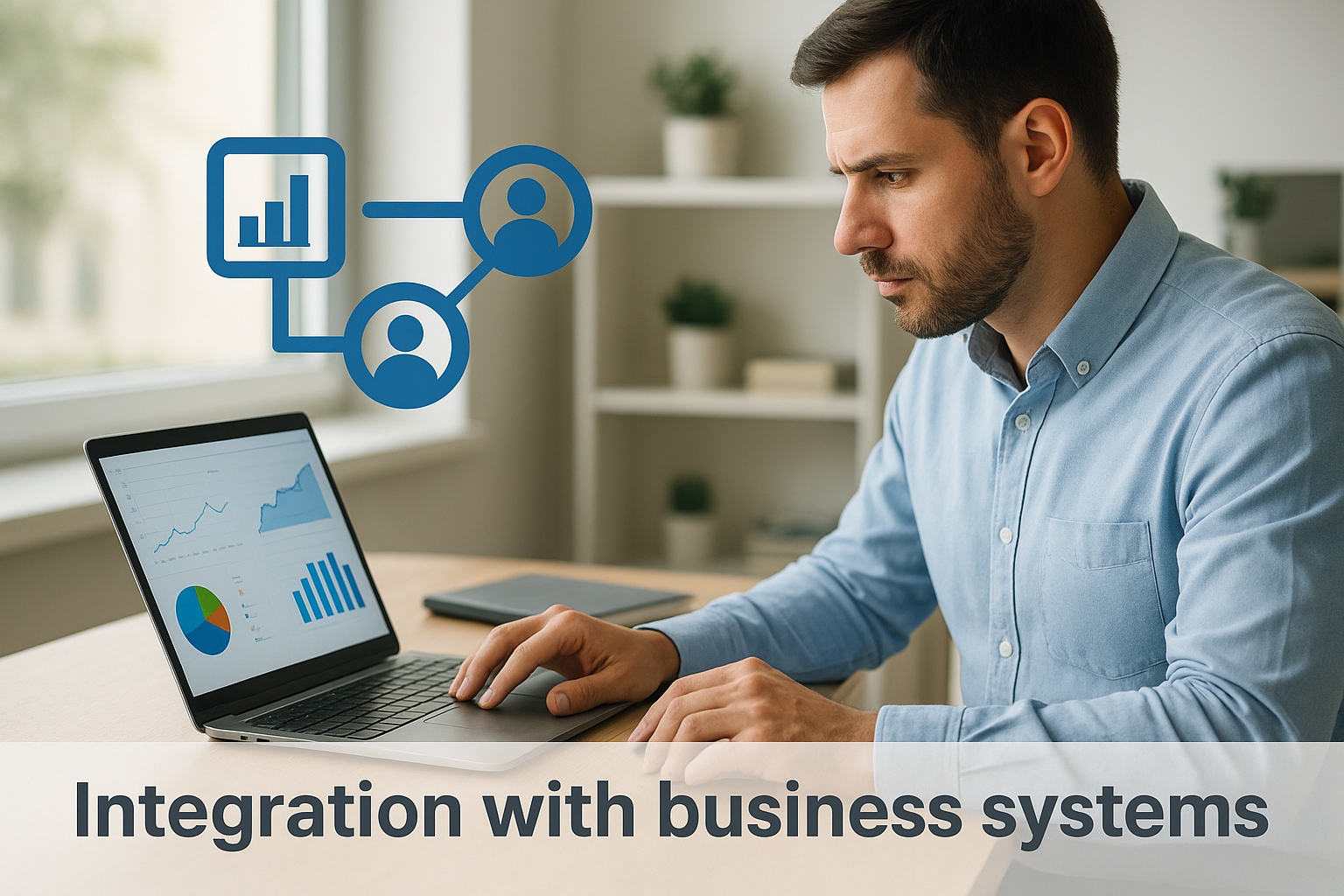
Analytics becomes powerful when you connect learning data to performance systems. Integrate your LMS with your CRM to correlate training completion with sales metrics. Link to your HR platform to track how training affects promotion rates, retention, and performance reviews. Connect with your quality management system to measure whether compliance training reduces incidents. These integrations reveal causal relationships between learning interventions and business outcomes that justify continued investment in training programs.
Common challenges and how to avoid them
Every organization faces predictable obstacles when implementing learning analytics in corporate training. The good news is that these challenges follow common patterns with proven solutions. You don’t need to learn through expensive trial and error when you understand what trips up most analytics initiatives and how to sidestep these pitfalls from the start.
Data quality and consistency issues
Your analytics are only as reliable as the data feeding them. Many organizations discover that their LMS captures incomplete records, departments use different systems that don’t communicate, or employees find workarounds that bypass tracking entirely. Fix this by establishing data governance standards before you launch analytics initiatives. Define exactly what gets tracked, how systems integrate, and who maintains data quality. Run regular audits to catch inconsistencies early and verify that your measurements reflect actual learner behavior rather than system quirks or reporting errors.
Clean, consistent data transforms analytics from guesswork into reliable business intelligence that stakeholders trust.
Getting stakeholder buy-in
Your managers and executives won’t care about analytics unless you connect insights to business outcomes they own. Avoid presenting raw data dumps that require stakeholders to interpret findings themselves. Instead, translate analytics into specific recommendations that address their performance goals. Show sales leaders how training correlates with quota attainment, not module completion rates. Demonstrate to operations managers that certification programs reduce errors, not that employees passed assessments.
Turning insights into action
Organizations often collect valuable data but never act on what they learn. You identify struggling learners but lack intervention processes. You discover ineffective content but don’t update it. Prevent this by building action protocols directly into your analytics workflow. When reports reveal problems, your system should automatically trigger specific responses: remedial training assignments, content revision requests, or manager notifications that require acknowledgment and action plans.
Final takeaways
Learning analytics in corporate training transforms how you measure, improve, and justify your training investments. You now understand which metrics drive real business impact, how to implement a practical analytics framework, and what tools connect learning data to performance outcomes. Most importantly, you know that success doesn’t require massive data science teams or complex technology stacks. It requires focused objectives, clean data, and commitment to acting on insights.
Your next step is choosing an LMS that makes analytics simple rather than adding complexity. Axis LMS delivers comprehensive reporting capabilities, seamless integrations with your business systems, and customizable dashboards that turn raw data into actionable insights. See how Axis LMS handles learning analytics in a free admin demo where you can explore our reporting tools firsthand and discover how easy it is to prove training ROI.
