You built training content that took weeks to create. Then you switched LMS platforms and discovered none of it works. Hours of work vanished because your old system and new system couldn’t communicate. This happens more often than you’d think.
A SCORM-compliant LMS solves this problem. SCORM (Sharable Content Object Reference Model) is a technical standard that lets your training content work across different platforms without rebuilding everything from scratch. Think of it as a universal translator between your courses and any LMS that speaks the same language. When both your content and platform follow SCORM standards, you can move, share, and reuse training materials without compatibility headaches.
This guide walks you through everything you need to evaluate SCORM-compliant platforms for your business. You’ll learn why compliance matters, what technical concepts actually mean, which features separate good systems from great ones, and how to avoid common mistakes. Whether you’re buying your first LMS or switching providers, you’ll know exactly what to look for.
Why SCORM compliance matters for businesses
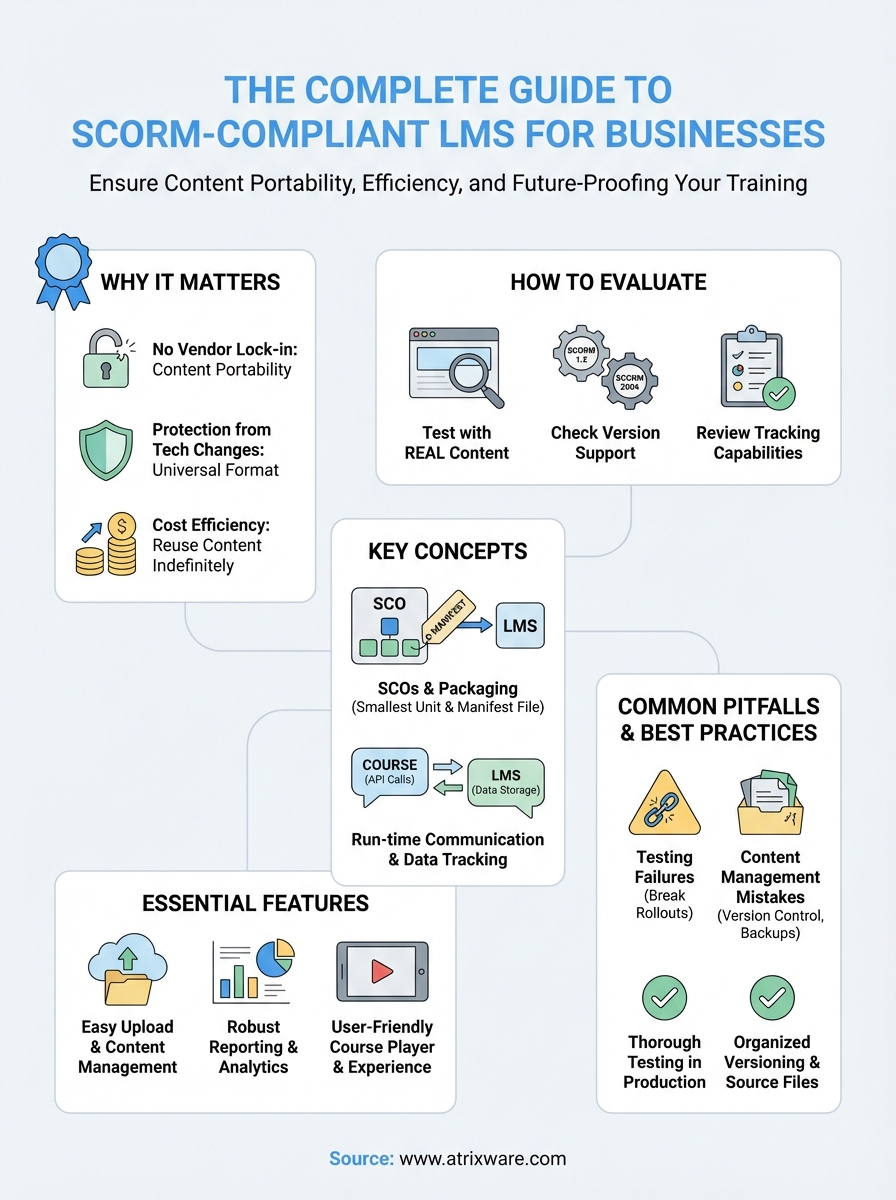
Your training investment shouldn’t trap you with one vendor. SCORM compliance protects your business from vendor lock-in by making your content portable across any SCORM-compliant platform. You can switch LMS providers without losing years of training materials or spending thousands rebuilding courses. This flexibility gives you negotiating power when contracts renew and ensures you always choose the best system for your needs, not just the one that holds your content hostage.

Protection from technology changes
Businesses face constant technology changes. Your LMS vendor might get acquired, discontinue features, or raise prices beyond your budget. SCORM standards shield you from these disruptions because your training content remains independent from any single platform. You own the content in a universal format that works anywhere. When your business grows and your training needs evolve, you can migrate to more advanced systems without starting over.
SCORM compliance means your training content outlasts any single platform.
Cost efficiency that compounds over time
Creating quality training content costs real money. Subject matter experts spend hours developing courses, designers polish the experience, and stakeholders review every detail. Without SCORM compliance, you pay these costs repeatedly every time you change platforms. A scorm compliant lms lets you reuse existing content indefinitely. You invest once in creating training materials and deploy them across different systems, departments, or even separate business units without additional development costs.
How to evaluate a SCORM compliant LMS
You can’t trust vendor claims alone. Testing with your actual content separates platforms that truly support SCORM from those that just check a box on their feature list. The evaluation process requires hands-on testing, version verification, and clear understanding of your tracking needs before you commit to any platform.
Test with real content first
Upload your existing SCORM packages to any platform you’re considering before you sign anything. Create a test course if you don’t have content yet using tools like Articulate or Adobe Captivate. Watch how the platform handles course launches, tracks completions, and reports scores. Some systems claim SCORM compliance but fail when you upload complex interactions, branching scenarios, or media-heavy content. Your test should include the most complicated course you plan to deploy, not just simple examples.

Check version support and compatibility
SCORM 1.2 remains the most widely supported version, while SCORM 2004 offers advanced sequencing and tracking capabilities. Your scorm compliant lms should support SCORM 1.2 and if you need it SCORM 2004. If you need SCORM 2004, ask vendors which specific editions of SCORM 2004 they support (2nd, 3rd, or 4th edition) since differences exist between them. Platforms that only support one version will force you to republish courses when standards change.
The right platform supports minimally SCORM 1.2 – the most widely supported version.
Review tracking capabilities
Different platforms capture different data points from your SCORM content. Basic systems track completion status and final scores. Advanced platforms record time spent on each page, individual question responses, number of attempts, and suspension data that lets learners resume where they stopped. List the specific metrics your business needs before evaluating systems. Compliance training requires detailed attempt tracking, while sales training might need completion percentages across teams. Your tracking requirements should drive your platform choice, not the other way around. Verify the platform exports this data in formats you can analyze, like CSV or Excel files, rather than locking reports behind proprietary dashboards.
Key SCORM concepts you should know
You don’t need to become a technical expert, but understanding core SCORM terminology helps you make better decisions. These concepts explain how your training content communicates with your LMS and what actually happens when learners launch courses. The technical foundation matters because it determines what your system can track and how reliably your content performs.
SCOs and content packaging
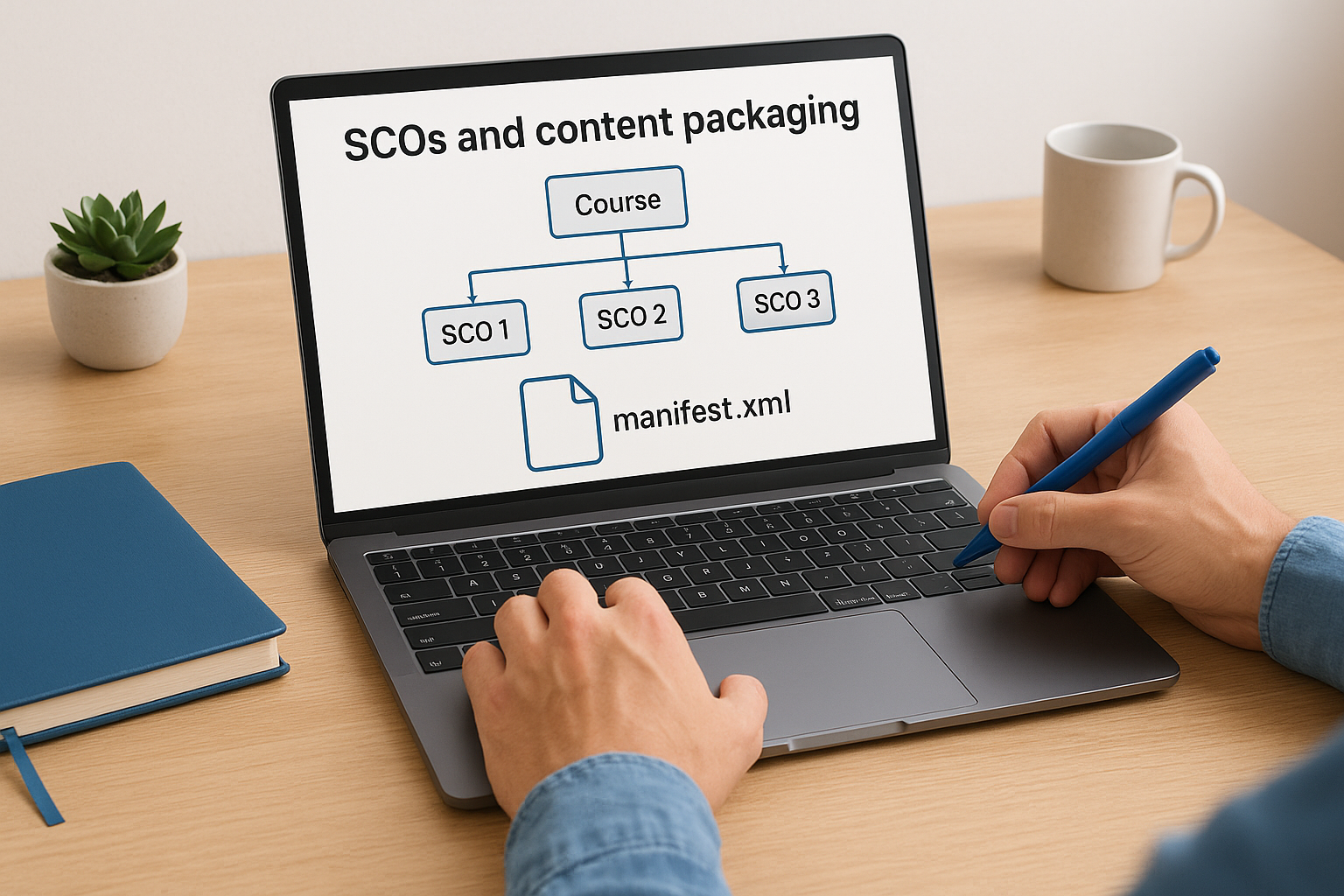
A Sharable Content Object (SCO) represents the smallest trackable unit in your training system. Think of it as a chapter or module that your scorm compliant lms monitors independently. Each SCO contains its own completion status, score, and bookmark data. When you create a course, you package these SCOs together with a manifest file that tells the LMS how to launch and organize everything. This manifest uses XML to describe your course structure, which SCO launches first, and how pieces connect together. Your authoring tool generates this packaging automatically, but the structure determines how learners navigate your training and what appears in your LMS table of contents.
Run-time communication and data tracking
Run-time communication describes the conversation between your course and the LMS while learners work through content. Your course sends messages like “learner scored 85%” or “bookmark saved at page 12” using standardized API calls. The LMS receives these messages and stores the data for reporting. This communication follows specific rules about which data elements exist and how they’re formatted. Basic tracking captures completion and scores, while advanced implementations record detailed attempts, time spent, and suspension data that lets learners resume exactly where they stopped.
Your LMS can only track data that SCORM standards define and your content actually sends.
Platforms differ in how many data elements they support and how quickly they process messages. Systems with robust SCORM engines handle rapid-fire data exchanges without losing information when learners click through content quickly.
Essential features in a SCORM compliant LMS
Your scorm compliant lms needs specific capabilities beyond basic compliance to deliver real business value. Core features determine whether your platform simply plays SCORM content or actively supports your training goals with tools that save time and improve learner outcomes. The right combination of features turns technical compliance into practical training success.
Easy upload and content management
You should be able to upload SCORM packages with a simple drag-and-drop interface or file picker. The system extracts your manifest file automatically, imports all associated media and resources, and displays your course structure without manual configuration. Advanced platforms let you update existing courses by uploading new versions while preserving learner progress and completion data. Your content library should organize courses with tagging, categories, and search functions so you quickly find and deploy specific training modules. Bulk upload capabilities matter when you’re migrating dozens or hundreds of courses from another system.
Robust reporting and analytics
Basic completion reports tell you who finished training, but comprehensive analytics reveal patterns that improve your programs. Your platform should track completion rates, average scores, time spent, attempts per course, and pass/fail ratios across individuals, departments, and the entire organization. Custom report builders let you filter data by date ranges, user groups, or specific courses to answer real business questions. Export options in CSV or Excel formats enable you to analyze trends outside the platform or share results with stakeholders who don’t have system access.

The best platforms turn SCORM tracking data into decisions that improve your training programs.
User experience and course player
Your course player determines how learners interact with training content. A responsive player adapts to different screen sizes and devices without breaking functionality or cutting off content. Navigation controls should include clear buttons for moving between pages, accessing the table of contents, and closing courses properly so progress saves correctly. Look for players that support bookmarking so learners resume exactly where they stopped, handle media playback smoothly, and process rapid clicks without losing tracking data. Your platform should launch courses in new windows, tabs, or embedded frames based on your preferences.
Common SCORM LMS pitfalls and best practices
Most businesses make the same mistakes when implementing SCORM systems, and these errors cost time and money. Understanding common pitfalls before they happen saves you from frustrated learners, incomplete data, and courses that don’t launch properly. Your scorm compliant lms works best when you combine technical compliance with practical deployment strategies that account for real-world use.
Testing failures that break rollouts
You can’t assume SCORM content works perfectly after upload. Test every course in your exact environment with multiple browsers, devices, and user roles before releasing to learners. Many platforms claim full compliance but handle specific interactions differently. Courses with video, branching scenarios, or complex quizzes often expose compatibility issues that simple content never reveals. Create a testing checklist that includes launching courses, completing activities, checking bookmarks, and verifying that scores report correctly. Your learners shouldn’t discover problems that proper testing would catch.
Testing in your production environment catches issues that never appear in demos or sandboxes.
Content management mistakes you can avoid
Businesses often treat SCORM packages as unchangeable files and create new versions for every update. Version control systems let you update content while preserving learner progress and historical data. Document which SCORM version each course uses and maintain source files from your authoring tool so you can edit content later. Your team needs clear naming conventions for courses and packages to avoid deploying outdated versions. Store SCORM packages in organized folders with metadata that explains content, target audience, and last update date. Regular backups protect against data loss when systems fail or migrations go wrong.
Bringing it all together
You now understand what separates basic SCORM support from true platform capabilities that drive training success. SCORM compliance protects your training investment by making content portable across systems, but the features surrounding that compliance determine your actual business outcomes. Your evaluation process should test real content, verify version support, check tracking capabilities, and examine the user experience your learners will encounter daily.
Successful implementations combine technical standards with practical features like easy uploads, comprehensive reporting, and reliable course players. Avoid common pitfalls by testing thoroughly before rollout and maintaining proper content management practices. Your scorm compliant lms becomes a strategic asset when you choose a platform that handles both current needs and future growth without compromise.
Ready to see what a truly capable platform looks like? Take our LMS readiness quiz to determine where you are in your evaluation process and discover the specific steps you should take next.
