Combining online flexibility with in-person engagement has become a priority for training professionals and educators who want better learner outcomes. If you’re researching Coursera blended learning options, you’re likely looking for structured courses or certifications that teach you how to design and deliver this hybrid approach effectively. The good news: Coursera offers several programs that break down blended learning methodology into actionable frameworks.
This article walks you through what blended learning actually means, which Coursera courses cover the topic, and how you can apply these principles to your own training programs. Whether you’re an HR manager building employee development initiatives or a training specialist improving course delivery, understanding blended learning fundamentals can directly impact learner engagement and retention.
At Atrixware, we build Axis LMS to help organizations deliver exactly the kind of flexible, trackable training that blended learning requires. The insights you gain from Coursera’s educational content can translate directly into how you structure courses, engage learners, and measure results within a platform like ours.
Why Coursera blended learning matters
You can’t implement what you don’t understand. Coursera blended learning courses give you a structured foundation in the principles, research, and practical techniques behind combining online and face-to-face instruction. These programs cover instructional design frameworks, learner engagement strategies, and assessment methods that directly apply to corporate training environments. Instead of piecing together scattered blog posts or guessing at best practices, you get curriculum built by educational institutions and industry experts who’ve tested these approaches across thousands of learners.
Learning the methodology correctly from the start prevents costly redesigns and learner disengagement later.
The skills you build through these courses carry immediate weight when you pitch blended programs to leadership. Decision-makers want evidence that your approach isn’t experimental. Completing a recognized certification demonstrates you’ve studied the pedagogy, understand how to balance synchronous and asynchronous elements, and can design learning paths that actually stick. This credibility matters when you’re asking for budget approval or convincing stakeholders to shift away from traditional classroom-only training.
Learning design skills translate to real business results
Training professionals who understand blended learning theory make better structural decisions from day one. You’ll know when to use video lectures versus live discussions, how to sequence content for maximum retention, and which activities work best in each format. These choices directly affect completion rates and knowledge transfer. A poorly designed blended program wastes both your time building it and your learners’ time struggling through it.
Certification validates your methodology
Coursera’s programs provide recognized credentials that signal competence to employers and colleagues. When you list a blended learning certification on your profile, you’re showing that a credible institution has verified your understanding of this approach. This validation becomes especially valuable if you’re consulting on training design or leading a learning and development team. Your recommendations carry more authority when backed by formal education rather than self-taught experimentation alone.
How Coursera supports blended learning
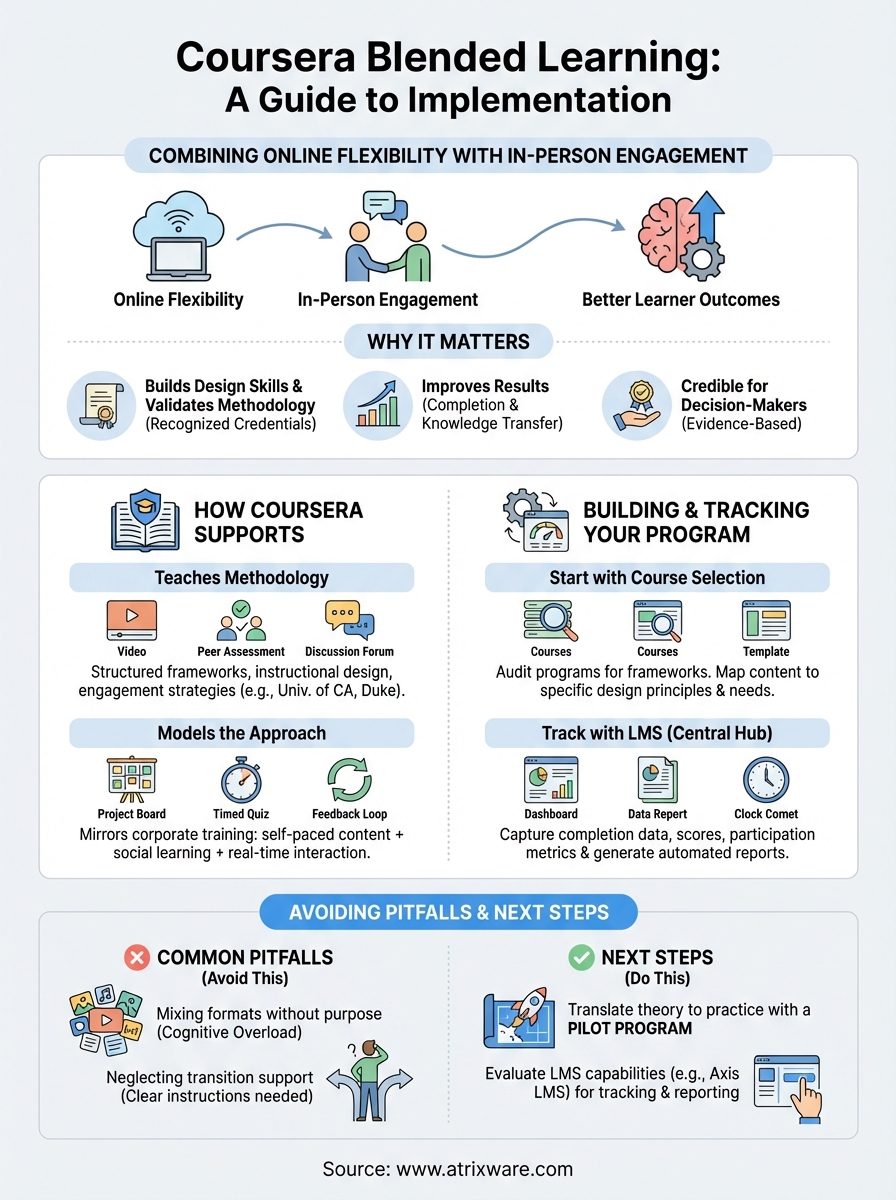
Coursera doesn’t just teach the theory behind blended approaches. The platform models the methodology through its own course architecture. You’ll find programs from institutions like the University of California, Irvine and Duke University that combine video lectures, peer assessments, discussion forums, and applied projects. This structure mirrors what you’d build in a corporate training environment: self-paced content consumption paired with social learning elements that require real-time or near-real-time interaction.
Courses teaching blended methodologies
Several certification programs focus specifically on blended and hybrid instructional design. These courses walk you through creating lesson plans, selecting appropriate technology tools, and sequencing activities across online and in-person formats. You’ll complete assignments that require you to design sample blended curricula, giving you portfolio pieces you can adapt for your organization. The curriculum covers assessment strategies, engagement techniques, and how to troubleshoot common implementation challenges before they derail your program.
Platform features for hybrid delivery
Coursera’s own interface demonstrates practical blended learning mechanics. You experience timed quizzes, peer review systems, and collaborative projects that can translate directly into your LMS design choices. The platform shows you how learner progress tracking and automated feedback loops function within a blended system. This hands-on exposure helps you understand which features actually drive engagement versus which ones add complexity without value. You’re not just reading about these tools; you’re using them as a learner yourself.

Experiencing blended learning as a student gives you insight no textbook explanation can match.
How to build a blended program with Coursera
You can apply Coursera blended learning principles directly to your training programs by following a structured approach. Start by identifying which competencies your team needs to develop, then select courses that align with those specific skills. The platform offers filtering by topic, skill level, and institution, making it straightforward to find relevant content. Once you’ve chosen your courses, you decide which components learners complete independently online and which concepts require live facilitation or hands-on practice sessions.
Start with course selection
Your first step involves auditing available programs that cover blended learning methodology. Look for courses from recognized universities that include practical assignments and certification options. These programs give you frameworks and templates you can adapt to your organizational context. Pay attention to course syllabi that break down instructional design steps, assessment strategies, and technology integration techniques. You want content that goes beyond theory and provides actionable implementation guidance.
Map content to your needs
After selecting your foundational courses, you extract specific design principles and models to apply in your environment. Identify which Coursera modules address your biggest training challenges, whether that’s learner engagement, assessment design, or activity sequencing. Create a translation document that connects course concepts to your actual training scenarios. This mapping process helps you adapt academic frameworks to real workplace applications without losing the methodological rigor that makes blended learning effective.
Connecting course theory to your specific use cases turns education into implementation.
How to track blended learning in an LMS
Your LMS becomes the central hub for monitoring how learners engage with both online and in-person components of your blended program. The system should capture completion data, assessment scores, and participation metrics across all formats you’ve incorporated from Coursera blended learning principles. This tracking capability lets you identify which learners are falling behind, which activities drive the most engagement, and where your curriculum needs adjustment based on actual performance data rather than assumptions.
Data points that matter
You need to track completion rates for self-paced modules, attendance records for live sessions, and assessment performance across both formats. Your LMS should show you when learners access content, how long they spend on each component, and whether they’re engaging with peer discussion elements. These metrics reveal patterns that inform future course design decisions. Tracking participation in collaborative activities helps you understand which social learning elements actually contribute to knowledge transfer versus which ones learners skip.
Comprehensive tracking across both online and in-person elements reveals the complete learning journey.
Reporting features you need
Your platform should provide automated reports that aggregate data across your entire blended program without manual compilation. Look for dashboards that display individual learner progress, cohort performance comparisons, and completion trends over time. These reporting tools help you demonstrate training ROI to stakeholders and identify at-risk learners before they disengage completely.

Common pitfalls and how to avoid them
Even with solid Coursera blended learning education behind you, implementation often reveals gaps between theory and execution. Most training professionals overload their first blended programs with too many formats and activities, thinking more variety equals better engagement. You end up creating confusion instead of clarity when learners can’t figure out where to focus their attention. The fix requires ruthless editing: choose fewer delivery methods and execute them well rather than spreading learner effort across ten different touchpoints.
Mixing formats without clear purpose
You damage program effectiveness when you add live sessions or collaborative activities simply because they exist in your toolkit. Each format needs a specific instructional reason tied to learning outcomes. Ask yourself why a particular concept requires synchronous discussion versus self-paced study. If you can’t articulate the pedagogical justification, you’re probably adding complexity without value. Structure your program so every format choice directly supports how learners need to process and apply that specific content.
Random format mixing creates cognitive overload rather than enhanced learning.
Neglecting transition support
Learners struggle most during format transitions within blended programs. You assume they’ll naturally shift from watching videos to attending live sessions without explicit guidance. Build clear instructions and expectations for each format change. Tell learners exactly what preparation they need before synchronous sessions and how online work connects to in-person activities. This scaffolding prevents the disorientation that causes dropout in otherwise well-designed programs.
Next steps
You’ve learned how Coursera blended learning courses can equip you with proven methodologies for combining online and in-person instruction. The educational foundation matters, but implementation determines whether these principles actually improve your training outcomes. Your next move involves translating course frameworks into functional program design within your own LMS environment. This shift from theory to practice separates professionals who understand blended learning from those who successfully deliver it.
Start by selecting one pilot program where you can apply these blended approaches. Choose a training initiative with clear success metrics so you can measure whether your new methodology delivers better results than traditional single-format delivery. This focused approach lets you refine your technique before scaling across your entire organization.
If you’re evaluating whether your current platform can support the tracking and reporting capabilities that effective blended learning requires, sign up for an Axis LMS admin demo to see how comprehensive LMS features handle both online course delivery and in-person session management within a single system.
