Your employees’ skills are the engine behind every project delivered, every customer served, and every goal achieved. But tracking those skills across teams, departments, and locations? That’s where things get complicated. The best competency management software helps you identify skill gaps, align training with business objectives, and build a workforce ready for what’s next. Choosing the right platform, however, requires cutting through the noise of dozens of competing solutions.
At Atrixware, we’ve spent years helping organizations deliver effective training through our Axis LMS platform. We understand that competency tracking and skill development go hand-in-hand with learning management, which is why we’ve researched and evaluated the top tools on the market. Our goal: give you an honest breakdown so you can make a confident decision for your team.
This guide covers 10 competency management software solutions worth considering in 2026. For each tool, you’ll find key features, pricing details, and the types of organizations that benefit most. Whether you’re managing compliance certifications, building leadership pipelines, or simply need better visibility into your team’s capabilities, you’ll find options that fit your needs below.
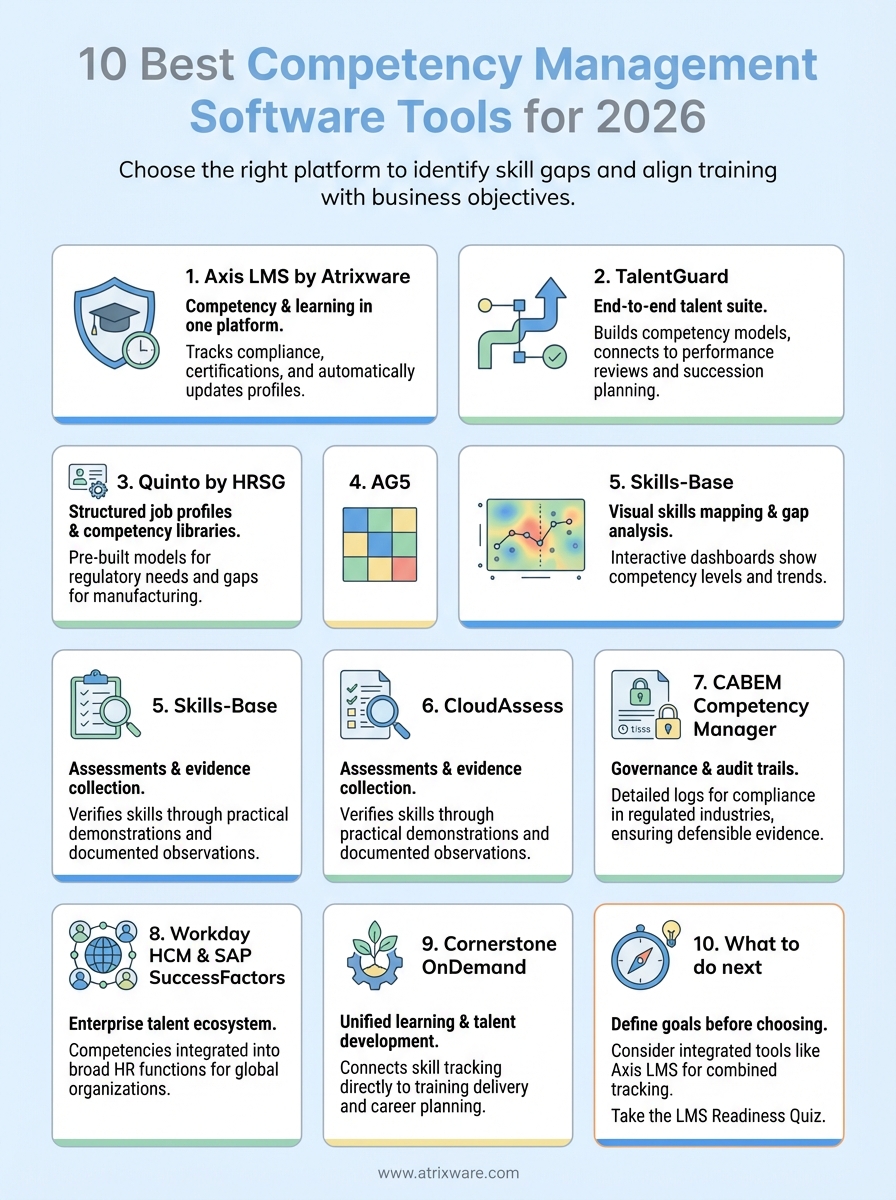
1. Axis LMS by Atrixware
Axis LMS brings competency management directly into your learning platform, which means you don’t need to juggle separate systems for training delivery and skill tracking. The software connects compliance requirements, certification deadlines, and competency frameworks to individual learner profiles, giving you visibility into who holds which skills and when re-certifications are due. You can build competency-based learning paths that automatically assign courses based on role requirements or identified skill gaps.
How Axis LMS handles competency and compliance tracking
Axis LMS tracks competencies at the course level and the user level, allowing you to assign required skills to specific roles or departments. When an employee completes training, the system automatically updates their competency profile and logs completion dates, test scores, and certification expiration timelines. You can set up automated reminders for re-certification, which helps you stay ahead of compliance audits in regulated industries.
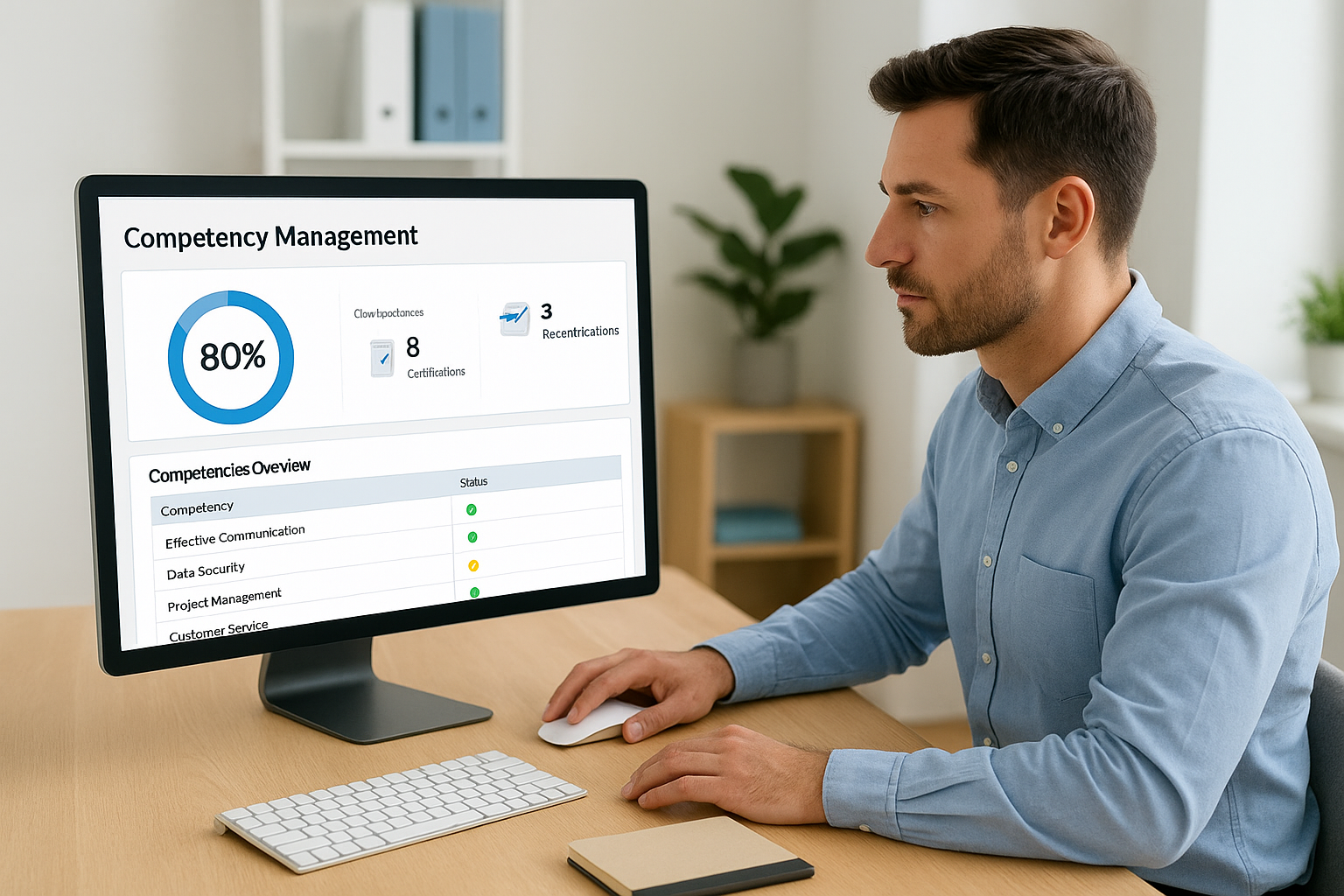
The platform’s real-time reporting tools let you pull up competency status for any individual, team, or department in seconds.
The system supports Continuing Education Units (CEU) tracking and offers configurable compliance features that align with standards like FDA 21 CFR Part 11 and GDPR. If you need audit trails, Axis LMS logs every action taken within the platform for full traceability.
Best fit for teams and use cases
Axis LMS works well for mid-sized to large organizations running employee training, customer education, or channel partner programs. Companies in healthcare, manufacturing, finance, and other regulated industries benefit from the built-in compliance tracking and automated workflows. The platform also suits businesses that sell training courses to external audiences, thanks to integrated e-commerce functionality.
Key features that matter for competency programs
You get a drag-and-drop course builder that lets you create competency-based learning paths without technical expertise. The reporting suite includes on-demand and automated reports that show competency gaps, certification statuses, and training effectiveness metrics. Axis LMS also offers extensive UI branding options, so your learners experience training under your organization’s look and feel.
Limits to know before you buy
Axis LMS focuses primarily on learning management with competency tracking as a supporting feature, so it may not offer the depth of standalone competency management tools. Organizations needing advanced skills matrices or sophisticated gap analysis might require additional customization or third-party integrations.
Integrations and data sync options
The platform connects with CRM and HR systems like Salesforce, ADP, BambooHR, and Zoho through its Integration Builder, which supports over 5,000 pre-built connections. You also get REST API access and webhook support for custom integrations. SAML-based single sign-on works with Okta, Azure, Ping Identity, and other identity providers.
Pricing approach
Atrixware uses custom pricing based on user count and feature requirements. You’ll need to request a quote directly from the sales team, as pricing isn’t published online.
2. TalentGuard
TalentGuard positions itself as an end-to-end talent management suite that wraps competency management into a broader HR platform. The system helps you build competency models from scratch or import existing frameworks, then connects those models to performance reviews, succession planning, and career development workflows. You can track skills at the individual, team, and organizational level while linking competencies directly to job requirements.
How TalentGuard supports competency frameworks
The platform offers a pre-built competency library with thousands of job-specific skills and behavioral attributes you can customize to match your organization’s needs. You assign competencies to roles, then use built-in assessment tools to measure proficiency levels and identify gaps. TalentGuard’s system updates competency profiles automatically as employees complete training or earn certifications.
The software creates visual competency maps that show skill distributions across your workforce.
Best fit for teams and use cases
TalentGuard works best for HR departments in mid-to-large enterprises focused on strategic workforce planning. Organizations using the software typically prioritize succession planning, career pathing, and performance management alongside competency tracking.
Key features that matter for competency programs
You get 360-degree feedback integration, which lets you gather skill assessments from managers, peers, and direct reports. The platform also includes career planning tools that recommend development activities based on competency gaps.
Limits to know before you buy
TalentGuard’s broader talent management focus means you pay for features beyond basic competency tracking, which might exceed your budget if you only need skills management.
Integrations and data sync options
The system integrates with major HRIS platforms and supports API connections for custom data flows.
Pricing approach
TalentGuard uses per-user pricing that varies based on which modules you activate. Contact their sales team for specific quotes.
3. Quinto by HRSG
Quinto delivers competency management built around structured job profiles and pre-loaded competency libraries, which helps you skip the groundwork of defining skills from scratch. The platform connects job descriptions, competency models, and performance management into a single system that lets you track workforce capabilities and align them with organizational goals. HRSG brings decades of competency research to the table, so you get access to validated competency frameworks used across industries and job families.
How Quinto uses competency libraries and job profiles
The software includes a library of over 2,000 pre-built competencies spanning technical skills, leadership behaviors, and functional knowledge areas. You select competencies relevant to each role, assign proficiency levels, and build job profiles that serve as the baseline for assessments and development planning. Quinto’s system lets you customize existing competencies or add organization-specific skills to match your unique needs.
The platform’s competency-based job profiles act as blueprints that drive hiring, training, and succession planning decisions.
Best fit for teams and use cases
Quinto works well for HR teams managing large-scale competency frameworks across multiple departments or business units. Organizations in government, healthcare, and professional services often choose this platform when they need structured, defensible competency models for regulatory purposes or workforce planning initiatives.
Key features that matter for competency programs
You get gap analysis tools that compare current employee competencies against job requirements and highlight development priorities. The platform also includes performance review integration, which connects competency assessments to annual evaluations and career progression discussions.
Limits to know before you buy
Quinto’s focus on structured job profiles and formal competency frameworks might feel rigid if your organization prefers flexible, agile approaches to skills tracking.
Integrations and data sync options
The system integrates with major HRIS and talent management platforms through API connections and data import/export tools.
Pricing approach
HRSG uses subscription-based pricing that scales with user count and selected modules. Request a custom quote through their sales team.
4. AG5
AG5 specializes in skills matrix management designed specifically for operational and manufacturing environments where tracking certifications, licenses, and hands-on competencies matters most. The platform gives you visual skills matrices that show which team members hold which qualifications, when certifications expire, and where skill gaps create operational risks. You can map skills to specific machines, processes, or safety requirements, then track competency levels across shifts, departments, or production lines.

How AG5 runs skills matrices for operational teams
The software builds color-coded skills matrices that display competency status at a glance, with red-yellow-green indicators showing expired certifications, upcoming renewals, and current qualifications. You assign skills to individual employees, set expiration dates for time-sensitive certifications, and receive automated alerts before renewals come due. AG5’s system lets you track both hard skills like equipment operation and soft skills like team leadership.
The platform’s matrix view helps you schedule shifts based on who holds the required certifications for specific machines or tasks.
Best fit for teams and use cases
AG5 works well for manufacturing facilities, warehouses, and field service organizations where operational continuity depends on maintaining certified teams. Companies needing real-time visibility into shop floor competencies benefit from the matrix-based approach.
Key features that matter for competency programs
You get role-based access controls that let managers view and update skills for their teams while restricting access to sensitive data. The platform includes competency planning tools that help you forecast skill needs based on production schedules.
Limits to know before you buy
AG5 focuses heavily on operational skills tracking, which means organizations needing broader talent management features might require additional systems.
Integrations and data sync options
The system connects with HRIS platforms and workforce management tools through API integrations.
Pricing approach
AG5 uses per-user subscription pricing with tiered plans based on feature access. Contact their sales team for specific quotes.
5. Skills-Base
Skills-Base focuses on visual skills mapping and gap analysis through interactive dashboards that show you exactly where your workforce stands on required competencies. The platform turns raw skills data into heat maps and matrix views that help you spot training needs, plan resource allocation, and track competency trends over time. You can build custom skills frameworks from scratch or use pre-loaded templates, then assign proficiency levels that match your organization’s assessment standards.
How Skills-Base maps skills and visualizes gaps
The software creates skills matrices that display competency levels across individuals, teams, or departments using color-coded indicators that show proficiency status at a glance. You define skills categories, set target proficiency levels for each role, and the system automatically calculates gaps by comparing current abilities against requirements. Skills-Base generates visual reports that highlight which skills need immediate attention and which teams face the biggest capability shortfalls.
The platform’s gap analysis tools help you prioritize training investments by showing which skills create the largest business risks.
Best fit for teams and use cases
Skills-Base works well for HR teams in growing companies that need better visibility into workforce capabilities without investing in enterprise-grade talent suites. Organizations managing technical skills across IT, engineering, or specialist functions benefit from the detailed mapping capabilities.
Key features that matter for competency programs
You get customizable skills taxonomies that let you define competencies specific to your industry or business model. The platform includes succession planning features that identify which employees hold the skills needed for future roles.
Limits to know before you buy
Skills-Base emphasizes visualization and reporting over learning delivery, so you’ll need separate training systems if you want integrated course management.
Integrations and data sync options
The system connects with HRIS platforms and learning management systems through API integrations and CSV import/export tools.
Pricing approach
Skills-Base uses subscription pricing that scales with user count. Contact their sales team for specific quotes based on your organization size.
6. CloudAssess
CloudAssess specializes in competency-based assessments and evidence collection, which makes it particularly useful when you need to verify that learners can demonstrate skills rather than just complete training modules. The platform gives you customizable assessment templates that align with industry standards or internal competency frameworks, then tracks evidence submissions, assessor feedback, and verification workflows in one centralized system. You can manage everything from simple knowledge checks to complex practical demonstrations that require photo uploads, video submissions, or documented observations.
How CloudAssess manages assessments and evidence
The software runs multi-step assessment workflows where learners submit evidence of competency, assessors review submissions, and managers verify final outcomes before marking skills as achieved. You create assessment criteria linked to specific competencies, then track evidence against each requirement to ensure nothing gets missed. CloudAssess stores all submission files in the cloud, giving assessors access to review materials from any device.
The platform’s evidence tracking ensures you maintain complete audit trails for compliance purposes.
Best fit for teams and use cases
CloudAssess works well for vocational training organizations, apprenticeship programs, and professional certification bodies that need structured evidence collection processes. Organizations running competency-based assessments for hands-on skills benefit most from the evidence management features.
Key features that matter for competency programs
You get customizable assessment rubrics that let you define exactly what constitutes competency at different proficiency levels. The platform includes assessor dashboards that show pending reviews and track assessment completion rates.
Limits to know before you buy
CloudAssess focuses specifically on assessment management, so you’ll need separate systems for course delivery and broader learning administration.
Integrations and data sync options
The system connects with learning management platforms through API integrations and supports data export for reporting purposes.
Pricing approach
CloudAssess uses subscription-based pricing that varies by user count. Contact their sales team for custom quotes.
7. CABEM Competency Manager
CABEM Competency Manager prioritizes governance frameworks and detailed audit trails over flashy dashboards and visualization tools, which makes it particularly valuable when you need to prove compliance during regulatory audits or investigations. The platform tracks every competency assessment, skill verification, and evidence submission with timestamps, user IDs, and detailed change logs that meet strict record-keeping requirements. You can establish approval workflows that ensure competency sign-offs move through proper channels before becoming official records.
How CABEM supports governance and audit trails
The software creates immutable audit logs that capture who assessed each competency, when verification occurred, and what evidence supported the assessment decision. You define approval hierarchies that require multiple sign-offs for critical competencies, and CABEM tracks each approval stage with complete documentation. The system maintains version control for competency frameworks, so you can trace how skill requirements evolved over time and demonstrate that assessments followed the standards in place when they occurred.
The platform’s audit trail features help you respond to compliance inquiries without scrambling through scattered records.
Best fit for teams and use cases
CABEM works well for heavily regulated industries like pharmaceuticals, aviation, and healthcare where competency records face frequent audits. Organizations needing defensible evidence of workforce qualifications benefit from the detailed governance controls.
Key features that matter for competency programs
You get customizable approval workflows that enforce proper sign-off procedures before competency records become official. The platform includes evidence attachment capabilities that link supporting documents directly to competency records.
Limits to know before you buy
CABEM’s governance focus means you sacrifice modern user interfaces and self-service features common in newer platforms.
Integrations and data sync options
The system connects with HR and quality management platforms through API integrations.
Pricing approach
CABEM uses custom enterprise pricing based on user count and deployment requirements.
8. Workday HCM and SAP SuccessFactors
Workday HCM and SAP SuccessFactors represent enterprise-grade talent management platforms that embed competency management within broader HR ecosystems covering everything from payroll to performance reviews. These systems approach competencies as part of an integrated talent strategy rather than standalone features, which means you get competency tracking alongside workforce planning, succession management, and career development tools. Both platforms serve global enterprises managing thousands of employees across multiple countries, business units, and regulatory environments.
How Workday and SuccessFactors approach competencies
Both platforms let you build competency frameworks tied to job profiles and then track skill levels through assessments, manager evaluations, and self-reported proficiency ratings. Workday uses skills clouds that suggest related competencies based on job families and industry benchmarks, while SuccessFactors offers competency libraries you can customize to match organizational needs. The systems connect competency data to talent reviews and development planning so managers see skill gaps alongside performance metrics.
These platforms treat competencies as strategic talent data that drives decisions across your entire employee lifecycle.
Best fit for teams and use cases
Both tools work best for large enterprises with dedicated HR technology teams managing complex workforce structures. Organizations already running Workday or SAP for core HR functions benefit from keeping competency management within the same ecosystem.
Key features that matter for competency programs
You get succession planning tools that identify high-potential employees based on competency assessments and career goals. Both platforms include development planning features that recommend training based on identified skill gaps.
Limits to know before you buy
These platforms require significant implementation resources and IT support, making them impractical for smaller organizations. The best competency management software for your needs might be a specialized tool if you don’t need the full enterprise suite.
Integrations and data sync options
Both systems function as central HR platforms that other tools integrate into rather than connecting outward to multiple systems.
Pricing approach
Expect six-figure annual contracts for mid-sized implementations and higher for global deployments.
9. Cornerstone OnDemand
Cornerstone OnDemand delivers competency management as part of a unified learning and talent development platform that connects skill tracking directly to training delivery, performance management, and career planning. The system lets you define competencies at the organizational level, assign them to specific roles, and then automatically recommend courses that close identified skill gaps. You can track competency progress through assessments, manager evaluations, and course completions while measuring how learning activities translate into improved capabilities across your workforce.
How Cornerstone connects learning to competencies
The platform maintains competency profiles for each employee that update automatically as learners complete training modules or pass assessments. You build competency frameworks tied to job families, then Cornerstone’s system matches learning content to specific skill requirements and suggests development paths based on career goals. The software tracks proficiency levels over time and generates reports showing how training investments impact competency growth.
The platform’s unified approach means you manage skill development and learning delivery without switching between separate systems.
Best fit for teams and use cases
Cornerstone works well for large organizations running comprehensive talent development programs that span employee onboarding, leadership development, and technical training. Companies already using Cornerstone for learning management benefit from keeping competency tracking within the same platform.
Key features that matter for competency programs
You get skills gap analysis tools that compare current competencies against role requirements and highlight development priorities. The platform includes succession planning features that identify employees with skills needed for future positions.
Limits to know before you buy
Cornerstone’s enterprise focus and feature breadth create complexity that smaller organizations might find overwhelming compared to specialized competency tools.
Integrations and data sync options
The system connects with major HRIS platforms through pre-built integrations and supports API connections for custom data flows.
Pricing approach
Cornerstone uses enterprise subscription pricing based on user count and selected modules. Contact their sales team for custom quotes.
What to do next
You now have detailed information about 10 competency management platforms that cover everything from operational skills matrices to enterprise talent suites. Each tool serves different organizational needs, whether you’re tracking shop floor certifications, managing compliance requirements, or building comprehensive workforce development programs. The best competency management software for your organization depends on your team size, industry requirements, and how deeply you need to integrate competency tracking with other HR systems.
Start by defining your specific competency management goals before reaching out to vendors. Do you need standalone skills tracking, or would competency management integrated into your existing learning platform work better? If you’re already running training programs and want to add competency tracking without managing multiple systems, Axis LMS offers both capabilities in one platform. Take the LMS readiness quiz to determine which features matter most for your current stage and business requirements.
