Choosing the right approach to training can mean the difference between engaged learners who retain information and disengaged ones who forget it within days. When researching learning strategies, you’ve likely encountered the terms adaptive learning vs personalized learning, often used interchangeably, though they represent distinct methodologies. Understanding what sets them apart helps training managers and L&D professionals build programs that actually work.
Both approaches aim to move beyond one-size-fits-all training, but they do so in different ways. Adaptive learning uses algorithms and real-time data to automatically adjust content based on learner performance. Personalized learning takes a broader view, allowing learners or instructors to customize the entire learning experience, from pace to content selection. The overlap between them creates confusion, but knowing the differences matters when selecting tools and designing curricula.
At Atrixware, we’ve built Axis LMS to support organizations implementing both strategies. This article breaks down each approach with clear definitions, explains where they intersect, and provides practical examples you can apply to your employee, customer, or compliance training programs.
Why the difference matters in corporate training
You face pressure to deliver measurable training results while keeping costs under control. Understanding adaptive learning vs personalized learning directly affects your ability to meet those goals. The wrong choice wastes budget on technology that doesn’t fit your learners’ needs or your team’s capacity to implement it. The right choice creates training programs that scale efficiently and produce visible improvements in performance.
Impact on training ROI
Adaptive learning typically requires upfront investment in technology platforms that analyze learner data and adjust content automatically. You pay for sophisticated algorithms and tracking systems, which makes sense when you train large groups who need standardized outcomes, like compliance certification. Personalized learning often costs less initially because you can start with manual customization using existing tools, though it demands more instructor time as programs grow.
Organizations that choose based on actual needs see better returns. A manufacturing company training 5,000 employees on safety protocols benefits from adaptive systems that automatically remediate knowledge gaps. A consulting firm training 50 account managers on client relationship strategies might achieve better results with personalized approaches that let learners choose relevant case studies and skip familiar content.
The financial difference becomes clear when you calculate total cost per trained employee against performance improvements and time to competency.
Effect on learner engagement and completion
Adaptive systems respond immediately to learner performance, adjusting difficulty in real time without human intervention. Your employees receive the next challenge based on their last answer, which maintains engagement by preventing both boredom and frustration. Completion rates improve when the system keeps learners in their optimal challenge zone.
Personalized approaches let learners control their own path through content, choosing what interests them or what applies to their specific role. This autonomy increases motivation, especially for experienced employees who resent being forced through basic material. However, some learners struggle with too much choice and need structure that adaptive systems provide automatically.
Implementation complexity and resources
Building an adaptive learning program requires technical expertise you might not have in-house. You need platforms that track detailed learner data, adjust content automatically, and integrate with your existing systems. Implementation takes months and ongoing optimization as algorithms learn from user behavior.
Personalized learning starts simpler. You can begin by creating optional learning paths within your current LMS or letting managers assign role-specific modules. The complexity grows as you scale, requiring more content creation and manual curation, but you maintain direct control over the learning experience without depending on automated systems.
What adaptive learning is and how it works
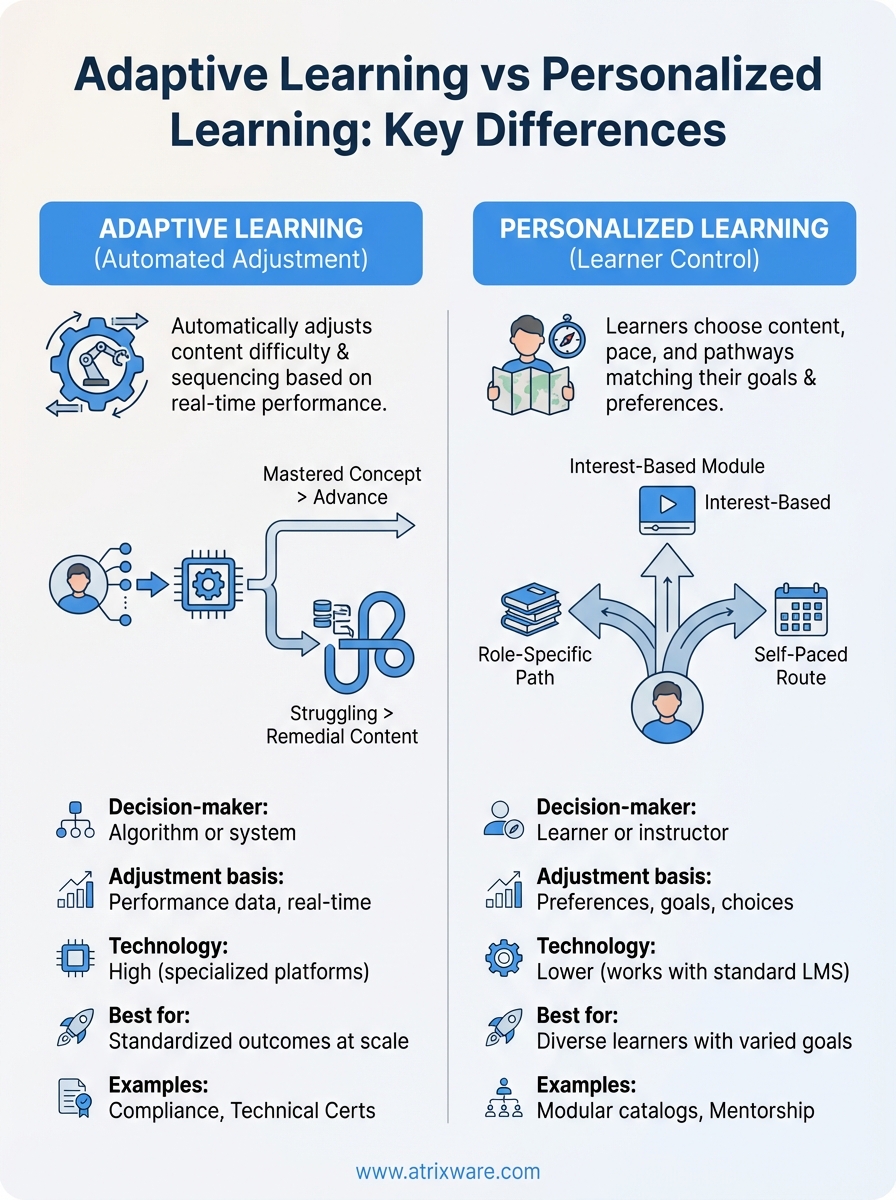
Adaptive learning refers to training systems that automatically adjust content difficulty and sequencing based on each learner’s real-time performance. The system tracks every answer, response time, and interaction, then uses algorithms to determine what the learner should see next. You experience this when a quiz question gets harder after you answer correctly or when the system redirects you to remedial content after you miss several concepts in a row. Unlike static courses, adaptive systems treat every learner’s path as unique.
The technology behind adaptive systems
Adaptive platforms collect detailed data points as learners progress through material. Each click, time spent on content, quiz score, and even mouse movement feeds into decision-making algorithms. The system analyzes patterns to identify knowledge gaps before learners realize they exist. When you struggle with a particular concept, the platform automatically presents additional examples or simplified explanations without instructor intervention.
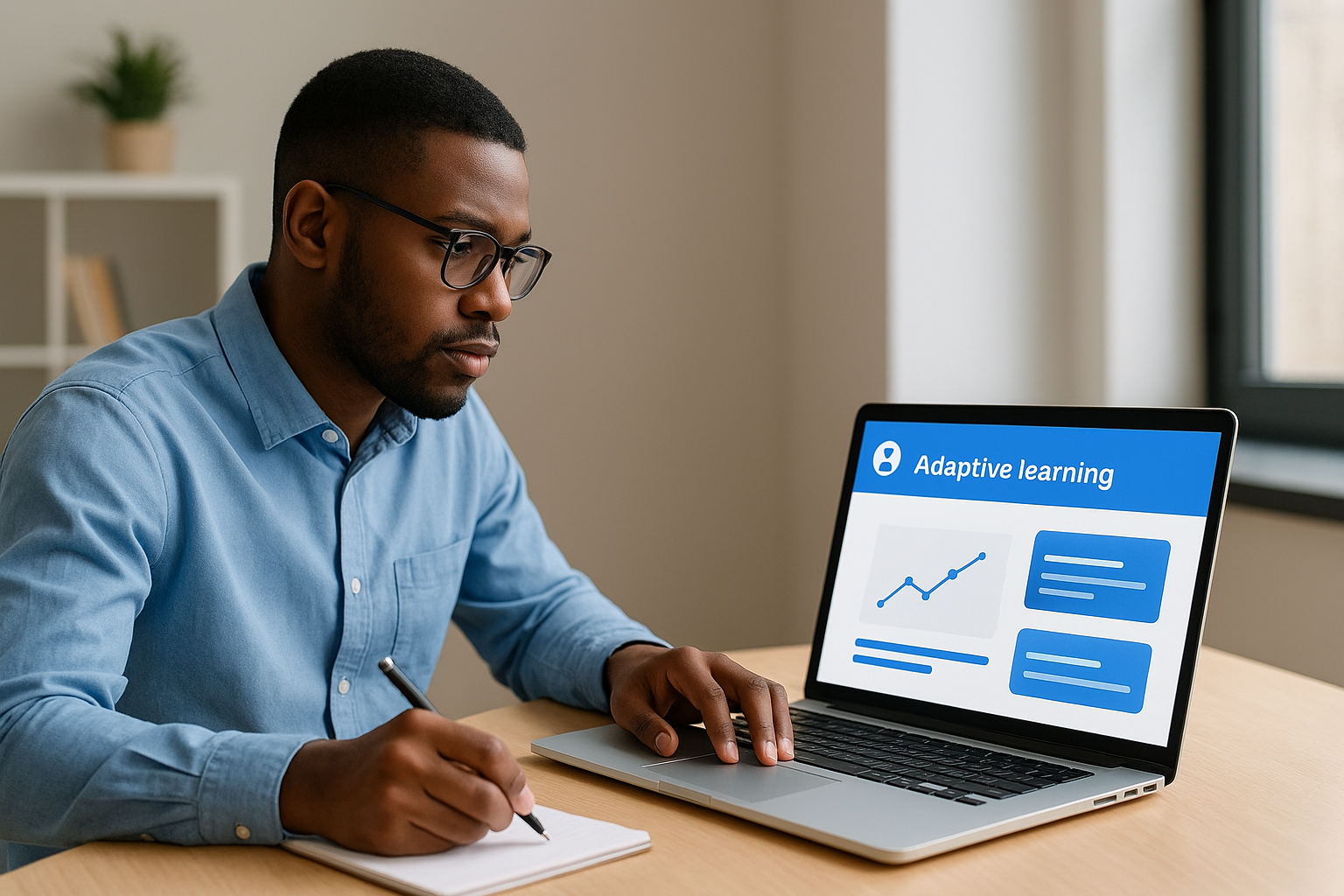
Adaptive algorithms make training decisions in milliseconds, something impossible for human instructors managing dozens or hundreds of learners simultaneously.
Most adaptive systems use branching logic or artificial intelligence to determine the next step. Simple branching follows predetermined rules (if the learner scores below 70%, show remedial module A). Advanced AI systems learn from aggregate user data, improving recommendations as more people use the platform.
Real-world applications in training
You see adaptive learning vs personalized learning differences most clearly in compliance training scenarios. An adaptive system teaching workplace safety automatically adjusts question difficulty based on whether employees demonstrate understanding of hazard identification. Someone who consistently identifies hazards quickly moves through content, while someone struggling receives additional scenarios and explanations.
Software companies use adaptive onboarding to train new developers on coding standards. The system presents increasingly complex debugging exercises based on performance, ensuring developers master fundamentals before tackling advanced problems.
What personalized learning is and how it works
Personalized learning puts learners in control of their training experience, allowing them to choose content, set their own pace, and select pathways that match their goals and preferences. Unlike systems that automatically adjust based on performance data, personalized approaches recognize that you know your learning needs better than an algorithm does. The learner actively shapes the experience by picking modules relevant to their role, skipping content they already know, or diving deeper into topics that interest them. When comparing adaptive learning vs personalized learning, this level of conscious choice represents the fundamental distinction.
The learner’s role in personalized approaches
You determine which learning resources to access and when rather than following a system’s automated recommendations. Training platforms provide multiple pathways, optional modules, or content libraries where you select what matters most. A sales representative might choose to focus on objection handling while skipping product features they already master. Instructors or managers often guide these choices, recommending specific paths based on job requirements or performance reviews, but the final decision rests with the learner.
Personalized learning treats adults as capable decision-makers who understand their own knowledge gaps and career development priorities.
Common personalized learning methods
Organizations implement personalized training through modular course catalogs where employees build custom curricula from available options. Learning management systems like Axis LMS let you create role-specific learning paths that learners customize based on experience level. Self-paced courses with optional supplementary materials give learners flexibility to deepen understanding selectively. Mentorship programs represent another personalized approach, pairing employees with experts who tailor guidance to individual circumstances rather than following standardized scripts.
Adaptive vs personalized learning side-by-side
You need to see how adaptive learning vs personalized learning compare across critical training dimensions to make informed decisions. Both approaches move beyond traditional one-size-fits-all training, but their methods for achieving individualization differ fundamentally. Understanding these distinctions helps you select the right methodology for specific training scenarios and organizational constraints.
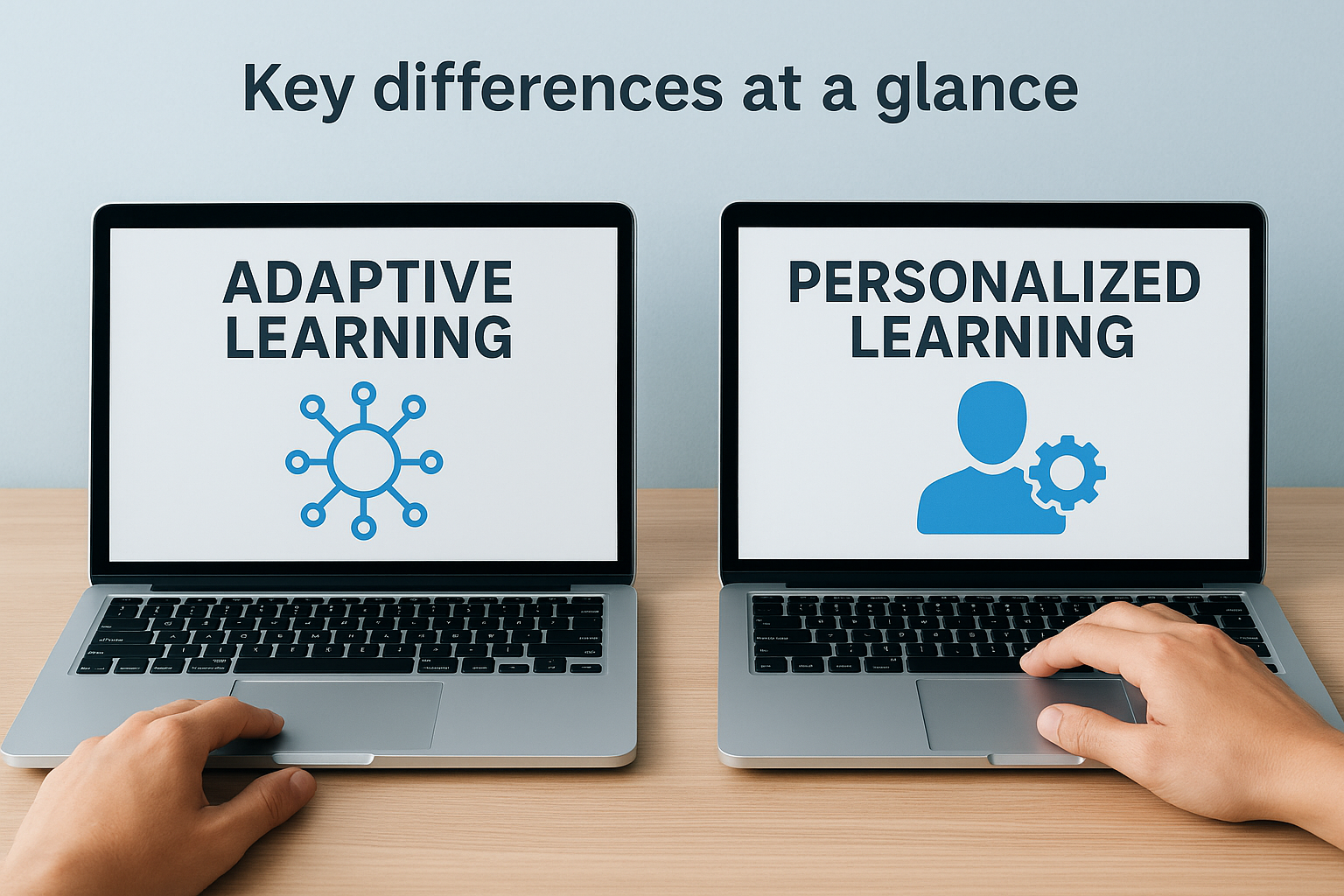
Key differences at a glance
The table below compares core characteristics that separate these approaches in practical implementation:
| Aspect | Adaptive Learning | Personalized Learning |
|---|---|---|
| Decision maker | Algorithm or system | Learner or instructor |
| Adjustment basis | Performance data and real-time responses | Preferences, goals, and choices |
| Technology requirement | High (specialized platforms needed) | Lower (works with standard LMS) |
| Content sequencing | Automatic based on learner performance | Manual selection by learner |
| Best for | Standardized outcomes at scale | Diverse learner populations with varied goals |
| Implementation time | Months (requires algorithm training) | Weeks (can start with existing content) |
| Ongoing management | Minimal instructor involvement | Requires continuous curation |
Where they overlap in practice
Both approaches recognize that individual learners have different needs and progress at different rates. Your training program benefits from this shared foundation regardless of which method you implement. Systems using either approach track learner progress and provide feedback, though adaptive systems respond automatically while personalized systems require human interpretation of that data.
Many modern training platforms blend both methodologies, offering automated content adjustments alongside learner choice options to maximize flexibility and effectiveness.
Organizations often combine elements when resources permit. You might use adaptive assessments that adjust question difficulty while still allowing learners to choose which modules they complete first. This hybrid approach delivers both algorithmic precision and human autonomy.
How to choose and implement the right approach
You select between adaptive learning vs personalized learning by examining your specific training objectives and available resources rather than following trends. The decision requires honest assessment of your learner population, technical capabilities, and desired outcomes. Start by defining success metrics like time to competency, completion rates, or performance improvements before evaluating which methodology aligns with those goals.
Assess your learner population and training goals
Organizations training large groups with standardized competency requirements benefit most from adaptive systems. Choose this approach when you need every learner to master the same core concepts but recognize they’ll require different amounts of practice to get there. Compliance training, technical certifications, and foundational skill development work well with adaptive platforms that automatically adjust difficulty and identify knowledge gaps.
Personalized approaches serve you better when learners have diverse roles and varying baseline knowledge. If your training population includes both entry-level employees and experienced professionals, personalized pathways let each group focus on relevant content without wasting time on material they already know. Customer training programs particularly benefit from this flexibility since clients have different use cases for your products.
The most effective choice matches your content structure, budget constraints, and team’s capacity to manage the selected methodology long-term.
Start with pilot programs before full rollout
You minimize risk by testing your chosen approach with a small learner group before committing resources to enterprise-wide implementation. Select 50-100 employees representing your broader population and run a controlled pilot for one training program. Track completion rates, time spent, assessment scores, and learner feedback to determine whether your selection achieves the intended results. Adjust your implementation plan based on pilot data before scaling.
Final takeaway
Your decision between adaptive learning vs personalized learning depends on your specific training needs and organizational capacity rather than which approach sounds more innovative. Adaptive systems deliver standardized outcomes efficiently for large groups through automated content adjustment, while personalized approaches give learners control over their training path when diversity of needs matters more than uniformity. Both methodologies improve on traditional training, and many successful programs incorporate elements of each.
Success requires choosing technology that matches your team’s ability to implement and maintain it over time. Start small, measure results against your defined objectives, and adjust based on actual performance data rather than assumptions. The right LMS supports whichever approach you select without forcing you into a single methodology.
Determine your LMS readiness to understand which features and capabilities align with your training strategy. Your learners benefit most when you select tools based on their needs rather than platform marketing claims.
