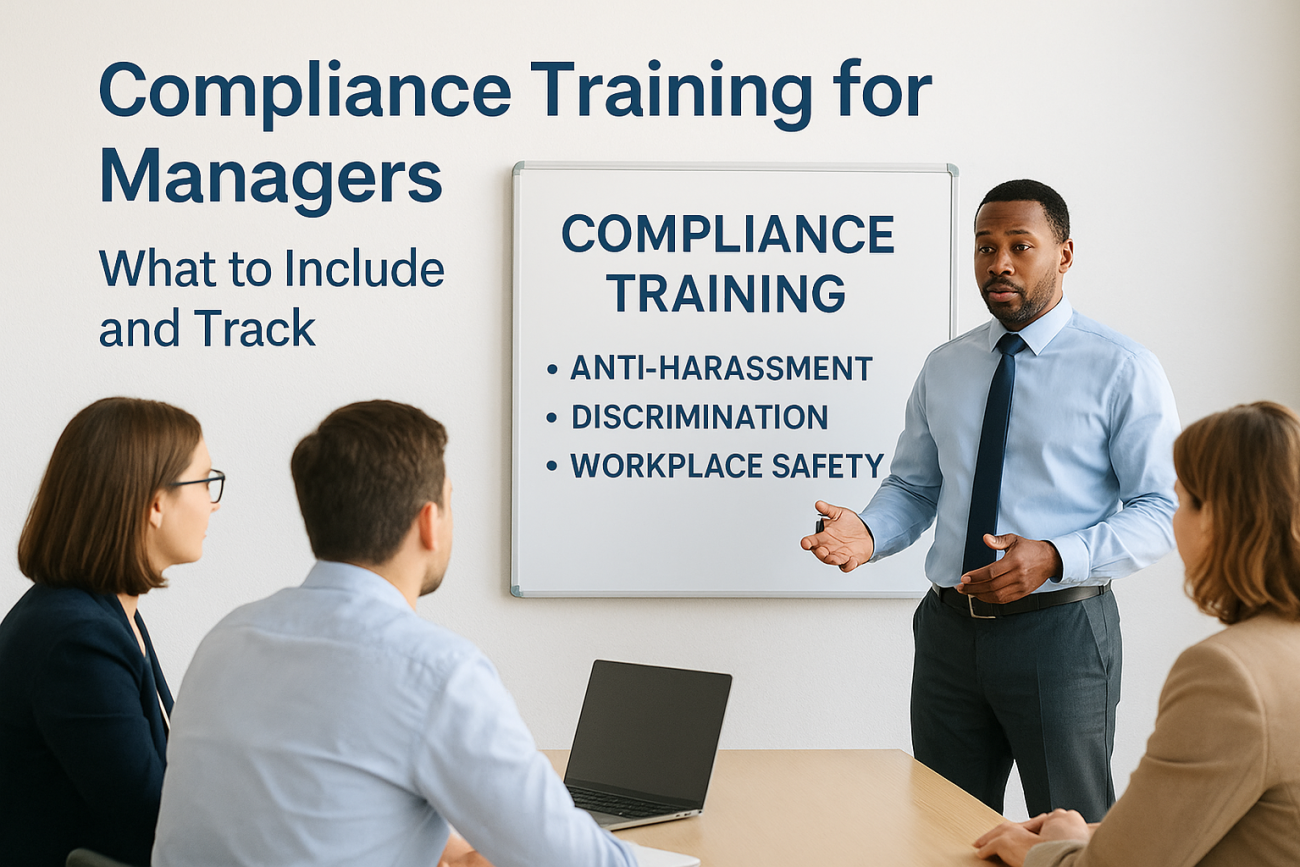
Managers make decisions every day that carry legal and regulatory weight, from hiring and performance reviews to handling workplace complaints. Without proper training, those decisions can expose your organization to costly lawsuits, fines, and reputational damage. That’s why compliance training for managers isn’t optional; it’s essential.
But what exactly should that training cover? And how do you know it’s actually working? These are the questions HR leaders and training professionals grapple with when building or evaluating their programs. The answers matter because generic, checkbox-style training rarely changes behavior or reduces risk.
This guide breaks down what effective manager compliance training includes, which topics are non-negotiable, and how to track completion and comprehension using a Learning Management System like Axis LMS. You’ll walk away with a clear framework for building training that protects your organization and equips your managers to lead responsibly.
Why compliance training matters for managers
Managers sit at the center of your organization’s compliance infrastructure. They implement policies, enforce standards, and directly influence how your workplace culture handles harassment, discrimination, and safety violations. When managers lack proper training, they can’t spot warning signs, mishandle complaints, or inadvertently create hostile work environments. Each misstep creates legal liability and financial exposure for your entire organization.
Legal and financial risks
Your organization faces steep penalties when managers violate employment laws or fail to act on compliance issues. A single discrimination lawsuit can cost hundreds of thousands in settlements, legal fees, and reputation damage. Federal agencies like the EEOC and OSHA actively investigate complaints, and state regulators add their own enforcement layers. Managers who don’t understand their responsibilities trigger these investigations through actions they don’t realize are violations.
Beyond direct legal costs, you face operational disruptions when managers handle situations incorrectly. Employee turnover increases when staff lose trust in leadership. Morale drops when complaints go unaddressed or escalate unnecessarily. Your productivity suffers as teams navigate toxic dynamics that trained managers could have prevented.
Investing in compliance training for managers protects both your people and your bottom line.
Building a culture of accountability
When you train managers properly, they become your first line of defense against compliance breaches. They recognize issues early, respond appropriately, and escalate concerns through proper channels. This proactive approach prevents small problems from becoming major incidents that require legal intervention.
Training also creates consistent enforcement across departments. Managers apply policies uniformly when they understand both the letter and spirit of regulations. Your employees see fairness in action, which builds trust and reduces the likelihood of formal complaints or legal action.
Core topics every manager program should cover
Your compliance training for managers should address the regulatory areas where they make daily decisions. These aren’t abstract concepts but practical situations managers encounter when supervising teams, reviewing performance, and handling interpersonal conflicts. Focus your curriculum on topics that directly affect your organization’s legal exposure and workplace culture.
Anti-harassment and discrimination
Managers need to recognize harassment patterns before they escalate into formal complaints or legal actions. Your training should cover protected characteristics under federal and state law, including race, gender, age, disability, and religion. Provide clear scenarios showing what constitutes harassment versus acceptable workplace communication.

Include guidance on your organization’s reporting procedures and investigation protocols. Managers must know when to escalate concerns to HR, how to document incidents properly, and what actions they cannot take independently. This knowledge prevents them from accidentally compromising investigations or creating additional liability through mishandling.
Effective harassment training gives managers both recognition skills and response protocols they can apply immediately.
Workplace safety and regulatory compliance
Managers enforce safety protocols that protect employees from physical harm and protect your organization from OSHA violations. Cover emergency procedures, accident reporting requirements, and specific hazards relevant to your industry. Include your policies on substance abuse, workplace violence prevention, and accommodation requests under the ADA.
How to build and deliver manager training
You can’t rely on off-the-shelf content that ignores your specific policies, procedures, and workplace scenarios. Build your compliance training for managers around situations they actually face, using real examples from your organization’s history and industry context. Your training should reference your employee handbook, reporting systems, and escalation protocols so managers know exactly what actions to take when issues arise.
Choosing the right delivery format
Online courses through a Learning Management System give you scalability and consistency across locations and time zones. You can deliver modules asynchronously so managers complete training on their schedules while maintaining standardized content and assessment. This approach lets you update materials quickly when regulations change and track exactly who completed which sections.
Blended approaches work well when you combine online modules with live discussion sessions where managers practice applying concepts.
Making content relevant and actionable
Your training materials should include decision trees and response templates that managers can reference during actual incidents. Case studies should mirror your workplace demographics, job roles, and common conflict scenarios. Focus on what managers should do and say rather than abstract legal principles they won’t remember under pressure.
What to track and how to document it
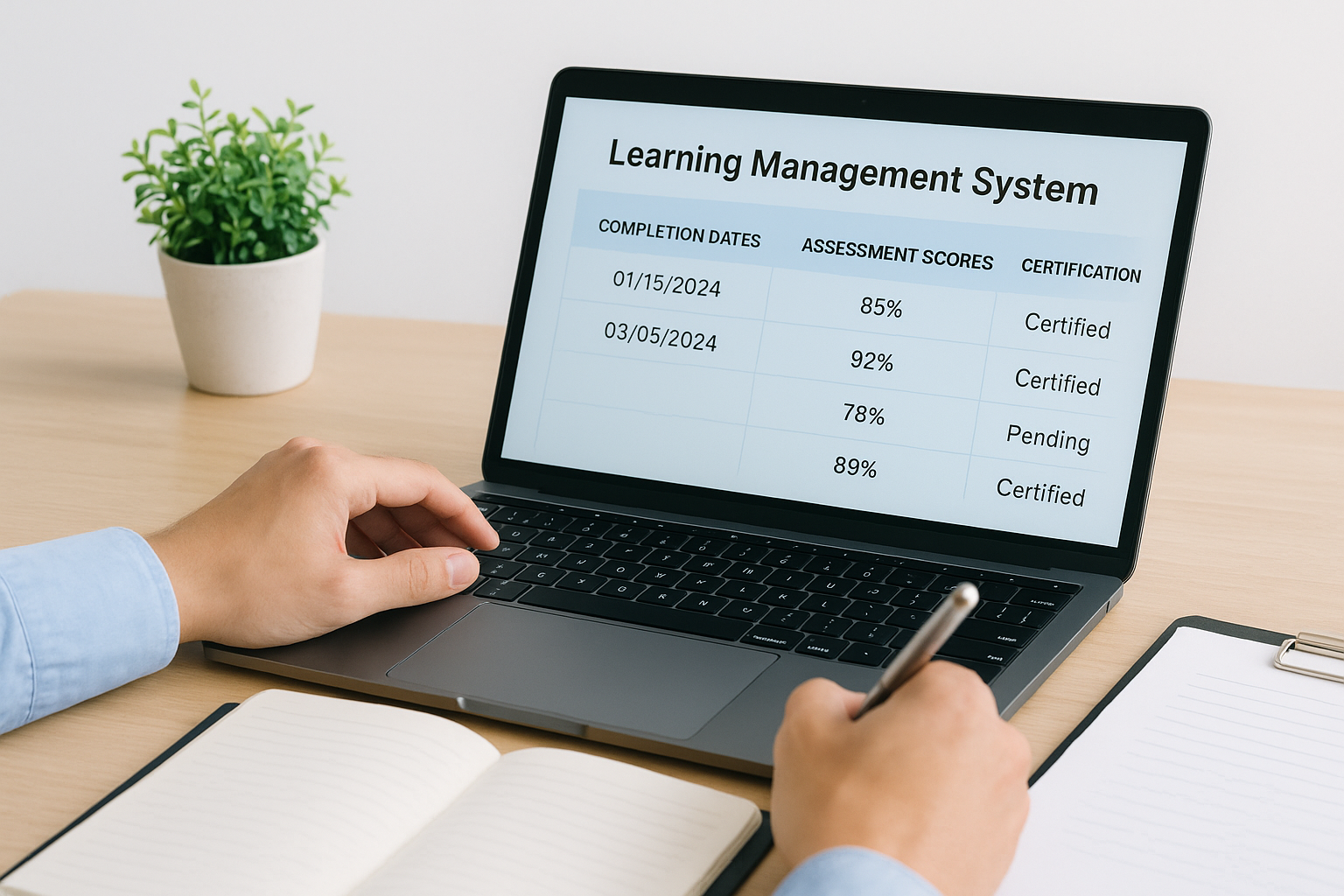
Your Learning Management System should capture completion dates, assessment scores, and certification status for every manager in your organization. This documentation becomes your primary defense if regulators or attorneys question whether managers received proper training. Track which modules each manager completed, when they finished each section, and how they performed on knowledge checks.
Completion and certification records
Record initial training completion dates and annual refresher cycles for each manager. Your LMS should automatically generate certificates when managers pass final assessments, and you need to store these records for the duration of employment plus at least three years after departure. Include version numbers so you can prove which policy version each manager learned under if regulations or your handbook changed.
Assessment scores and comprehension
Monitor quiz results and scenario-based responses to identify managers who need additional support before they face real compliance situations. Set minimum passing scores that reflect actual comprehension rather than memorization. When managers fail assessments repeatedly, your system should flag them for remedial training or coaching sessions with HR.
Detailed tracking turns compliance training for managers from a checkbox exercise into verifiable evidence of your good-faith efforts to prevent violations.
Common pitfalls and how to avoid them
Organizations waste resources when they treat compliance training for managers as a one-time event or deploy generic content that doesn’t reflect their actual policies. These mistakes create false confidence while leaving real vulnerabilities unaddressed. You need to recognize these patterns and design your program to avoid them.
One-and-done training approach
Your managers forget most training content within weeks if you don’t reinforce it through regular refreshers and practical application. Annual training alone doesn’t stick when managers face daily decisions requiring compliance knowledge. Build ongoing learning into your program through quarterly micro-modules, scenario discussions, and policy updates that keep concepts fresh.
Training that happens once a year becomes irrelevant when regulations change or new situations emerge in your workplace.
Generic content disconnected from reality
Pre-packaged courses that ignore your industry, state laws, and internal procedures confuse managers rather than guide them. Your training must reference your specific reporting systems, escalation paths, and documentation requirements so managers know exactly what to do in your organization. Customize scenarios to match your workforce demographics, common conflict patterns, and actual policy language.
Key takeaways and next steps
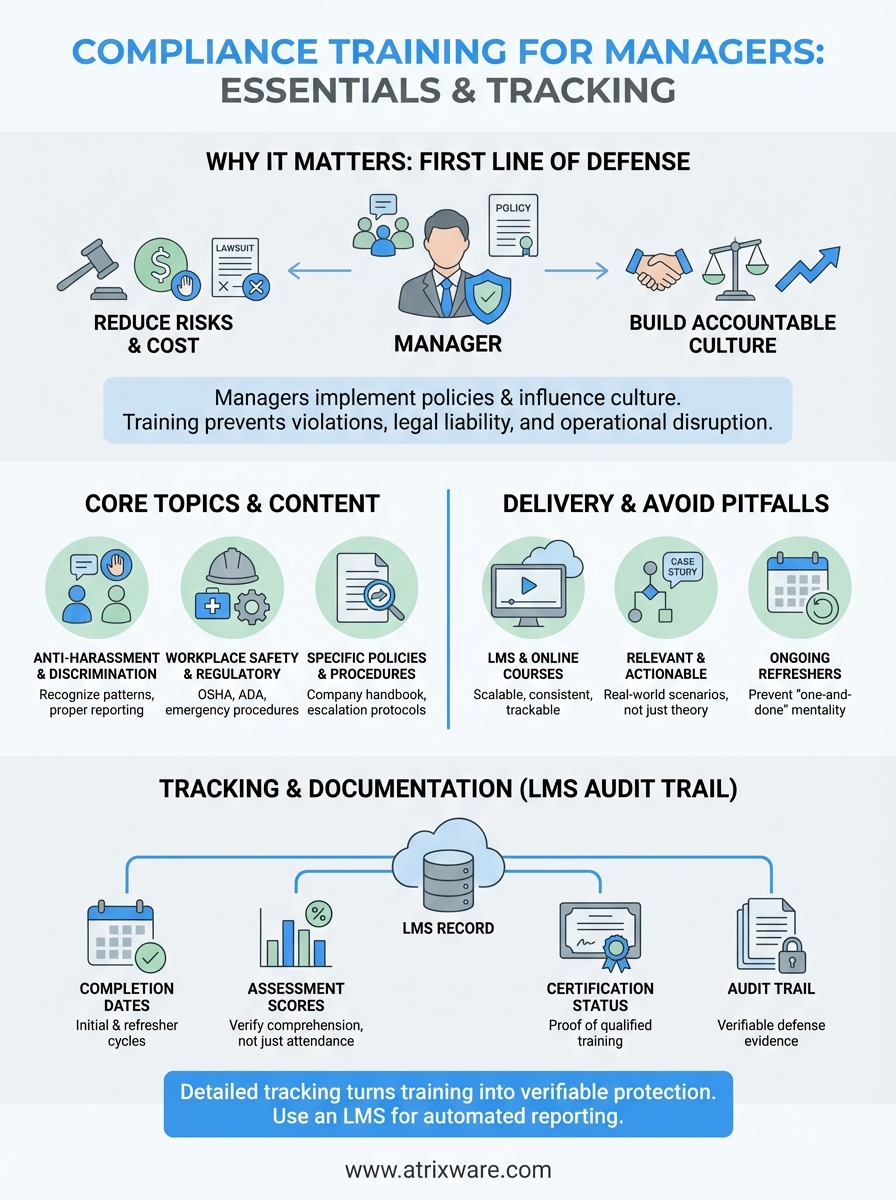
Your compliance training for managers protects your organization when you cover the right topics, deliver content effectively, and track completion rigorously. Focus on anti-harassment, workplace safety, and your specific policies rather than generic legal concepts. Make your training actionable through scenarios that reflect your workplace reality, and reinforce learning through regular refreshers and practical application.
Document everything through your Learning Management System. Track completion dates, assessment scores, and certification status for every manager. This detailed record-keeping demonstrates your good-faith efforts to prevent violations when regulators or attorneys ask questions.
Your next step is evaluating whether your current system can handle these tracking requirements. See how Axis LMS handles compliance training with automated reporting, certification management, and customizable course building that fits your organization’s specific needs. The right platform turns compliance training from a checkbox exercise into verifiable protection for your business.
