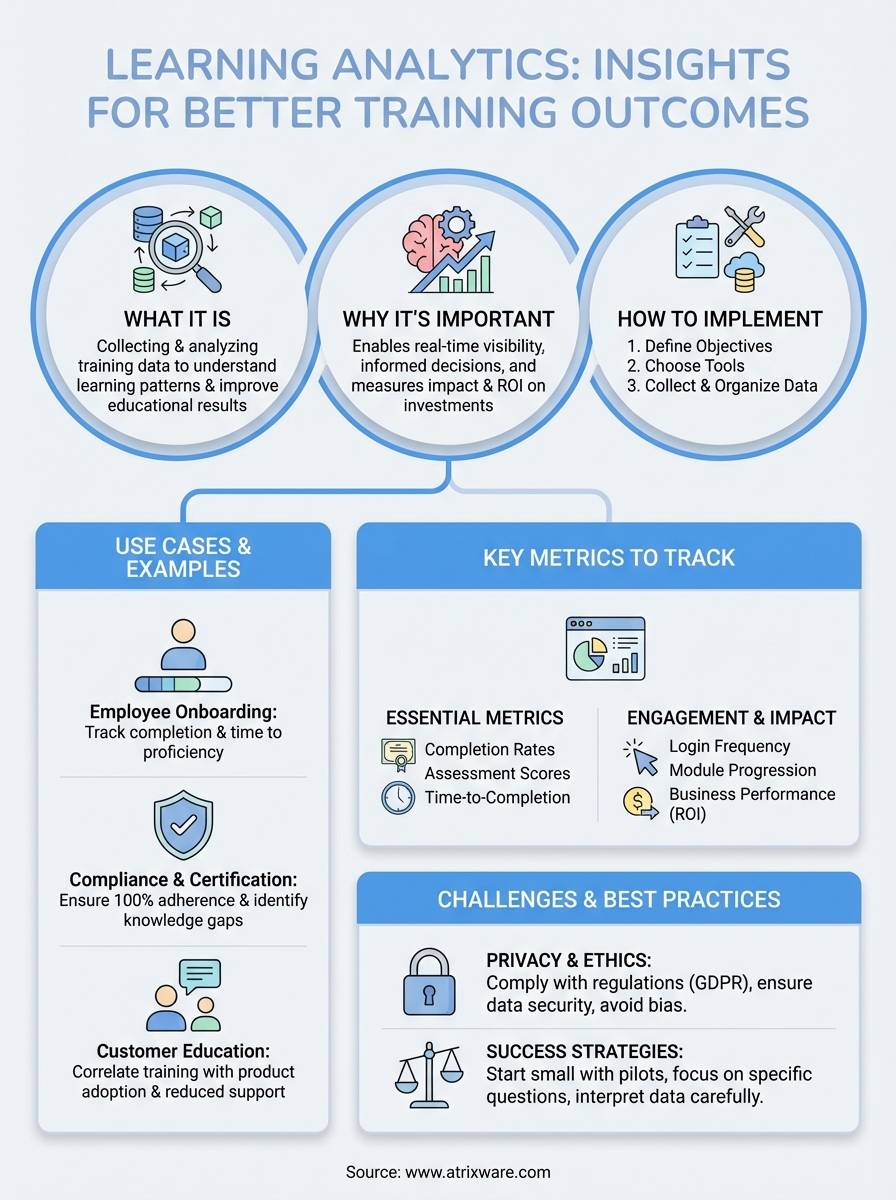
Learning analytics is the process of collecting and analyzing data from training programs to understand how people learn and improve educational outcomes. It takes information from your learning management system, course interactions, assessment results, and learner behavior to reveal patterns that help you make better training decisions. You can use these insights to identify struggling learners early, adjust your course content, personalize learning paths, and measure the real impact of your training investments.
This guide walks you through everything you need to know about learning analytics. You’ll discover why it matters for your training programs, how to implement it step by step, practical examples from different industries, the key metrics you should track, and the tools that make it all possible. We’ll also cover the challenges you might face and the best practices that keep your analytics efforts on track.
Why learning analytics is important
Understanding what is learning analytics and why it matters can transform how you approach training. Traditional training programs operate on assumptions and feedback surveys that arrive weeks after a course ends. Learning analytics gives you real-time visibility into what’s working and what’s not, so you can make adjustments before problems become failures. You’ll spot patterns that would otherwise remain hidden, like specific modules where learners consistently struggle or content that fails to engage your audience.
Making informed training decisions
Your training budget demands measurable results, and learning analytics delivers the proof you need to justify investments. You can identify which courses generate the best completion rates, which instructors drive the highest engagement, and which learning paths produce the most competent employees. This data helps you allocate resources where they’ll have the greatest impact rather than spreading them thin across programs that don’t deliver value.
Learning analytics transforms gut feelings about training effectiveness into concrete evidence that drives better business outcomes.
Measuring real impact
Analytics lets you connect training activities to business performance metrics that matter to leadership. You’ll track how training influences productivity, reduces compliance violations, shortens onboarding time, and improves customer satisfaction scores. Your organization gains the ability to demonstrate clear return on investment for every training dollar spent.
How to implement learning analytics
Implementing learning analytics requires a systematic approach that starts with clear objectives and builds toward meaningful insights. You need to establish what questions you want to answer, which data sources will provide those answers, and how you’ll turn raw information into actionable improvements. The process works best when you involve stakeholders from training, IT, and business leadership from the start, so everyone understands what is learning analytics and how it will benefit your organization.
Define your learning objectives
Start by identifying the specific problems you want to solve with analytics. You might want to reduce course dropout rates, improve assessment scores, shorten time to competency, or prove training ROI to executives. Write down your top three to five questions that data should answer, such as "Which modules cause learners to disengage?" or "Does our sales training correlate with revenue increases?" These questions will guide which metrics you track and how you structure your reporting.
Choose the right tools and infrastructure
Your learning management system already collects basic data, but you need to determine whether its native analytics features meet your needs or if you require additional tools. Look for capabilities like customizable dashboards, automated reporting, data export options, and integration with your existing business systems. Consider whether you need advanced features like predictive analytics to identify at-risk learners or visualization tools that make complex data understandable to non-technical stakeholders.

The right analytics infrastructure turns scattered data points into a coherent story about your training program’s effectiveness.
Collect and organize your data
Begin gathering data from every touchpoint in your training ecosystem, including login frequency, time spent on content, assessment attempts and scores, completion rates, and post-training performance metrics. Clean this data by removing duplicates, standardizing formats, and filling gaps where possible. Organize information into logical categories that align with your objectives, such as learner demographics, course characteristics, engagement behaviors, and outcome measures. This foundation ensures your analytics efforts produce reliable insights rather than misleading conclusions.
Use cases and practical examples
Learning analytics delivers value across every type of training program, from employee development to customer education. You can apply what is learning analytics to solve specific business challenges and improve outcomes in measurable ways. The following examples show how organizations use data to transform their training initiatives from guesswork into strategic advantages that drive real results.
Employee onboarding and training
Your new hire onboarding program benefits from analytics that track completion rates, time to proficiency, and knowledge retention across different cohorts. A manufacturing company discovered through analytics that safety training modules with video demonstrations produced 23% higher assessment scores than text-based content, leading them to redesign their entire safety curriculum. You’ll spot which onboarding steps cause delays, which trainers achieve the best results, and which new hires need extra support before they fall behind.

Sales teams gain particular advantages from analytics that connect training completion to revenue performance. Organizations track which product training modules correlate with higher deal closure rates, allowing them to prioritize the most impactful content and identify top performers who can mentor struggling colleagues.
Compliance and certification tracking
Regulated industries use learning analytics to ensure 100% compliance with mandatory training requirements and avoid costly violations. Healthcare systems monitor which departments fall behind on annual certifications, automatically sending reminders and escalating to managers when deadlines approach. Financial services firms analyze patterns in compliance test failures to identify knowledge gaps that require additional training materials or policy clarification.
Analytics transforms compliance training from a checkbox exercise into a strategic tool that reduces risk and improves organizational knowledge.
Customer education programs
Software companies track how product training affects adoption rates and support ticket volume, discovering that customers who complete advanced features training submit 40% fewer help requests. You can identify which tutorials prevent the most common user mistakes, which certification programs drive product expansion, and which educational resources generate the highest customer satisfaction scores. This data helps you build training programs that reduce support costs while increasing customer success and retention.
Key metrics and learning analytics tools
Tracking the right metrics separates effective analytics from data overload. You need to focus on measurements that directly connect to your training objectives and business outcomes rather than collecting every available data point. The tools you choose should make this data accessible to decision makers without requiring technical expertise or data science backgrounds.
Essential metrics to track
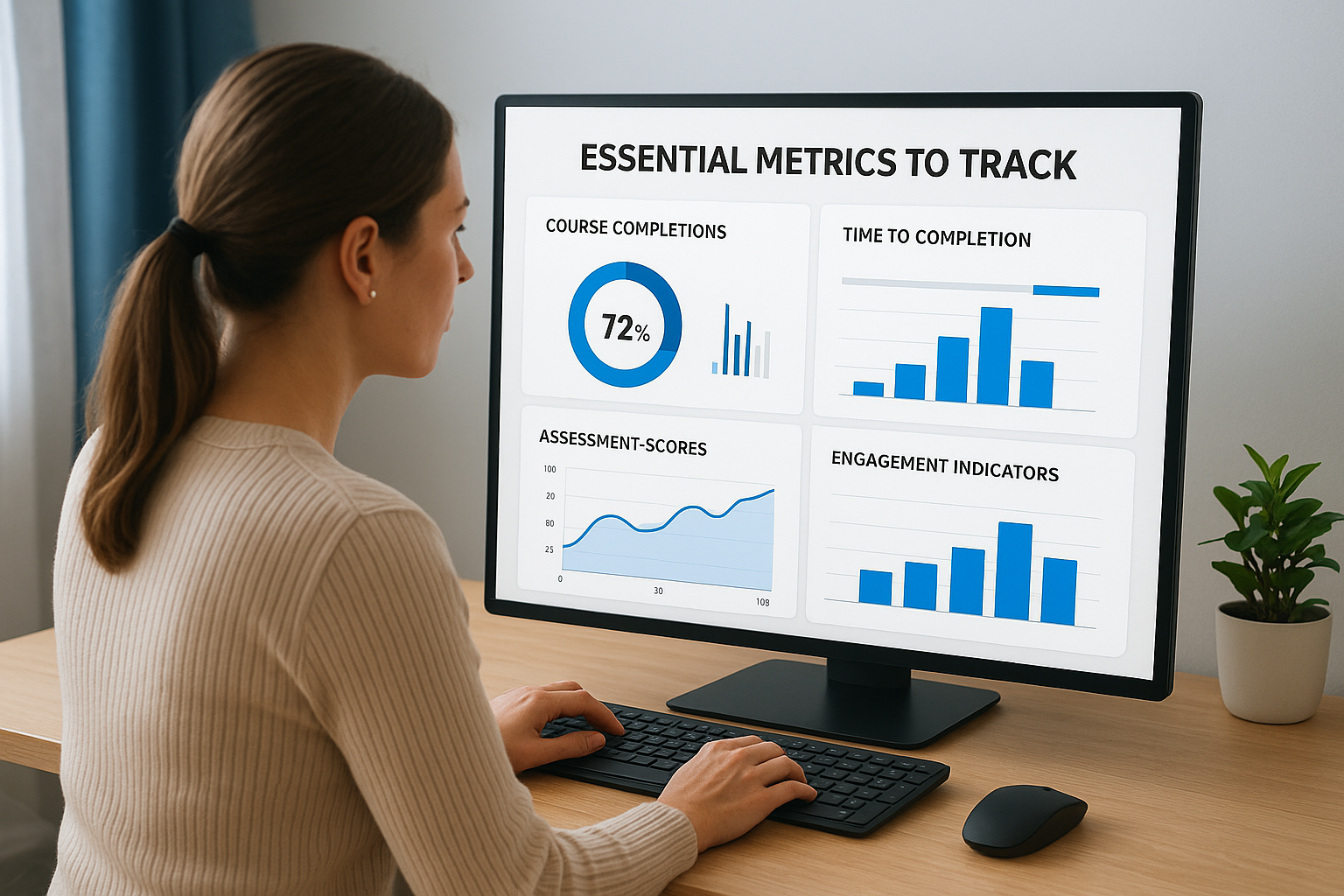
Your analytics dashboard should display completion rates that show how many learners finish courses, time-to-completion metrics that reveal efficiency, and assessment scores that measure knowledge retention. Track engagement indicators like login frequency, time spent on content, and module progression patterns to identify where learners lose interest. These foundation metrics answer basic questions about training effectiveness and learner behavior.
Beyond basic tracking, monitor performance improvement through pre and post-training assessments, skill application rates that show real-world use of learned concepts, and business impact metrics like productivity increases or error reductions. Learner satisfaction scores provide qualitative feedback that complements quantitative data, helping you understand why certain programs succeed or fail.
The metrics that matter most are those that connect training activities directly to the business outcomes your leadership cares about.
Selecting analytics tools
Most modern learning management systems include built-in analytics capabilities that provide standard reports on learner progress, course completions, and basic engagement metrics. Your LMS may already answer many questions about what is learning analytics without requiring additional investments. Evaluate whether these native features meet your needs before purchasing separate analytics platforms.
Additional tools become necessary when you need advanced features like predictive analytics, custom dashboards, cross-system data integration, or sophisticated visualization capabilities. Look for solutions that export data easily, automate reporting schedules, and integrate with your existing business intelligence systems to provide comprehensive insights across your organization.
Challenges, ethics, and best practices
Understanding what is learning analytics includes recognizing the obstacles and ethical considerations that come with collecting learner data. You’ll face technical challenges like data quality issues, integration difficulties between systems, and the complexity of interpreting results accurately. Organizations also struggle with resistance from stakeholders who worry about surveillance or lack trust in data-driven decisions. Your success depends on addressing these concerns proactively while maintaining ethical standards that protect learner privacy.
Privacy and data protection
Your analytics program must comply with data protection regulations like GDPR and protect learner information from unauthorized access. Collect only the data you need, explain clearly how you’ll use it, and give learners control over their personal information. Implement strict security measures including encryption, access controls, and regular audits to prevent breaches. Transparency builds trust, so communicate your data practices openly and allow learners to opt out of non-essential tracking.
Ethical learning analytics balances the power of data insights with respect for individual privacy and learner autonomy.
Avoiding bias in analytics
Your data can reflect and amplify existing biases if you don’t examine it critically. Review your analytics models regularly to ensure they don’t disadvantage certain demographic groups or perpetuate unfair outcomes. Test whether your predictive algorithms treat all learners equitably and adjust them when disparities emerge. Consider the unintended consequences of labeling learners as "at risk" or creating tracking systems that limit opportunities rather than expand them.
Implementation best practices
Start small with a pilot program that tests your analytics approach before scaling across your organization. Focus on answering specific questions rather than collecting every possible metric, which creates noise instead of insights. Train your team to interpret data correctly and make evidence-based decisions, while remembering that human judgment still matters when data tells an incomplete story.
Final thoughts
Understanding what is learning analytics gives you the foundation to transform your training programs from guesswork into strategic assets backed by real data. You’ve learned how to implement analytics systems, which metrics matter most, and how to address the ethical challenges that come with collecting learner data. The organizations that succeed with analytics start small, focus on specific questions, and build their capabilities over time rather than attempting everything at once.
Your next step involves evaluating whether your current learning management system provides the analytics capabilities you need to drive better training outcomes. Modern LMS platforms like Axis LMS include built-in analytics tools that make data-driven training accessible without requiring additional investments or technical expertise. Take our LMS readiness quiz to discover where your organization stands and what steps will move you forward.
