
Corporate training is the structured learning organizations provide to help employees develop skills, gain knowledge, and improve their performance at work. Companies invest in these programs to keep their workforce competent, compliant, and aligned with business goals. The scope is broad, covering everything from onboarding new hires and teaching technical abilities to ensuring regulatory compliance and developing leadership skills. Whether you run a small business or manage training for a large enterprise, corporate training helps your team stay sharp and your organization stay competitive in your market.
This guide covers everything you need to know about corporate training. You’ll discover why it matters for business success, how to build programs that drive real results, and the main types of training organizations commonly implement. We’ll explore the concrete benefits for both employees and companies, then show you how to measure and improve your return on investment. By the end, you’ll have a clear understanding of how to create effective training that strengthens your workforce and supports your business objectives.
Why corporate training matters
Your company’s success depends directly on how well your employees perform their jobs. When you invest in training, you equip your team with the skills and knowledge they need to deliver results. Businesses that prioritize learning see measurable improvements in productivity, retention, and innovation. Without structured training programs, your workforce falls behind as industries evolve, technologies advance, and customer expectations shift. The question isn’t whether you can afford to train your people, it’s whether you can afford not to.
Business performance and competitive advantage
Organizations with strong training programs gain a clear edge in their markets. Your competitors likely invest in developing their teams, and falling behind on skill development means losing ground on innovation and efficiency. Training helps you reduce operational errors, improve service quality, and adapt faster to market changes. Companies that understand what is corporate training and implement it effectively report higher employee engagement and better customer satisfaction scores. The financial impact shows up in reduced turnover costs, increased sales performance, and stronger profit margins across departments.

"Trained employees are more confident, productive, and loyal to organizations that invest in their growth."
Employee expectations and talent retention
Today’s workforce expects employers to provide meaningful learning opportunities as part of their career path. Skilled professionals, especially younger generations, actively seek companies that offer training and development programs. When you fail to provide these opportunities, your best performers leave for organizations that will invest in their future. Training signals to your team that you value their contributions and want them to grow with your company. This commitment builds loyalty, reduces recruitment costs, and helps you maintain institutional knowledge that takes years to develop.
How to build an effective corporate training program
Building an effective training program requires strategic planning and a clear understanding of your business objectives. You need to align your training efforts with what your organization actually needs, not just what seems popular or convenient. The process starts with identifying skill gaps in your workforce and defining specific outcomes you want to achieve. Your program should solve real problems, whether that’s improving customer service, reducing safety incidents, or preparing employees for new technology. A structured approach ensures you invest resources wisely and create training that employees actually complete and apply in their daily work.
Assess your training needs and set clear goals
Start by conducting a thorough needs assessment across your organization. Talk to managers about performance gaps, review customer feedback for service issues, and analyze data on employee productivity and error rates. Survey your team to understand what skills they feel they lack and what training would help them succeed. This research tells you exactly where to focus your efforts instead of guessing at what employees might need.
Once you identify the gaps, set specific and measurable goals for each training initiative. Define what success looks like in concrete terms, such as reducing onboarding time by 30% or increasing sales conversion rates by 15%. Clear objectives help you design targeted content and give you benchmarks to measure whether your training actually works.
Design content that drives real results
Your training content must address real workplace situations that employees face every day. Generic, theoretical material fails to engage learners or change behavior. Create scenarios, case studies, and examples pulled directly from your business operations. When employees see how training applies to their actual job responsibilities, they pay attention and retain information better.
Break complex topics into digestible modules that respect your employees’ time and cognitive load. Use multiple formats like videos, interactive exercises, and job aids to accommodate different learning styles. The goal is to make learning practical and accessible, not to overwhelm people with information they won’t remember or use.
"Training programs succeed when employees can immediately apply what they learn to improve their daily work."
Choose the right delivery methods
Your delivery method depends on your workforce characteristics and the type of skills you’re teaching. Technical skills often require hands-on practice, while compliance training might work well in shorter online modules. Consider whether your employees work remotely, in offices, or in the field, as this affects which delivery formats make sense for your situation.
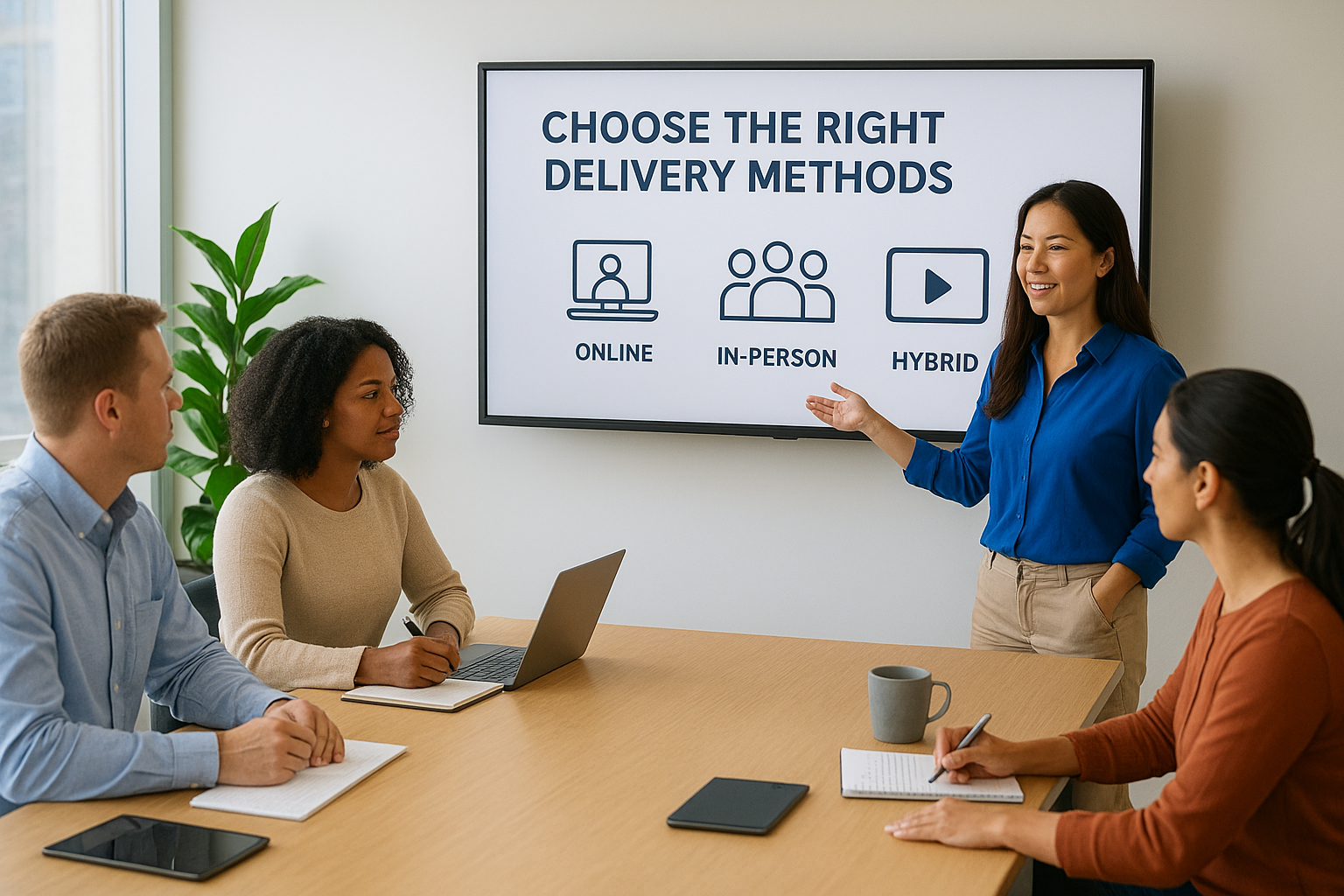
Modern learning management systems let you combine multiple approaches, mixing self-paced online courses with live virtual sessions and in-person workshops. This flexibility helps you reach employees where they are while controlling training costs. Understanding what is corporate training today means recognizing that effective programs use technology to scale learning without sacrificing quality or engagement.
Implement and iterate based on feedback
Roll out your program with clear communication about expectations and benefits. Employees need to understand why the training matters and how it helps their career development. Provide manager support to reinforce learning and give employees time to complete training without competing demands.
Collect feedback continuously through surveys, completion rates, and performance metrics. Track whether employees apply new skills on the job and whether you see the business improvements you targeted. Use this data to refine your content, adjust delivery methods, and identify additional training needs. Your program should evolve based on what actually works, not just what you initially planned.
Key types of corporate training
Understanding what is corporate training means recognizing the distinct categories that address different organizational needs and employee development areas. Each type serves specific purposes, from ensuring legal compliance to building leadership pipelines. Your training strategy should include a mix of these categories based on your business requirements, industry regulations, and workforce development goals. The most effective organizations tailor their approach to match their unique challenges while covering the fundamental training areas that every business needs to address.
Onboarding and orientation training
New employees need structured programs to understand your company culture, policies, and job responsibilities from day one. Onboarding training accelerates the time it takes for hires to become productive contributors to your team. This training covers everything from administrative procedures and benefits enrollment to role-specific workflows and team introductions. Strong onboarding programs reduce early turnover by helping new employees feel prepared and connected to your organization.
Your onboarding should extend beyond the first week to include 90-day check-ins and ongoing support as employees settle into their roles. Research shows that effective onboarding improves retention rates and helps new hires reach full productivity faster than unstructured approaches.
Compliance and regulatory training
Every organization must meet specific legal requirements and industry standards that protect employees, customers, and the business itself. Compliance training covers topics like workplace safety, data privacy, anti-harassment policies, and sector-specific regulations. Your company faces real financial and legal risks when employees lack proper compliance knowledge, making this training non-negotiable rather than optional.
You need to track completion rates carefully and provide regular updates as regulations change. Documentation of compliance training protects your organization during audits and demonstrates your commitment to maintaining a safe, ethical workplace.
Technical and product skills training
Employees need specific technical competencies to use the tools, systems, and technologies required for their jobs. This category includes software training, equipment operation, product knowledge, and specialized techniques unique to your industry. Technical training ensures your team can perform their core responsibilities efficiently and adapt as you introduce new technologies or update existing systems.
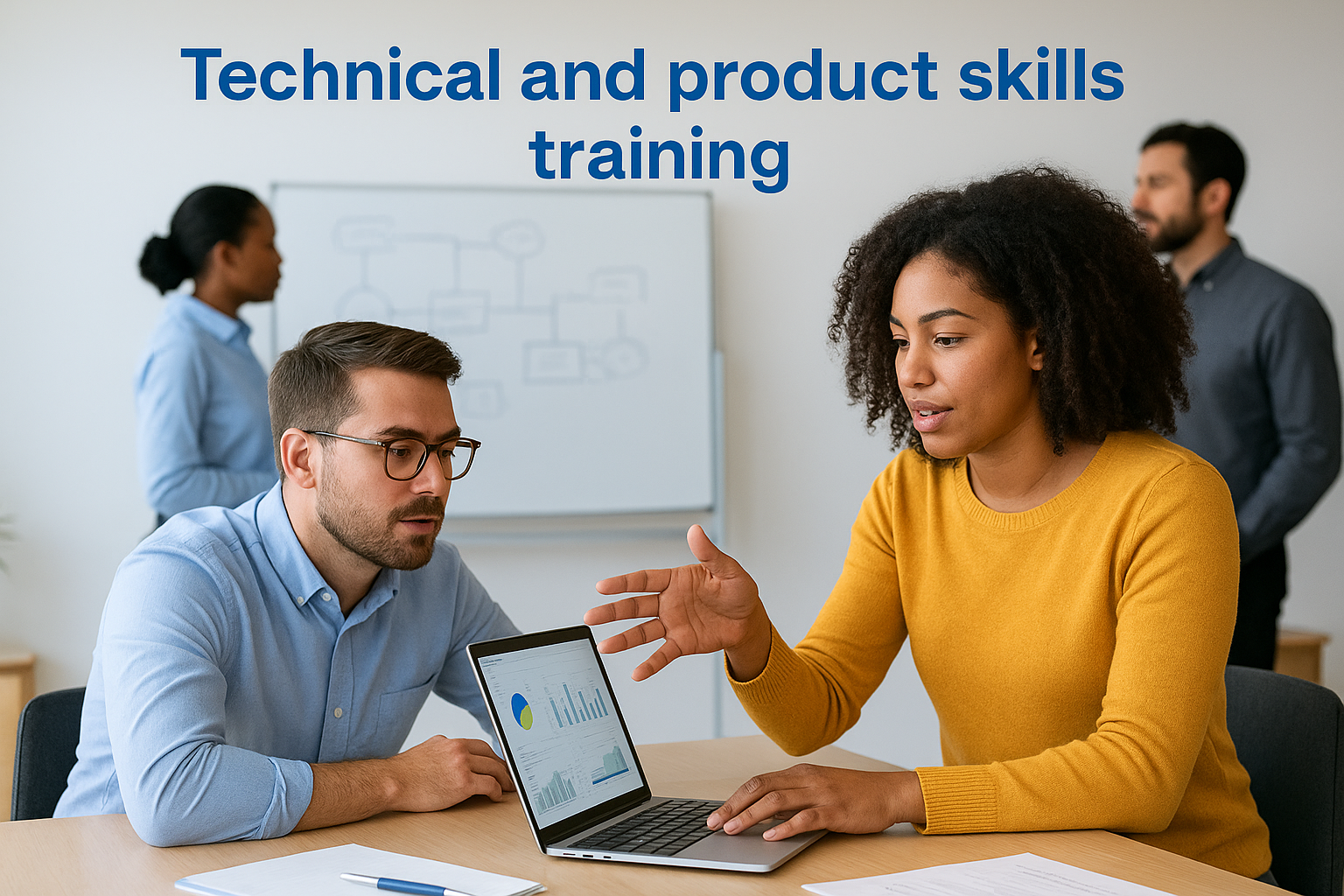
"Technical skills training directly impacts product quality, customer satisfaction, and operational efficiency across your organization."
Product training helps customer-facing teams understand what they’re selling or supporting in depth. Sales representatives, support staff, and account managers perform better when they truly understand your products’ features, benefits, and applications.
Leadership and management development
Your organization needs a pipeline of capable leaders who can guide teams, make strategic decisions, and develop other employees. Leadership training covers skills like effective delegation, performance management, conflict resolution, and strategic thinking. This investment prepares high-potential employees for greater responsibilities and ensures your management team operates with consistent principles and approaches.
Management development programs should include both foundational skills for new managers and advanced training for experienced leaders. Your succession planning depends on continuously developing leadership talent throughout your organization.
Soft skills and professional development
Communication, problem-solving, time management, and collaboration skills matter across every role in your company. Soft skills training helps employees work more effectively with colleagues, serve customers better, and navigate workplace challenges successfully. These interpersonal and cognitive abilities often determine who advances in their career and who struggles despite having strong technical skills. Professional development programs show employees you care about their long-term growth, not just their ability to complete immediate tasks.
Benefits of training for employees and businesses
Corporate training creates value for both your workforce and your organization, delivering returns that extend far beyond the immediate learning experience. Understanding what is corporate training and its benefits helps you justify investment and build support for learning initiatives. Your employees gain marketable skills and career advancement opportunities, while your business sees improved performance, reduced costs, and stronger competitive positioning. These benefits compound over time as your trained employees apply their knowledge, share it with colleagues, and contribute to a culture of continuous improvement.
Employee benefits and career growth
Your employees gain tangible advantages that enhance their professional lives when you provide quality training. They develop new competencies that make them more effective in their current roles and more qualified for future opportunities within your organization. Training builds confidence by giving employees the knowledge and skills they need to handle challenges independently. This empowerment leads to higher job satisfaction and a stronger sense of purpose at work.
Career development programs signal to your team that you value their long-term success, not just their immediate output. Employees who receive training report feeling more engaged and loyal to their employers. They appreciate the investment in their growth and respond with increased commitment to your organization’s success. Training also makes your workforce more adaptable and resilient when facing change, whether that’s new technology, process improvements, or shifts in market conditions.
"Employees who receive regular training opportunities develop stronger skills, greater confidence, and deeper loyalty to their organizations."
Business outcomes and organizational impact
Your organization benefits from training through measurable improvements in multiple areas that directly affect your bottom line. Productivity increases as employees work more efficiently and make fewer errors. Customer satisfaction rises when your team has the skills to deliver excellent service consistently. You reduce turnover costs by retaining trained employees who see a future with your company instead of seeking opportunities elsewhere.
Training strengthens your competitive position by creating a more capable workforce that can execute your strategy effectively. Your organization becomes more agile, able to adopt new technologies and respond to market changes faster than competitors with less skilled teams. Compliance training protects you from regulatory penalties and legal risks that could damage your reputation and finances. The knowledge your employees gain through training becomes intellectual capital that drives innovation and helps you maintain advantages in your market.
Quality training programs also improve your employer brand, making it easier to attract top talent who want to work for companies that invest in development. Your organization builds a reputation as a place where people grow their careers, creating a positive cycle that brings in stronger candidates and reduces recruitment costs over time.
Measuring and improving corporate training ROI
Your training investments need to deliver measurable returns to justify continued funding and demonstrate value to stakeholders. You can’t manage what you don’t measure, and tracking the right metrics helps you understand which programs work and which need improvement. Return on investment (ROI) for training goes beyond simple completion rates to include business outcomes like productivity gains, error reduction, and revenue growth. By establishing clear measurement systems and continuously refining your approach, you turn training from a cost center into a strategic asset that drives organizational performance.
Track quantifiable metrics that matter
Focus on metrics that connect directly to your business objectives rather than vanity numbers that look impressive but reveal little about impact. Measure completion rates to ensure employees actually finish training, but also track knowledge retention through assessments given weeks after program completion. Monitor performance changes by comparing key metrics before and after training, such as sales numbers, customer satisfaction scores, or safety incident rates.
Your data collection should include both leading indicators like participation rates and lagging indicators like long-term performance improvements. Track time-to-competency for new hires to see if training accelerates their ability to work independently. Document behavior changes by gathering feedback from managers about whether employees apply new skills on the job.
Calculate your training ROI
Calculate ROI by comparing the monetary benefits your training generates against the total costs you invested. Add up all training expenses including development time, instructor fees, technology platforms, and employee hours spent learning. Then quantify the benefits through reduced turnover costs, increased productivity, fewer errors, or higher revenue from improved performance.

"Effective ROI measurement connects training outcomes directly to financial results that matter to business leaders."
Your ROI formula divides net benefits by total costs, then multiplies by 100 for a percentage. For example, if you spend $50,000 on sales training and your team generates $200,000 in additional revenue as a result, your ROI equals 300%. Some benefits prove harder to quantify, so document qualitative improvements like enhanced customer relationships or stronger company culture alongside your financial calculations.
Use data to refine your programs
Review your metrics regularly to identify which training elements produce the best results and which need adjustment. Compare different delivery methods, content formats, and instructor approaches to see what resonates with your audience. Your analysis might reveal that shorter modules improve completion rates or that certain topics require additional reinforcement.
Continuous improvement keeps your training relevant as your business evolves and employee needs change. Understanding what is corporate training today means recognizing that effective programs adapt based on evidence rather than assumptions about what should work.

Key takeaways
You now understand what is corporate training means for your organization and how to implement programs that deliver real results. Corporate training encompasses structured learning initiatives that develop employee skills, ensure compliance, and drive business performance. Your investment in training creates measurable value through improved productivity, reduced turnover, and stronger competitive positioning in your market.
Successful programs start with thorough needs assessments and clear objectives aligned to your business goals. You need the right delivery methods, whether online courses, virtual sessions, or blended approaches that combine multiple formats. Your training strategy should include onboarding, compliance, technical skills, leadership development, and soft skills training tailored to your workforce needs.
Track meaningful metrics and calculate ROI to prove your training effectiveness and justify continued investment. Ready to streamline your corporate training? Take our LMS readiness quiz to discover the best next steps for your organization.
